
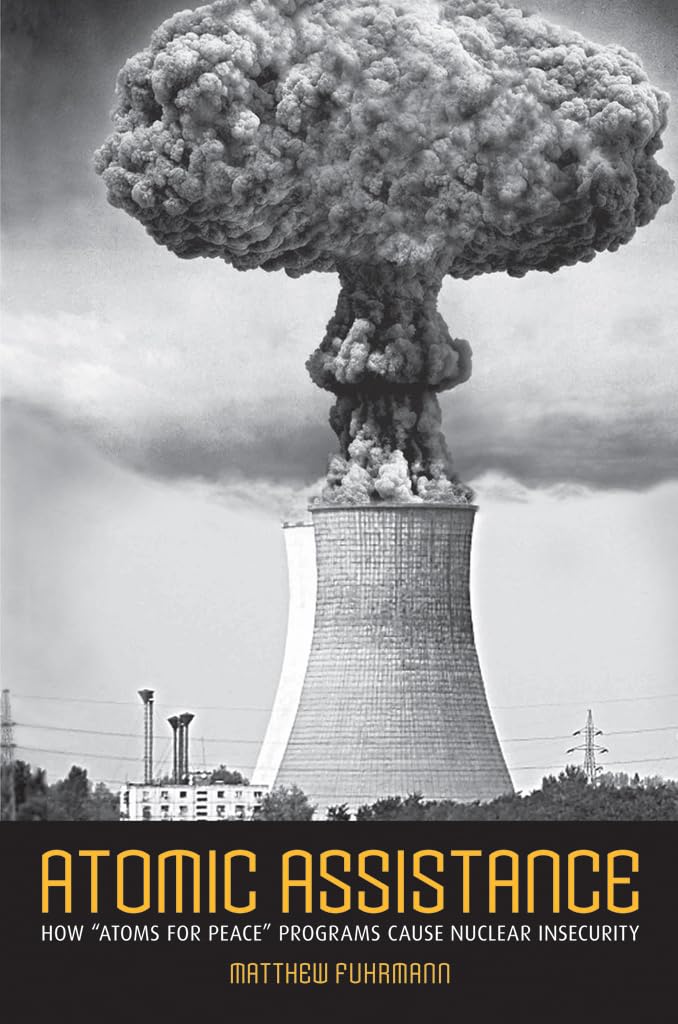
Title
Atomic Assistance: How Atoms For Peace Programs Cause Nuclear Insecurity (Cornell Studies In Security Affairs)
Sold by Ergodebooks, an authorized reseller.
Returns accepted within 30 days | support@ergodebooks.com
Shipping Information
- Free Standard Shipping — United States only
- Processing Time: 3–5 business days
- Estimated Delivery: 6–10 business days after dispatch
- Double-boxed, fully insured & discreetly packaged
- Tracking number sent via email once dispatched
Returns & Refund
Returns accepted within 30 days of delivery.
Damaged or Defective Item
Free return shipping + replacement or full refund
Wrong Item Received
Free return shipping + replacement or full refund
Change of Mind
Return shipping at customer's expense · 25% restocking fee applies
Payment Option

Nuclear Technology Is Dual Use In Nature, Meaning That It Can Be Used To Produce Nuclear Energy Or To Build Nuclear Weapons. Despite Security Concerns About Proliferation, The United States And Other Nuclear Nations Have Regularly Shared With Other Countries Nuclear Technology, Materials, And Knowledge For Peaceful Purposes. In Atomic Assistance, Matthew Fuhrmann Argues That Governments Use Peaceful Nuclear Assistance As A Tool Of Economic Statecraft. Nuclear Suppliers Hope That They Can Reap The Benefits Of Foreign Aidimproving Relationships With Their Allies, Limiting The Influence Of Their Adversaries, Enhancing Their Energy Security By Gaining Favorable Access To Oil Supplieswithout Undermining Their Security. By Providing Peaceful Nuclear Assistance, However, Countries Inadvertently Help Spread Nuclear Weapons.Fuhrmann Draws On Several Cases Of Atoms For Peace, Including U.S. Civilian Nuclear Assistance To Iran From 1957 To 1979; Soviet Aid To Libya From 1975 To 1986; French, Italian, And Brazilian Nuclear Exports To Iraq From 1975 To 1981; And U.S. Nuclear Cooperation With India From 2001 To 2008. He Also Explores Decision Making In Countries Such As Japan, North Korea, Pakistan, South Africa, And Syria To Determine Why States Began (Or Did Not Begin) Nuclear Weapons Programs And Why Some Programs Succeeded While Others Failed. Fuhrmann Concludes That, On Average, Countries Receiving Higher Levels Of Peaceful Nuclear Assistance Are More Likely To Pursue And Acquire The Bombespecially If They Experience An International Crisis After Receiving Aid.
⚠️ WARNING (California Proposition 65):
This product may contain chemicals known to the State of California to cause cancer, birth defects, or other reproductive harm.
For more information, please visit www.P65Warnings.ca.gov.
- Q: How many pages does the book have? A: This book has three hundred forty-four pages. It offers an in-depth exploration of nuclear assistance and its implications.
- Q: What are the dimensions of the book? A: The book measures six point twelve inches in length, zero point eighty-three inches in width, and nine point twenty-five inches in height. These dimensions make it a suitable size for both reading and storage.
- Q: What type of binding does this book have? A: This book is paperback bound. It provides a lightweight option for easy handling and reading.
- Q: Who is the author of the book? A: The author of the book is Matthew Fuhrmann. He specializes in security affairs and nuclear policy.
- Q: What category does this book fall under? A: This book falls under the Nuclear category. It addresses themes related to nuclear energy and weapons.
- Q: What is the main topic of the book? A: The main topic of the book focuses on how peaceful nuclear assistance can inadvertently lead to nuclear insecurity. It examines historical cases and their implications.
- Q: Is this book suitable for beginners in nuclear studies? A: Yes, this book is suitable for beginners. It provides a comprehensive introduction to the complexities of nuclear assistance.
- Q: What kind of reader would benefit from this book? A: Readers interested in international relations, security studies, or nuclear policy will find this book beneficial. It provides insightful analysis and case studies.
- Q: Can this book be used for academic research? A: Yes, this book can be used for academic research. It presents detailed case studies and arguments relevant to nuclear policy debates.
- Q: How should I store this book? A: Store this book in a cool, dry place away from direct sunlight. This helps preserve its binding and pages.
- Q: Is there a recommended way to care for the book? A: To care for the book, handle it gently and avoid bending the spine. This will maintain its condition over time.
- Q: What if the book arrives damaged? A: If the book arrives damaged, you should contact the seller for a return or exchange. Most sellers provide clear policies for such situations.
- Q: Does this book have any adult content? A: No, this book does not contain adult content. It is focused on nuclear issues and academic discussions.
- Q: Is this book available in other formats? A: Currently, this book is only available in paperback format. There may not be an electronic version available.
- Q: What is the significance of the title 'Atomic Assistance'? A: The title 'Atomic Assistance' signifies the dual nature of nuclear technology and its role in both energy and weaponry. It emphasizes the paradox of peaceful nuclear aid leading to insecurity.
- Q: Which publisher released this book? A: The book is published by Cornell University Press. They specialize in scholarly works across various disciplines.