
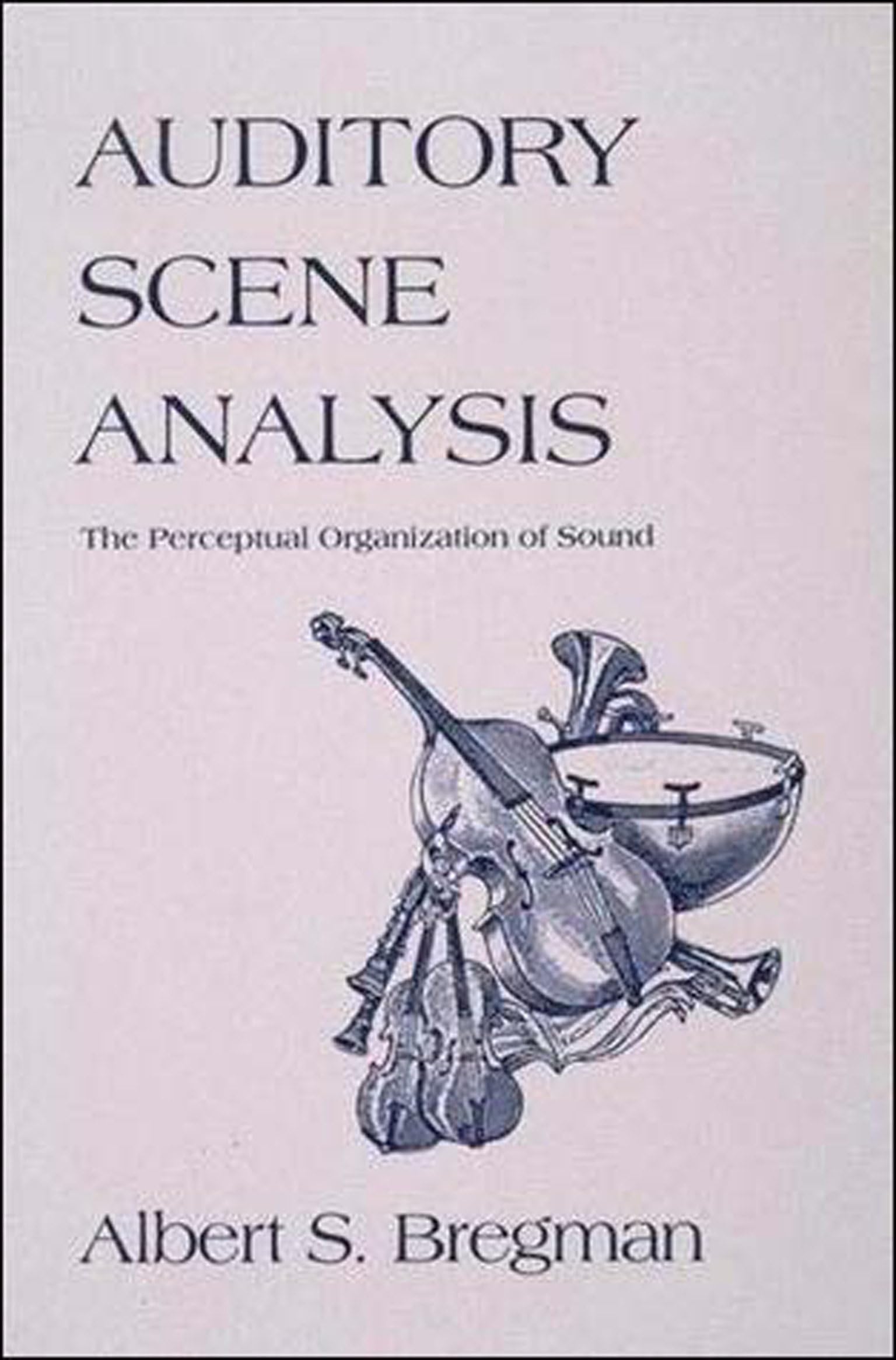
Title
Auditory Scene Analysis: The Perceptual Organization Of Sound
Sold by Ergodebooks, an authorized reseller.
Returns accepted within 30 days | support@ergodebooks.com
Shipping Information
- Free Standard Shipping — United States only
- Processing Time: 3–5 business days
- Estimated Delivery: 6–10 business days after dispatch
- Double-boxed, fully insured & discreetly packaged
- Tracking number sent via email once dispatched
Returns & Refund
Returns accepted within 30 days of delivery.
Damaged or Defective Item
Free return shipping + replacement or full refund
Wrong Item Received
Free return shipping + replacement or full refund
Change of Mind
Return shipping at customer's expense · 25% restocking fee applies
Payment Option

Auditory Scene Analysis Addresses The Problem Of Hearing Complex Auditory Environments, Using A Series Of Creative Analogies To Describe The Process Required Of The Human Auditory System As It Analyzes Mixtures Of Sounds To Recover Descriptions Of Individual Sounds. In A Unified And Comprehensive Way, Bregman Establishes A Theoretical Framework That Integrates His Findings With An Unusually Wide Range Of Previous Research In Psychoacoustics, Speech Perception, Music Theory And Composition, And Computer Modeling.
⚠️ WARNING (California Proposition 65):
This product may contain chemicals known to the State of California to cause cancer, birth defects, or other reproductive harm.
For more information, please visit www.P65Warnings.ca.gov.
- Q: What is the binding type of this book? A: The binding type is paperback. This choice makes it lightweight and easy to carry for reading.
- Q: How many pages does this book have? A: This book has seven hundred ninety pages. It offers a comprehensive exploration of auditory scene analysis.
- Q: What are the dimensions of this book? A: The dimensions are nine point thirteen inches in length, six point zero two inches in width, and one point fifty-seven inches in height. These measurements make it a manageable size for reading.
- Q: Who is the author of this book? A: The author is Albert S. Bregman. He is renowned for his contributions to psychoacoustics and auditory perception.
- Q: What topics does this book cover? A: This book covers auditory scene analysis, psychoacoustics, and speech perception. It integrates various research findings in these fields.
- Q: What genre does this book belong to? A: This book belongs to the psychology and counseling genre. It is ideal for readers interested in auditory perception.
- Q: Is this book suitable for beginners in psychology? A: Yes, this book is suitable for beginners. It provides foundational knowledge in auditory scene analysis and related fields.
- Q: Can I use this book for academic purposes? A: Yes, this book is suitable for academic use. Its comprehensive approach makes it a valuable resource for students and researchers.
- Q: Who would benefit from reading this book? A: Students, researchers, and professionals in psychology and music theory would benefit from this book. It offers valuable insights into sound analysis.
- Q: How should I store this book to maintain its condition? A: Store this book in a dry, cool place away from direct sunlight. This helps preserve the paperback binding and pages.
- Q: Is this book safe for young readers? A: Yes, this book is safe for young readers. However, it is recommended for those with an interest in psychology.
- Q: What should I do if my book arrives damaged? A: If the book arrives damaged, contact the seller for a return or exchange. Most sellers have policies to address such issues.
- Q: Does this book contain illustrations or figures? A: No, this book does not include illustrations or figures. It focuses primarily on text and theoretical frameworks.
- Q: Can this book be used for self-study? A: Yes, this book can be used for self-study. It provides comprehensive information on auditory scene analysis concepts.
- Q: What research areas does this book integrate? A: This book integrates research from psychoacoustics, music theory, and computer modeling. It offers a well-rounded perspective on auditory analysis.
- Q: Is there a glossary or index in this book? A: Yes, this book includes an index. It helps readers quickly locate specific topics related to auditory scene analysis.