
Title
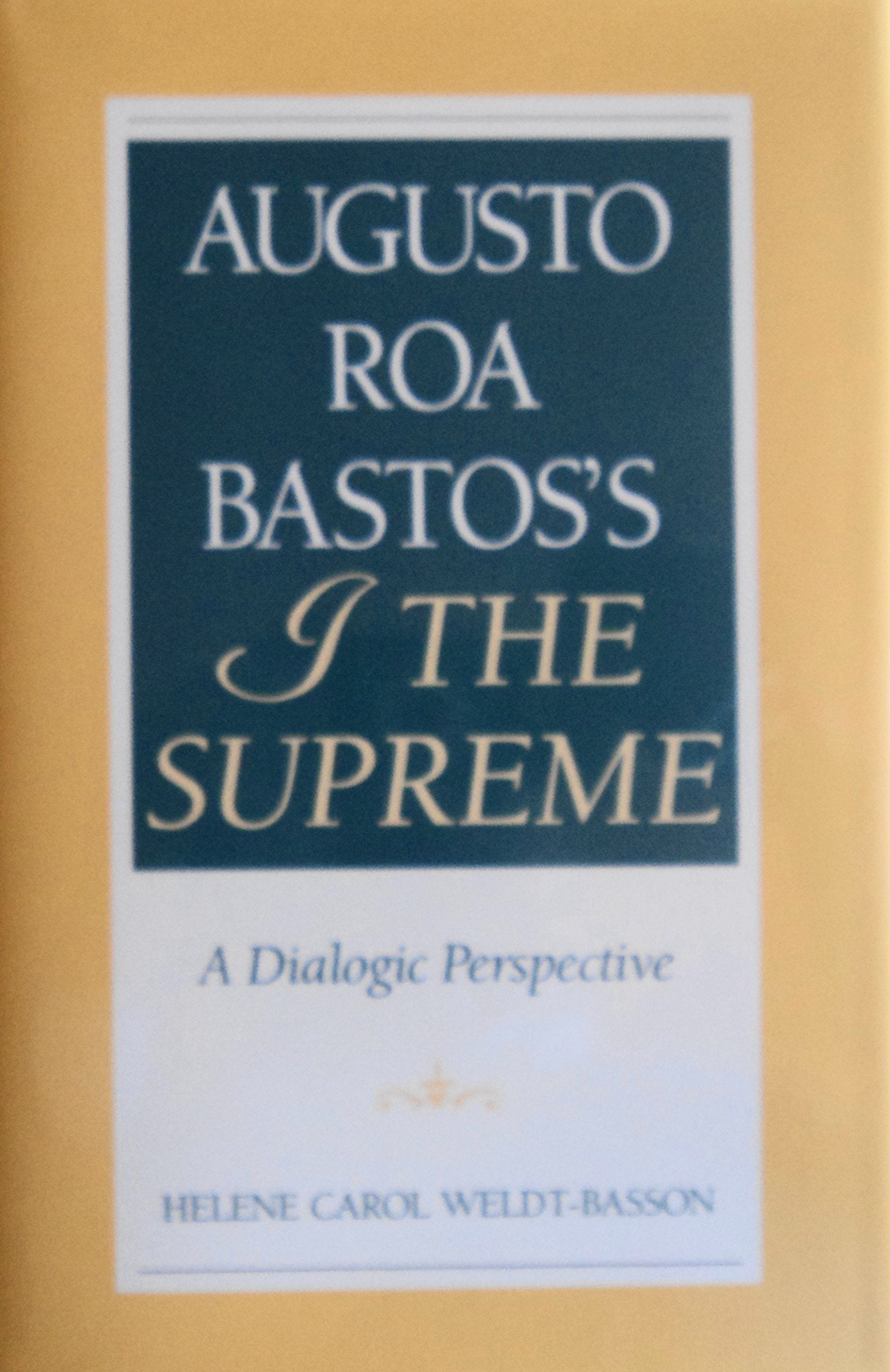
Augusto Roa Bastos's I the Supreme: A Dialogic Perspective,Used
Sold by Ergodebooks, an authorized reseller.
Returns accepted within 30 days | support@ergodebooks.com
Shipping Information
- Free Standard Shipping — United States only
- Processing Time: 3–5 business days
- Estimated Delivery: 6–10 business days after dispatch
- Double-boxed, fully insured & discreetly packaged
- Tracking number sent via email once dispatched
Returns & Refund
Returns accepted within 30 days of delivery.
Damaged or Defective Item
Free return shipping + replacement or full refund
Wrong Item Received
Free return shipping + replacement or full refund
Change of Mind
Return shipping at customer's expense · 25% restocking fee applies
Payment Option

Augusto Roa Bastos's novel I the Supreme (1974) may be one of the most famous and yet least understood works of contemporary Latin American fiction. Based on the twentysixyear reign of Paraguayan dictator Jose Gaspar Rodriguez de Francia (17661840), the novel carries on dialogues with history in ways heretofore unexplored. In Augusto Roa Bastos's I THE SUPREME, Helene Carol WeldtBasson analyzes Roa Bastos's seminal work by unraveling the rich web of both historical and nonhistorical interxtuality that is critical to an understanding of this novel.WeldtBasson first establishes the preliminary connections between I the Supreme and Roa Bastos's previous works. She continues her incisive analysis of the novel's fragmented structure by focusing on its complex use of narrative "voice" and symbolism. In doing so, the author applies and extends some of the most stimulating contemporary literary theories of dialogism and intertextuality, in particular those of Mikhail Bakhtin.WeldtBasson also discusses the novel's dialogic relationship with history and examines how the novel "answers" and parodies historical texts, imitates the constructive process of historiography, and amplifies and exaggerates historical events. In addition, she investigates the novel's incorporation of nonhistorical intertexts, especially the works of Cervantes, Pascal, Raymond Roussel, and Roa Bastos himself. She offers suggestions regarding how the reader may deduce authorial norms and values from the novel's dialogic structure.Anyone interested in Latin American fiction, history, and culture will find this interpretation of I the Supreme thoroughly absorbing Students of literary theory will also appreciate the deft manner in which WeldtBasson utilizes twentiethcentury theories to interpret the novel.
⚠️ WARNING (California Proposition 65):
This product may contain chemicals known to the State of California to cause cancer, birth defects, or other reproductive harm.
For more information, please visit www.P65Warnings.ca.gov.