
Title
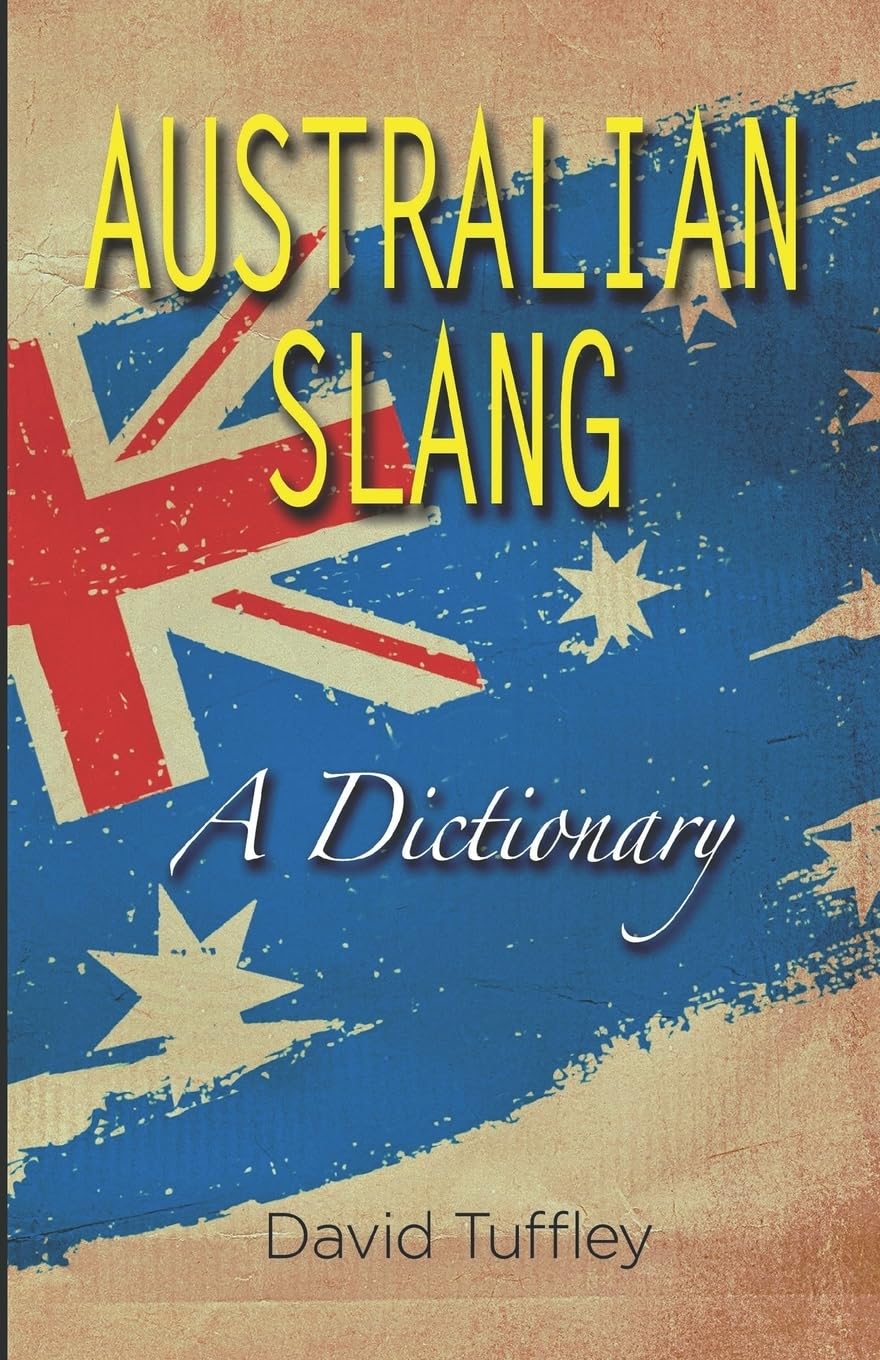
Australian Slang: A Dictionary,Used
Sold by Ergodebooks, an authorized reseller.
Returns accepted within 30 days | support@ergodebooks.com
Shipping Information
- Free Standard Shipping — United States only
- Processing Time: 3–5 business days
- Estimated Delivery: 6–10 business days after dispatch
- Double-boxed, fully insured & discreetly packaged
- Tracking number sent via email once dispatched
Returns & Refund
Returns accepted within 30 days of delivery.
Damaged or Defective Item
Free return shipping + replacement or full refund
Wrong Item Received
Free return shipping + replacement or full refund
Change of Mind
Return shipping at customer's expense · 25% restocking fee applies
Payment Option

Welcome to this latest edition of Australian Slang. , a richlytextured, often ribald world of laconic humor. Now updated with over 100 new entries, this dictionary aims to do three things; (a) help the traveller to decipher what they might hear in everyday Australian life, (b) give the casual reader some insight if not amusement at how we Aussies speak, and (c) record for posterity many expressions that are slipping into disuse in the 21st Century. Readers will recognize many British and American expressions in this list. Australian English has absorbed much from Britain and America. For depth of knowledge of their own language, noone beats the British. They invented the language after all. From its origins as an obscure West Germanic dialect and a thousand years in the making, English is the soul of what it is to be British. Noone understands or uses their language more skillfully. Across the Atlantic Ocean, American English had acquired a creative momentum that recognizes no boundaries. Americans have taken a good allpurpose language from the British and extended it to describe their dynamically changing world. They do not cling to old forms out of respect for tradition as the British do. Anything is fair game. The Irish playwright George Bernard Shaw famously observed that Britain and America (are) two great nations divided by the same language. The quote is also attributed to Oscar Wilde and Winston Churchill. Being a witty truism, people are bound to pick it up and use it in every day conversation. If its funny and true, the saying will spread and become established. That is no less the case with Australian slang. For over a hundred years, Australia developed in splendid isolation its unique blend of English, tempered by the hardships of heat and cold, deluge and drought, bushfires and cyclones. The harsh environment united people in a common struggle to survive. People helped each other. Strong communitarian loyalties were engendered. It is from this that the egalitarian character of Australia evolved. There is a strong emphasis on building a feeling of solidarity with others. Strangers will call each other "mate" or "luv" in a tone of voice ordinarily reserved for close friends and family in other parts of the world. Everyone was from somewhere else, and noone was better than anyone else. A strong antiauthoritarian attitude became deeply embedded in Australian English. This was mainly directed towards their British overlords who still ran the country as a profitable colony. The Australian sense of humour is generally understated, delivered with a straightface, and is often selfdeprecating in nature. Noone wants to appear to be up themselves. Harsh or otherwise adverse conditions had to be met without complaint, so when discussing such conditions, it was necessary to do so with laconic, understated humour. Anyone not doing so was deemed a whinger (winjer).Following World War II the American influence came increasingly to influence Australian culture and therefore the language. Noone is better at selling their popular culture to the world than the United States of America. Their pop culture is a beguiling instrument of foreign policy, so pervasive and persuasive it is. Young Australians enthusiastically embraced American culture, and since the 1940s the old established British language and customs have become blended with the American. If Australian English has a remarkable quality, it is the absence of regional dialects. It is spoken with relative uniformity across the entire nation. Brisbane on the East coast is a 4,300 kilometer (2,700 mile) drive from Perth on the West coast, yet there is little discernible linguistic difference between the two places.
⚠️ WARNING (California Proposition 65):
This product may contain chemicals known to the State of California to cause cancer, birth defects, or other reproductive harm.
For more information, please visit www.P65Warnings.ca.gov.
- Q: How many pages does the book 'Australian Slang: A Dictionary' have? A: The book has one hundred five pages. This length allows for a comprehensive exploration of Australian slang and idioms.
- Q: What is the binding type of 'Australian Slang: A Dictionary'? A: It is a paperback binding. This makes it lightweight and easy to carry for travelers and readers alike.
- Q: What are the dimensions of 'Australian Slang: A Dictionary'? A: The book measures five point five one inches in length, zero point two four inches in width, and eight point five inches in height. These dimensions make it a compact reference.
- Q: Who is the author of 'Australian Slang: A Dictionary'? A: The author is David Tuffley. He provides insights into the unique characteristics of Australian English.
- Q: What category does 'Australian Slang: A Dictionary' belong to? A: It belongs to the Slang & Idioms category. This genre focuses on colloquial expressions used in everyday conversation.
- Q: How can I use 'Australian Slang: A Dictionary' effectively? A: You can use it as a reference guide for understanding Australian slang. It's particularly useful for travelers wishing to navigate local conversations.
- Q: Is 'Australian Slang: A Dictionary' suitable for children? A: Yes, it can be suitable for older children and teenagers. However, some slang terms may require adult supervision for context.
- Q: How do I maintain 'Australian Slang: A Dictionary' in good condition? A: Keep it in a dry place and avoid exposure to moisture. Regularly handle it with clean hands to maintain its condition.
- Q: What is the best way to handle and store 'Australian Slang: A Dictionary'? A: Store it upright on a shelf to prevent bending. Avoid placing heavy items on top to preserve its shape.
- Q: Is there a warranty or return policy for 'Australian Slang: A Dictionary'? A: Yes, there is a return policy. If you receive a damaged copy, you can return it within a specified period for a replacement.
- Q: What do I do if 'Australian Slang: A Dictionary' arrives damaged? A: Contact customer support immediately for assistance. They can guide you through the return or exchange process.
- Q: Can 'Australian Slang: A Dictionary' help me if I'm new to Australian culture? A: Yes, it provides valuable insights into Australian culture and language. This can enhance your understanding and appreciation of local expressions.
- Q: What makes 'Australian Slang: A Dictionary' different from other dictionaries? A: It focuses specifically on Australian slang, capturing unique expressions and cultural nuances that may not be found in standard dictionaries.
- Q: Does 'Australian Slang: A Dictionary' include modern expressions? A: Yes, it has been updated with over one hundred new entries. This includes contemporary slang that reflects current Australian culture.
- Q: Is 'Australian Slang: A Dictionary' a good gift for someone traveling to Australia? A: Absolutely, it is an excellent gift. It serves as a handy guide for anyone looking to engage with locals while traveling in Australia.
- Q: What kind of humor can I expect in 'Australian Slang: A Dictionary'? A: The book features Australian humor, which is often laconic and self-deprecating. This reflects the unique cultural context of Australia.