
Title
Authority and Representation in Early Modern Discourse,Used
Sold by Ergodebooks, an authorized reseller.
Returns accepted within 30 days | support@ergodebooks.com
Shipping Information
- Free Standard Shipping — United States only
- Processing Time: 3–5 business days
- Estimated Delivery: 6–10 business days after dispatch
- Double-boxed, fully insured & discreetly packaged
- Tracking number sent via email once dispatched
Returns & Refund
Returns accepted within 30 days of delivery.
Damaged or Defective Item
Free return shipping + replacement or full refund
Wrong Item Received
Free return shipping + replacement or full refund
Change of Mind
Return shipping at customer's expense · 25% restocking fee applies
Payment Option

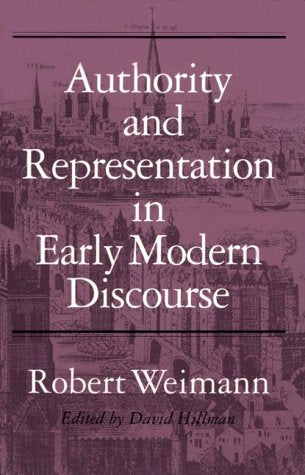
This pathbreaking study attempts to view both Reformation discourse and Renaissance fiction (and, by implication, the Elizabethan theater) as constitutive of an early modern paradigm change in the authorization of discourse. The profound crisis in traditional locations of authority, affecting religious, political, and poetic courts of appeal, is traced as interactive with an unprecedented proliferation of both signifying practices and communicative technologies. Representation itself seeks to cope with these changing uses of language and power visvis deep divisions (but also new patterns of socialization) in contemporary culture and society. Authority, now that it is less given before an utterance begins, comes to constitute itself through the competence, cogency, and efficacy of representational practice itself, even as this practice privileges, and draws upon, pictorial form in diverse cultural contexts.This book continues to search for answers to questions of why and under what conditions in the early modern period the representation of authority could increasingly be challenged by the authority of signs. Initially raised in Weimann's Shakespeare und die Macht der Mimesis, these questions are developed towards a theory and history of early modern representation that involves close encounters with a wide variety of texts, from Luther, Henry Tudor, Edward Seymour, Gardiner, and Bancroft to Malory, Erasmus, Rabelais, Sidney, Nashe, and Cervantes."Robert Weimann is one of the world's most eminent and intellectually formidable scholars of early modern cultureand he has written a work of the utmost importance to the theory and practice of cultural and literary history, and to the study of sixteenth century English and European culture in particular. The book is an intellectual tour de force, yet one utterly devoid of the flourishes of academic selfdisplay. This work genuinely impresses without ever seeking to impress."Louis A. Montrose, University of California, San Diego
⚠️ WARNING (California Proposition 65):
This product may contain chemicals known to the State of California to cause cancer, birth defects, or other reproductive harm.
For more information, please visit www.P65Warnings.ca.gov.