
Title
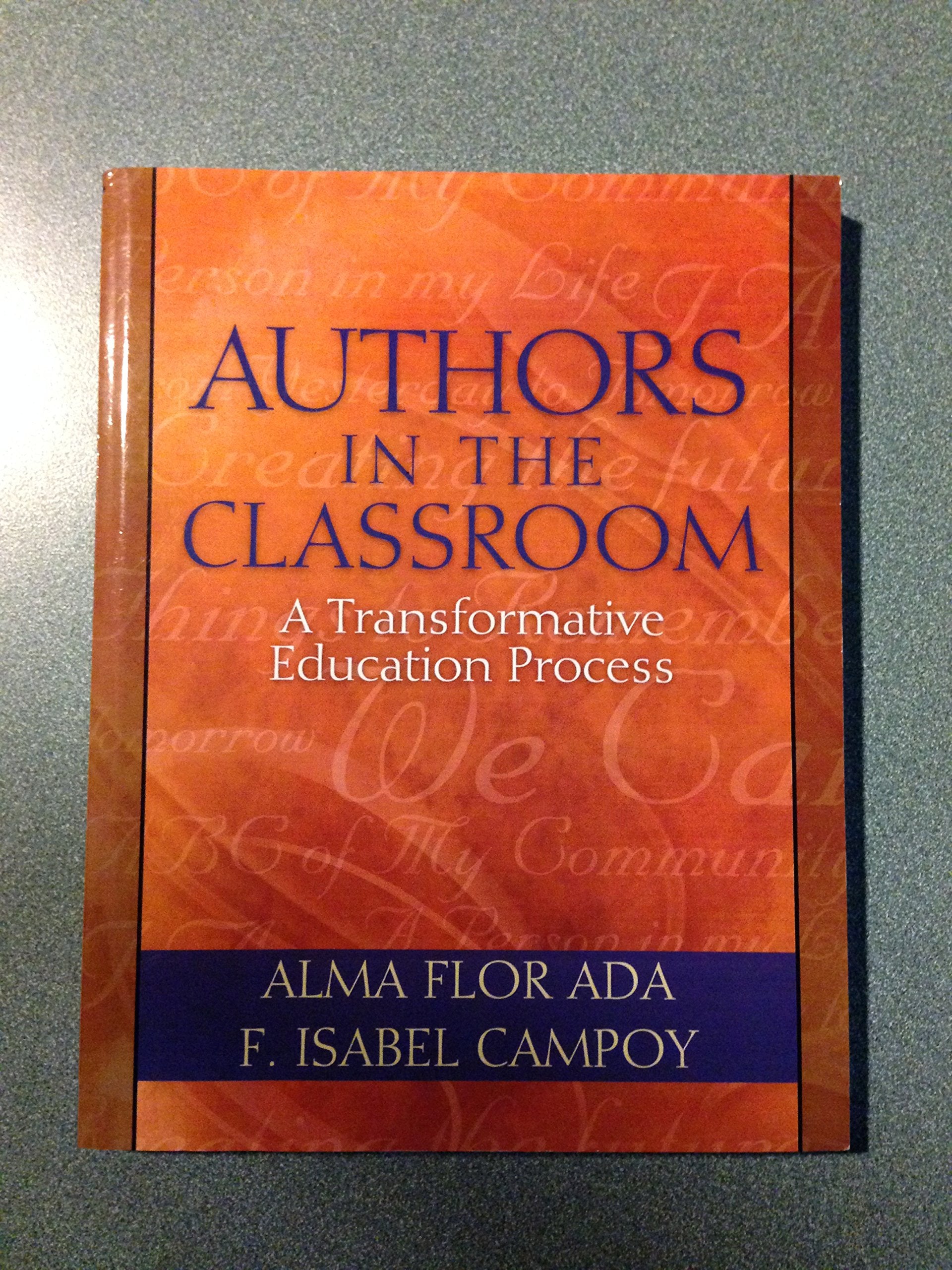
Authors in the Classroom: A Transformative Education Process,Used
Sold by Ergodebooks, an authorized reseller.
Returns accepted within 30 days | support@ergodebooks.com
Shipping Information
- Free Standard Shipping — United States only
- Processing Time: 3–5 business days
- Estimated Delivery: 6–10 business days after dispatch
- Double-boxed, fully insured & discreetly packaged
- Tracking number sent via email once dispatched
Returns & Refund
Returns accepted within 30 days of delivery.
Damaged or Defective Item
Free return shipping + replacement or full refund
Wrong Item Received
Free return shipping + replacement or full refund
Change of Mind
Return shipping at customer's expense · 25% restocking fee applies
Payment Option

From Language Arts 'It is inappropriate to expect teachers to develop in their students skills with which they are not confident themselves,' claim Ada and Campoy (p.2). Authors in the Classroom shares years of these authors' experiences working to transform teachers into authors, 'from followers of other people's agenda to shapers of our own ideas.' (p. 4). One of the most odious aspects of standardized curricula is the instruction of all students in the same way. In order to reach maximum educational potential, students; identities need nourishment. In the first chapter, Ada and Campoy educate readers in antibias ethics with informational text and exploration that readers can conduct on their own attitudes through journaling. This counterplay between information and reflection is the cornerstone of the book.To live the process advocated by Ada and Campoy, teachers (readers) are encouraged to make their own writing public by 'publishing' books; by doing so, they provide models that an instruct and motivate students and their families to write about and publish their own life stories and ideas. Honest, accepting dialogues, where individuals ask real questions, express different points of views, and help teach, model, practice and problem solve, provide classroom strategies that undergird the writing program.The second half of the book contains ten units on topics such as Affirming Self, Understanding the Past, Creating the Future and Learning to Know. There are multiple examples of student, teacher, and familyauthored writing, stimulated by rich children's literature in many different genres. Annotated bibliographies of books for children and young adults accompany each chapter. Using this authoring process, individuals create many small books that can be read by others inside and outside their classroom. By the time you finish reading this captivating book, you have no doubt that the students who have engaged in this process will be readers and writers for life. No matter what happens during the rest of the day, this literacy format needs to fit between the cracks, for from there it will move to center stage.Linda Leonard Lamme, School of Teaching and Learning, College of Education, University of Florida. Language Arts, Vol. 82, No. 3, January 2005, page 222
⚠️ WARNING (California Proposition 65):
This product may contain chemicals known to the State of California to cause cancer, birth defects, or other reproductive harm.
For more information, please visit www.P65Warnings.ca.gov.