
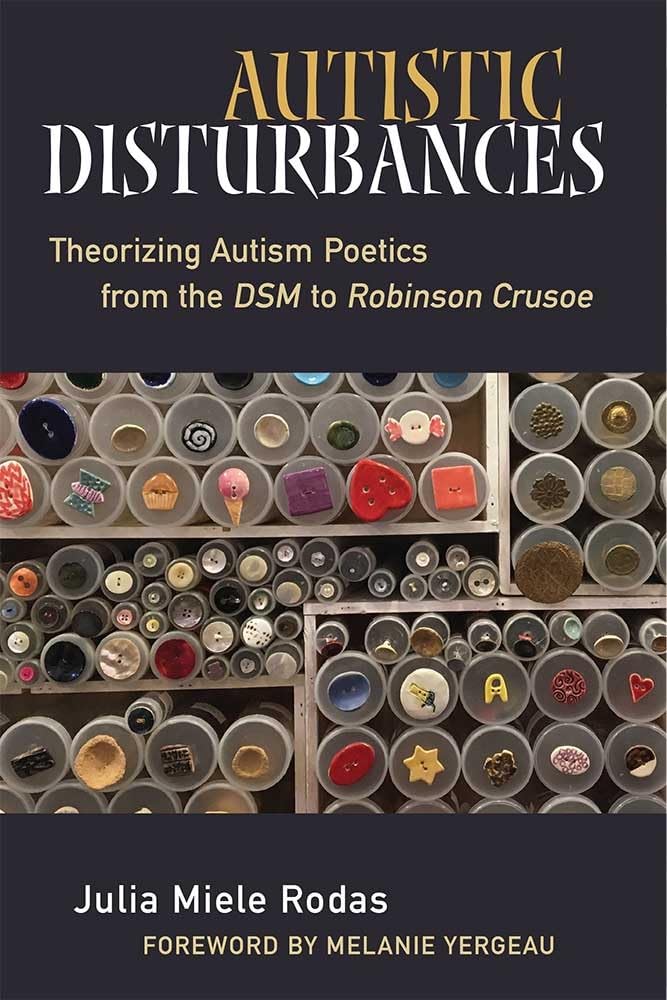
Title
Autistic Disturbances: Theorizing Autism Poetics from the DSM to Robinson Crusoe (Corporealities: Discourses Of Disability),Used
Sold by Ergodebooks, an authorized reseller.
Returns accepted within 30 days | support@ergodebooks.com
Shipping Information
- Free Standard Shipping — United States only
- Processing Time: 3–5 business days
- Estimated Delivery: 6–10 business days after dispatch
- Double-boxed, fully insured & discreetly packaged
- Tracking number sent via email once dispatched
Returns & Refund
Returns accepted within 30 days of delivery.
Damaged or Defective Item
Free return shipping + replacement or full refund
Wrong Item Received
Free return shipping + replacement or full refund
Change of Mind
Return shipping at customer's expense · 25% restocking fee applies
Payment Option

While research on autism has sometimes focused on special talents or abilities, autism is typically characterized as impoverished or defective when it comes to language. Autistic Disturbances reveals the ways interpreters have failed to register the real creative valence of autistic language and offers a theoretical framework for understanding the distinctive aesthetics of autistic rhetoric and semiotics. Reinterpreting characteristic autistic verbal practices such as repetition in the context of a more widely respected literary canon, Julia Miele Rodas argues that autistic language is actually an essential part of mainstream literary aesthetics, visible in poetry by Walt Whitman and Gertrude Stein, in novels by Charlotte Bront and Daniel Defoe, in life writing by Andy Warhol, and even in writing by figures from popular culture.Autistic Disturbances pursues these resonances and explores the tensions of language and culture that lead to the classification of some verbal expression as disordered while other, similar expression enjoys prized status as literature. It identifies the most characteristic patterns of autistic expressionrepetition, monologue, ejaculation, verbal ordering or listmaking, and neologismand adopts new language to describe and reimagine these categories in aesthetically productive terms. In so doing, the book seeks to redress the place of verbal autistic language, to argue for the value and complexity of autistic ways of speaking, and to invite recognition of an obscured tradition of literary autism at the very center of AngloAmerican text culture.
⚠️ WARNING (California Proposition 65):
This product may contain chemicals known to the State of California to cause cancer, birth defects, or other reproductive harm.
For more information, please visit www.P65Warnings.ca.gov.
- Q: What is the page count of this book? A: This book contains two hundred forty-eight pages. It provides an in-depth exploration of autistic language and its literary significance.
- Q: What is the binding type of this book? A: The binding type is paperback. This makes it lightweight and easy to handle for readers.
- Q: What are the dimensions of this book? A: The dimensions are six inches in length, nine inches in height, and zero point nine one inches in width. These measurements make it a convenient size for reading.
- Q: Who is the author of this book? A: The author is Julia Miele Rodas. She offers a unique perspective on autism and literature.
- Q: What is the main topic of this book? A: The book discusses the aesthetics of autistic language. It challenges traditional views on autism and highlights its literary contributions.
- Q: How can I use this book for research? A: You can use this book as a critical resource for understanding autism in literature. It's beneficial for academics and anyone interested in disability studies.
- Q: Is this book suitable for all age groups? A: Yes, this book is suitable for adults and older teens. It covers complex themes that are best understood by mature readers.
- Q: Can this book be used in a classroom setting? A: Yes, it can be used in courses on disability studies or literature. It provides valuable insights that can stimulate discussion among students.
- Q: How should I store this book? A: Store this book in a cool, dry place. Keeping it away from direct sunlight will help preserve its condition.
- Q: Can this book be cleaned if it gets dirty? A: Yes, you can gently wipe the cover with a damp cloth. Avoid using harsh chemicals to prevent damage.
- Q: What if I receive a damaged copy of this book? A: If your copy is damaged, you can contact customer support for a return or exchange. Make sure to have your order details ready.
- Q: Is there a warranty for this book? A: No, there is no warranty for this book. However, you can return it if it arrives damaged.
- Q: How does this book compare to other books on autism? A: This book offers a unique literary perspective on autism, focusing on its aesthetic contributions, which is less common in other works.
- Q: Is this book a good choice for someone new to the topic of autism? A: Yes, it's a good introduction for those new to autism studies. It combines literary analysis with discussions on autistic expression.
- Q: What themes are explored in this book? A: The book explores themes such as language, culture, and the classification of verbal expression. It highlights the artistic value of autistic communication.