
Title
Autobiographical Tightropes: Simone De Beauvoir, Nathalie Sarraute, Marguerite Duras, Monique Wittig, And Maryse Cond,Used
Sold by Ergodebooks, an authorized reseller.
Returns accepted within 30 days | support@ergodebooks.com
Shipping Information
- Free Standard Shipping — United States only
- Processing Time: 3–5 business days
- Estimated Delivery: 6–10 business days after dispatch
- Double-boxed, fully insured & discreetly packaged
- Tracking number sent via email once dispatched
Returns & Refund
Returns accepted within 30 days of delivery.
Damaged or Defective Item
Free return shipping + replacement or full refund
Wrong Item Received
Free return shipping + replacement or full refund
Change of Mind
Return shipping at customer's expense · 25% restocking fee applies
Payment Option

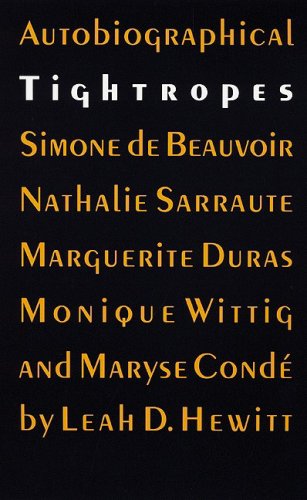
In order to write' said Simone de Beauvoir, 'the first essential condition is that reality can no longer be taken for granted.' She and four other French women writers of the second half of the twentieth centuryNathalie Sarraute, Marguerite Duras, Monique Wittig, and Maryse Condillustrate that producing autobiography is like performing a tightrope act on the slippery line between fact and fiction.Autobiographical Tightropes emphasizes the tension in the works of these major writers as they move in and out of 'experience' and 'literature,' violating the neat boundaries between genres and confusing the distinctions between remembering and creating. Focusing on selected works, Leah D. Hewitt for the first time anywhere explores the connections among the authors. In doing so she shows how contemporary women's autobiography in France links with feminist issues, literary tradition and trends, and postmodern theories of writing.In light of these theories Hewitt offers a new reading of de Beauvoir's memoirs and reveals how her attempt to represent the past faithfully is undone by irony, by literary and 'feminine' detours. Other analysts of Nathalie Sarraute's writing have dwelt mainly on formal considerations of the New Novel, but Hewitt exposes a repressed, forbidden feminine aspect in her literary innovations. Unlike Sarraute, Duras cannot be connected with just one literary movement, political stance, style, or kind of feminism because her writing, largely autobiographical, is marked by chameleon like transformations. The chapters on Wittig and Cond show how, within the bounds of feminism, lesbians and women of color challenge the individualistic premises of autobiography. Hewitt demonstrates that, despite vast differences among these five writers, all of them reveal in their autobiographical works the self's need of a fictive other.
⚠️ WARNING (California Proposition 65):
This product may contain chemicals known to the State of California to cause cancer, birth defects, or other reproductive harm.
For more information, please visit www.P65Warnings.ca.gov.