
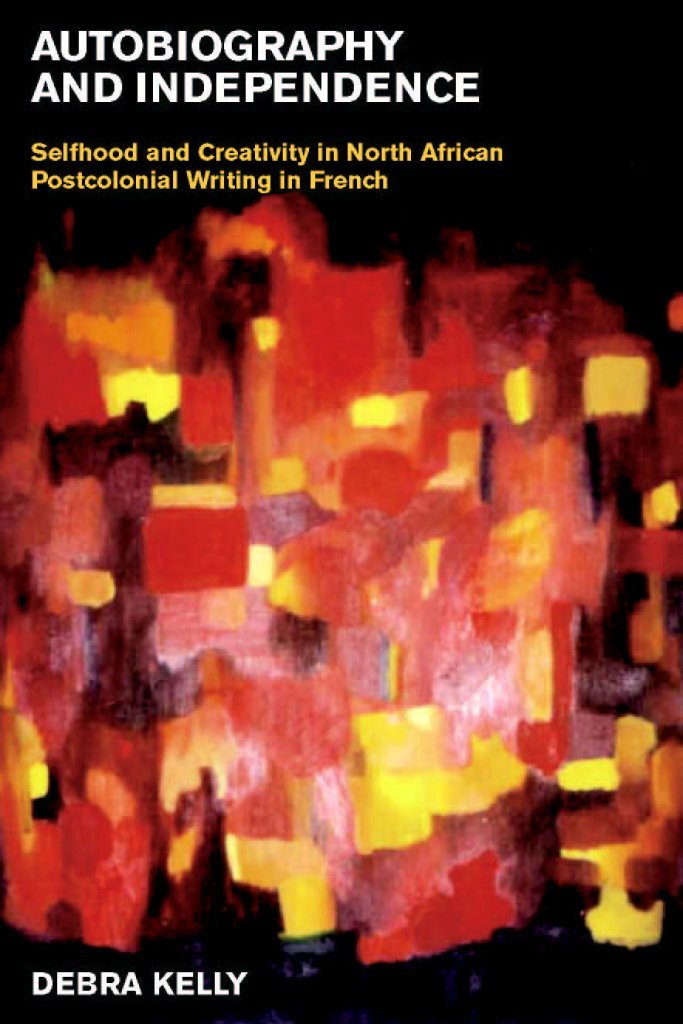
Title
Autobiography And Independence: Self And Identity In North African Writing In French (Contemporary French And Francophone Cultur
Sold by Ergodebooks, an authorized reseller.
Returns accepted within 30 days | support@ergodebooks.com
Shipping Information
- Free Standard Shipping — United States only
- Processing Time: 3–5 business days
- Estimated Delivery: 6–10 business days after dispatch
- Double-boxed, fully insured & discreetly packaged
- Tracking number sent via email once dispatched
Returns & Refund
Returns accepted within 30 days of delivery.
Damaged or Defective Item
Free return shipping + replacement or full refund
Wrong Item Received
Free return shipping + replacement or full refund
Change of Mind
Return shipping at customer's expense · 25% restocking fee applies
Payment Option

This Book Offers An Indepth Study Of The Autobiographical Writings Of Four Twentiethcentury Writers From North Africa, Assia Djebar, Mouloud Feraoun, Abdelkbir Khatibi And Albert Memmi, As They Explore Issues Of Language, Identity And The Individual'S Relationship To History. The Book Places These Writers In A Clearly Defined Theoretical Context, Introducing And Contextualising Each Of The Four Through The Application Of Postcolonial Studies And Literary Theory On Autobiography Linked To Close Textual Reading Of Their Works. Avoiding Both Psychoanalytical Theory And Approaches Concerned Primarily With The Writer'S 'Testimony Value', Kelly Concentrates Instead On The Poetic And Literary Qualities Of Each Author'S Work, Dwelling On The Politics And Poetics Of Identity, As Well As The Ethics And Aesthetics Of This Literature. She Includes Clear Discussions Of Key Terms Such As 'Postcolonial', 'Francophone', And 'Autobiography', Which Current Academic Discourse Has Rendered Very Complex And Even Opaque. The Book Includes A Fascinating Photograph Of Two Stone Tablets Inscribed With Punic And Numidian Scripts, Now Held In The British Museum, Which Assia Djebar Writes About At Length In One Of The Texts Studied In The Book.
⚠️ WARNING (California Proposition 65):
This product may contain chemicals known to the State of California to cause cancer, birth defects, or other reproductive harm.
For more information, please visit www.P65Warnings.ca.gov.
- Q: What is the page count of this book? A: This book contains four hundred eight pages. It provides a comprehensive exploration of autobiographical writings from North African authors.
- Q: What is the binding type of this book? A: This book is bound in hardcover. Hardcover bindings are designed for durability and longevity.
- Q: Who is the author of this book? A: The author of this book is Debra Kelly. She focuses on the intersection of identity and literature in North African writing.
- Q: What themes are covered in this book? A: This book explores themes of identity, language, and the relationship between individuals and history. It focuses on North African writers' contributions to these topics.
- Q: What is the genre of this book? A: This book falls under the genre of literary criticism and postcolonial studies. It analyses autobiographical literature within a theoretical framework.
- Q: Is this book suitable for academic use? A: Yes, this book is suitable for academic use. It includes theoretical discussions and critical analyses relevant to literary studies.
- Q: How do I care for this hardcover book? A: To care for this hardcover book, store it upright in a dry place. Avoid exposure to direct sunlight to preserve the cover and pages.
- Q: Can I clean the book's cover? A: Yes, you can clean the book's cover gently. Use a soft, dry cloth to remove dust without damaging the surface.
- Q: Is this book intended for adult readers? A: Yes, this book is intended for adult readers. Its themes and discussions are complex and require a mature understanding.
- Q: What if the book arrives damaged? A: If the book arrives damaged, you should contact the seller for a return or exchange. Most retailers have policies in place for such issues.
- Q: Is this book a good choice for someone new to literary theory? A: Yes, this book is a good choice for newcomers to literary theory. It introduces key concepts in an accessible manner while providing in-depth analyses.
- Q: What kind of photographs are included in the book? A: The book includes a photograph of two stone tablets inscribed with Punic and Numidian scripts. This image enhances the discussion of Assia Djebar's work.
- Q: Does this book reference specific literary theories? A: Yes, the book references postcolonial studies and literary theory. It contextualizes the writings within these frameworks.
- Q: Is the writing style of the book academic? A: Yes, the writing style of the book is academic. It is intended for readers interested in serious literary analysis and critique.
- Q: Who are the key authors discussed in the book? A: The key authors discussed in the book are Assia Djebar, Mouloud Feraoun, Abdelkébir Khatibi, and Albert Memmi. Each author is analyzed in depth.
- Q: What does the book say about the politics of identity? A: The book discusses the politics of identity through the lens of literary works by North African authors. It examines how these themes manifest in their autobiographies.