
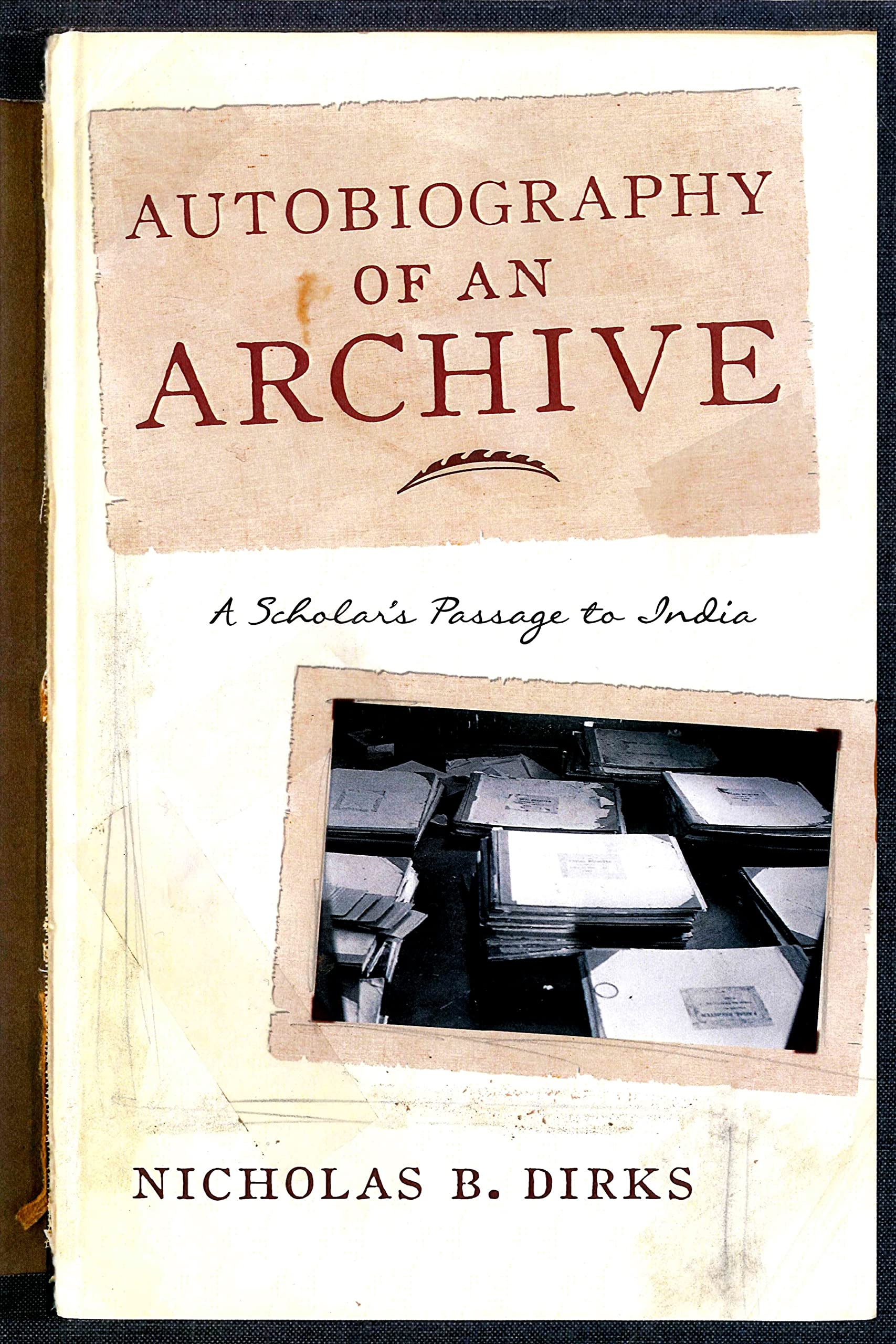
Title
Autobiography of an Archive: A Scholar's Passage to India (Cultures of History),Used
Sold by Ergodebooks, an authorized reseller.
Returns accepted within 30 days | support@ergodebooks.com
Shipping Information
- Free Standard Shipping — United States only
- Processing Time: 3–5 business days
- Estimated Delivery: 6–10 business days after dispatch
- Double-boxed, fully insured & discreetly packaged
- Tracking number sent via email once dispatched
Returns & Refund
Returns accepted within 30 days of delivery.
Damaged or Defective Item
Free return shipping + replacement or full refund
Wrong Item Received
Free return shipping + replacement or full refund
Change of Mind
Return shipping at customer's expense · 25% restocking fee applies
Payment Option

The decades between 1970 and the end of the twentieth century saw the disciplines of history and anthropology draw closer together, with historians paying more attention to social and cultural factors and the significance of everyday experience in the study of the past. The people, rather than elite actors, became the focus of their inquiry, and anthropological insights into agriculture, kinship, ritual, and folk customs enabled historians to develop richer and more representative narratives. The intersection of these two disciplines also helped scholars reframe the legacies of empire and the roots of colonial knowledge.In this collection of essays and lectures, history's turn from high politics and formal intellectual history toward ordinary lives and cultural rhythms is vividly reflected in a scholar's intellectual journey to India. Nicholas B. Dirks recounts his early study of kingship in India, the rise of the caste system, the emergence of English imperial interest in controlling markets and India's political regimes, and the development of a crisis in sovereignty that led to an extraordinary nationalist struggle. He shares his personal encounters with archives that provided the sources and boundaries for research on these subjects, ultimately revealing the limits of colonial knowledge and single disciplinary perspectives. Drawing parallels to the way American universities balance the liberal arts and specialized research today, Dirks, who has occupied senior administrative positions and now leads the University of California at Berkeley, encourages scholars to continue to apply multiple approaches to their research and build a more global and ethical archive.
⚠️ WARNING (California Proposition 65):
This product may contain chemicals known to the State of California to cause cancer, birth defects, or other reproductive harm.
For more information, please visit www.P65Warnings.ca.gov.