
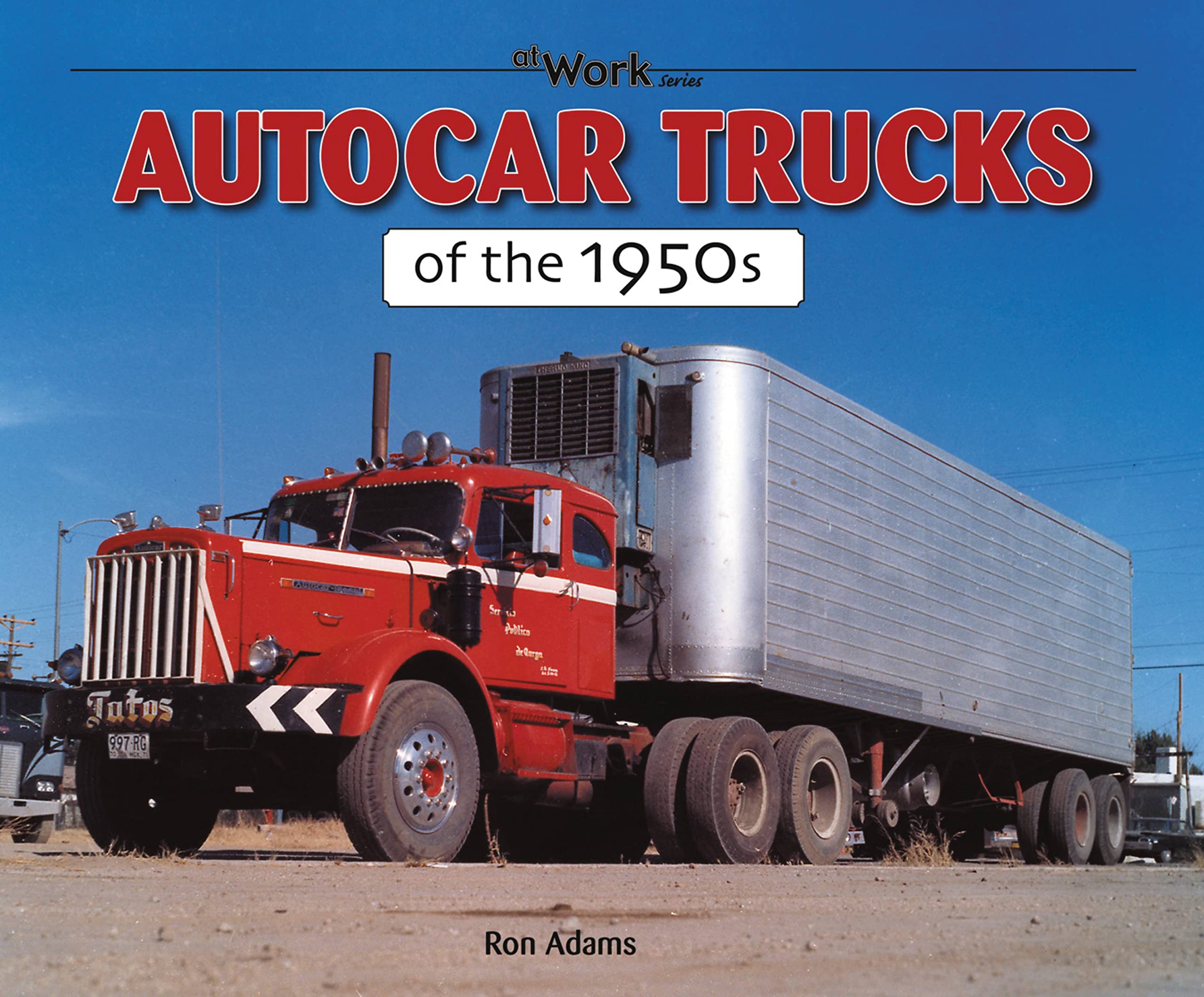
Title
Autocar Trucks of the 1950s (at Work),New
Sold by Ergodebooks, an authorized reseller.
Returns accepted within 30 days | support@ergodebooks.com
Shipping Information
- Free Standard Shipping — United States only
- Processing Time: 3–5 business days
- Estimated Delivery: 6–10 business days after dispatch
- Double-boxed, fully insured & discreetly packaged
- Tracking number sent via email once dispatched
Returns & Refund
Returns accepted within 30 days of delivery.
Damaged or Defective Item
Free return shipping + replacement or full refund
Wrong Item Received
Free return shipping + replacement or full refund
Change of Mind
Return shipping at customer's expense · 25% restocking fee applies
Payment Option

Autocars roots go way back into the early 1900s and became known for tough and rugged trucks. When WWII came, very few trucks for civilian use were produced and by the end many trucks were worn out from constant use. After the war, civilian production began again in full force because of the lack of new trucks. In 1950, when Autocar introduced the new driver cab, the louver design was eliminated. The old style flat windshield sleeper cabs were used up until 1953 (the same year that Autocar was purchased by the White Motor Co.) when the new sleeper cab was introduced. Autocar became the topoftheline marque for White and marketing focused primarily on specialized applications, such as construction, logging, mining and oil industries. See the rest of the Worlds Finest helping do their part to revive America in the 1950s.
⚠️ WARNING (California Proposition 65):
This product may contain chemicals known to the State of California to cause cancer, birth defects, or other reproductive harm.
For more information, please visit www.P65Warnings.ca.gov.
- Q: What is the main focus of the book 'Autocar Trucks of the 1950s (at Work)'? A: The book focuses on the history and development of Autocar trucks in the 1950s, detailing their rugged design and specialized applications in industries like construction, logging, mining, and oil.
- Q: What type of condition is the book in? A: The book is listed as a 'Used Book in Good Condition', indicating it has been pre-owned but is still in a satisfactory state for reading.
- Q: How many pages does the book contain? A: The book contains 128 pages, providing a detailed exploration of Autocar trucks and their significance during the 1950s.
- Q: Who is the author of the book? A: The book is authored by Ron Adams, who provides insights into the history and impact of Autocar trucks.
- Q: What is the publication date of 'Autocar Trucks of the 1950s (at Work)'? A: The book was published on May 15, 2009, making it a relatively recent addition to literature on automotive history.
- Q: What edition of the book is available for purchase? A: The book is available in an 'Illustrated' edition, which typically includes images or illustrations that complement the text.
- Q: Is the book suitable for collectors or enthusiasts? A: Yes, this book is suitable for collectors and automotive enthusiasts interested in the history of trucks and the specific developments of the Autocar brand.
- Q: What binding type does the book have? A: The book is bound in paperback, making it lightweight and portable for readers.
- Q: Can I find information about Autocar's history during WWII in this book? A: Yes, the book discusses the impact of WWII on truck production and how Autocar adapted post-war to meet civilian needs.
- Q: Does this book cover the transition in truck designs after the 1950s? A: The book primarily focuses on the 1950s, including design changes and innovations during that decade, but does not extensively cover post-1950s developments.