
Title
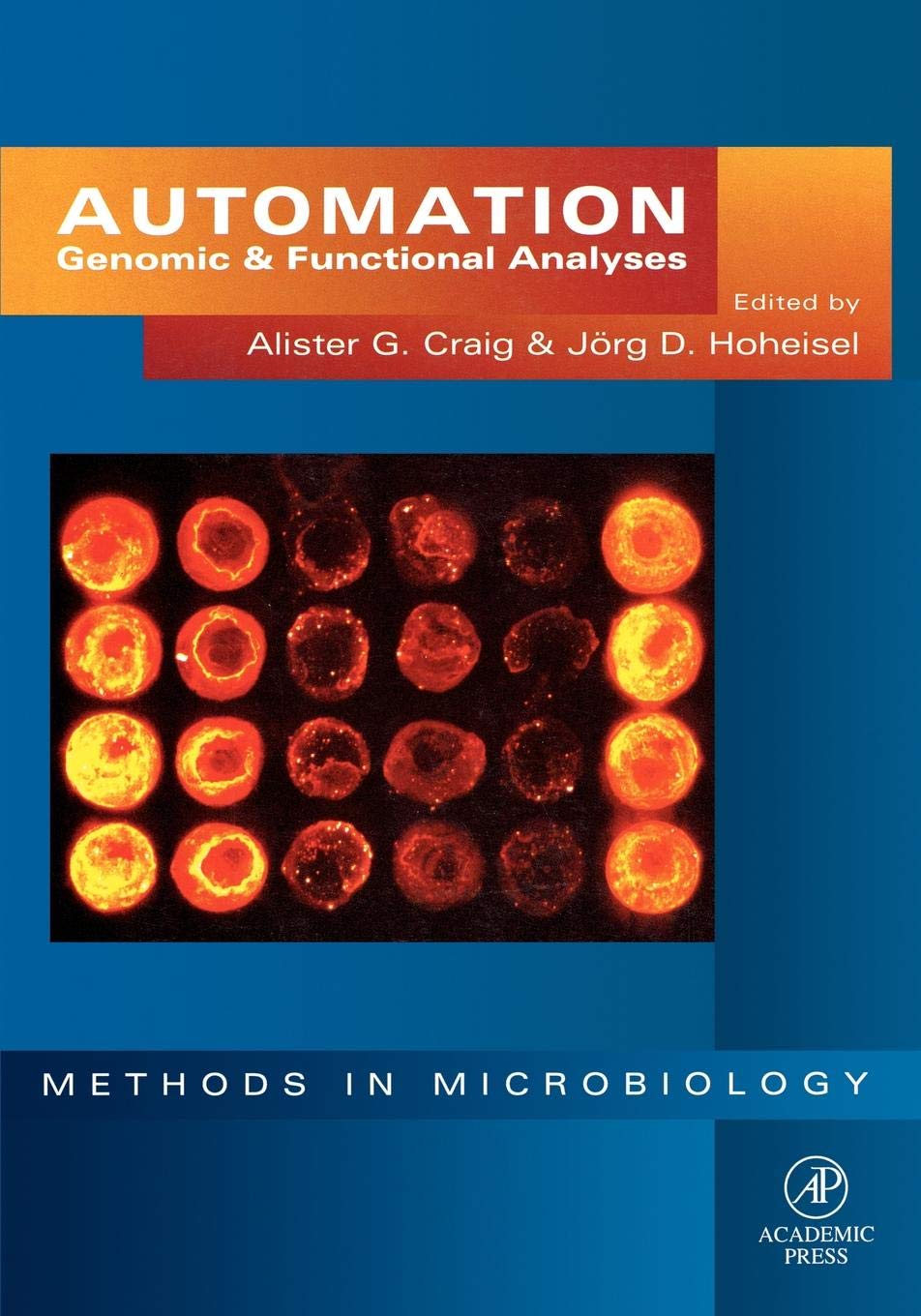
Automation: Genomic And Functional Analyses (Volume 28) (Methods In Microbiology, Volume 28),Used
Sold by Ergodebooks, an authorized reseller.
Returns accepted within 30 days | support@ergodebooks.com
Shipping Information
- Free Standard Shipping — United States only
- Processing Time: 3–5 business days
- Estimated Delivery: 6–10 business days after dispatch
- Double-boxed, fully insured & discreetly packaged
- Tracking number sent via email once dispatched
Returns & Refund
Returns accepted within 30 days of delivery.
Damaged or Defective Item
Free return shipping + replacement or full refund
Wrong Item Received
Free return shipping + replacement or full refund
Change of Mind
Return shipping at customer's expense · 25% restocking fee applies
Payment Option

Automation is the major future trend for many areas in microbiology, molecular biology, and biochemistry, among other disciplines. It is an enormously exciting area, where techniques and assays that were once repetitive, tedious, and time consuming can be performed robotically, liberating the time of researchers and hospital laboratory workers for more interesting work. Many techniques have now been automated and often miniaturized, including PCR analysis, DNA/RNA preparation, diagnostic test (e.g., Pap tests), compound screening, and of course, sequencing. Some major advances, notably in Professor Leroy Hood's group, have resulted in the ability to perform thousands of assays simultaneously on a normal microscope slide.Automation, edited by two of the leading experts in the field, presents the very latest experimental techniques explained in detail. This book has succeeded in bringing together researchers at the forefront of clone library construction, genome analysis, sequencing, computational data evaluation and functional analysis, to provide insight into this 'new age' of research based on genomic and chemical screening. Describes automated procedures used in microbiology and molecular biology Includes developments in robotics and vision systems Features automation in library picking, presentation and analysis Discusses paralogous duplications in microbial genomes Covers deciphering genomes through automated largescale sequencing Describes and stresses the need for functional analyses Internationally acclaimed contributors, including Professor Leroy Hood
⚠️ WARNING (California Proposition 65):
This product may contain chemicals known to the State of California to cause cancer, birth defects, or other reproductive harm.
For more information, please visit www.P65Warnings.ca.gov.