
Title
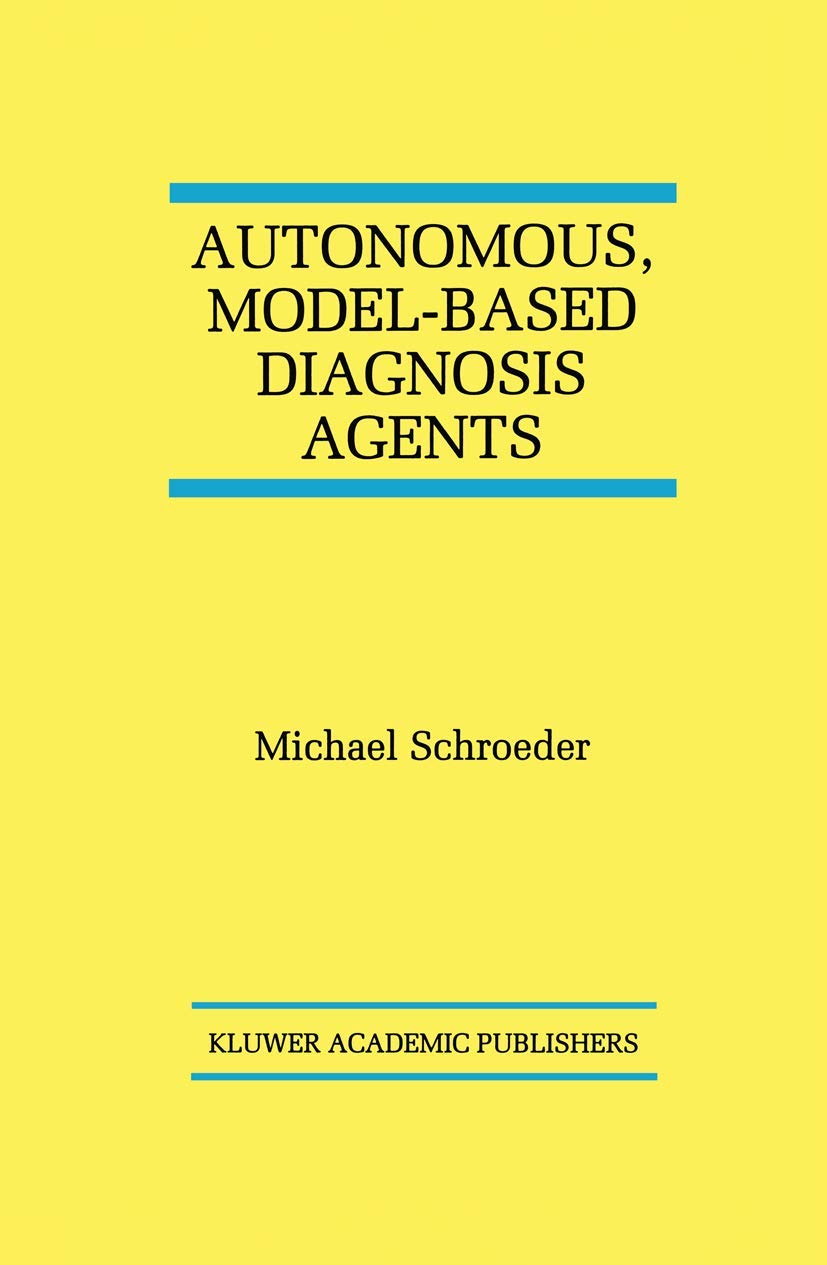
Autonomous, ModelBased Diagnosis Agents (The Springer International Series in Engineering and Computer Science, 442),Used
Sold by Ergodebooks, an authorized reseller.
Returns accepted within 30 days | support@ergodebooks.com
Shipping Information
- Free Standard Shipping — United States only
- Processing Time: 3–5 business days
- Estimated Delivery: 6–10 business days after dispatch
- Double-boxed, fully insured & discreetly packaged
- Tracking number sent via email once dispatched
Returns & Refund
Returns accepted within 30 days of delivery.
Damaged or Defective Item
Free return shipping + replacement or full refund
Wrong Item Received
Free return shipping + replacement or full refund
Change of Mind
Return shipping at customer's expense · 25% restocking fee applies
Payment Option

Autonomous, ModelBased Diagnosis Agents defines and describes the implementation of an architecture for autonomous, modelbased diagnosis agents. It does this by developing a logic programming approach for modelbased diagnosis and introducing strategies to deal with more complex diagnosis problems, and then embedding the diagnosis framework into the agent architecture of vivid agents.Autonomous, ModelBased Diagnosis Agents surveys extended logic programming and shows how this expressive language is used to model diagnosis problems stemming from applications such as digital circuits, traffic control, integrity checking of a chemical database, alarmcorrelation in cellular phone networks, diagnosis of an automatic mirror furnace, and diagnosis of communication protocols. The book reviews a bottomup algorithm to remove contradiction from extended logic programs and substantially improves it by topdown evaluation of extended logic programs. Both algorithms are evaluated in the circuit domain including some of the ISCAS85 benchmark circuits.This comprehensive indepth study of concepts, architectures, and implementation of autonomous, modelbased diagnosis agents will be of great value for researchers, engineers, and graduate students with a background in artificial intelligence. For practitioners, it provides three main contributions: first, it provides many examples from diverse areas such as alarm correlation in phone networks to inconsistency checking in databases; second, it describes an architecture to develop agents; and third, it describes a sophisticated and declarative implementation of the concepts and architectures introduced.
⚠️ WARNING (California Proposition 65):
This product may contain chemicals known to the State of California to cause cancer, birth defects, or other reproductive harm.
For more information, please visit www.P65Warnings.ca.gov.