
Title
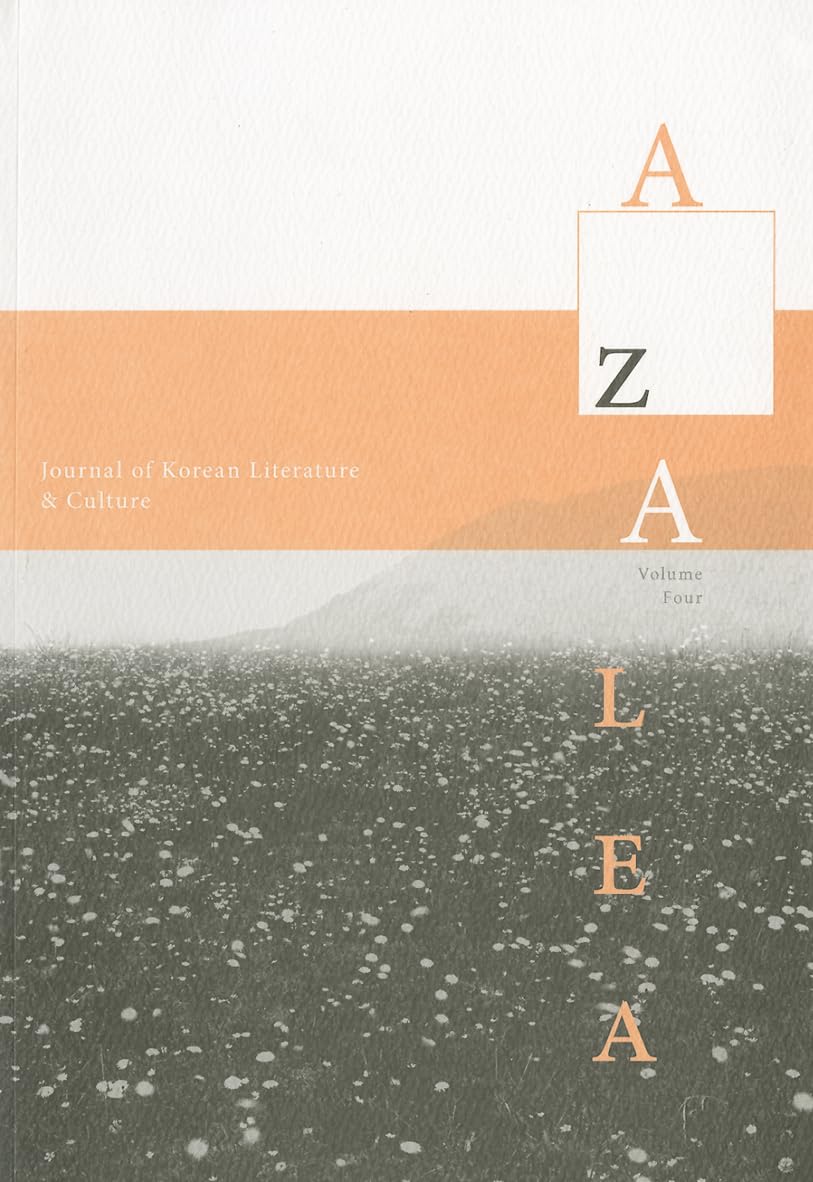
Azalea 4: Journal of Korean Literature and Culture (Azalea: Journal of Korean Literature and Culture),Used
Sold by Ergodebooks, an authorized reseller.
Returns accepted within 30 days | support@ergodebooks.com
Shipping Information
- Free Standard Shipping — United States only
- Processing Time: 3–5 business days
- Estimated Delivery: 6–10 business days after dispatch
- Double-boxed, fully insured & discreetly packaged
- Tracking number sent via email once dispatched
Returns & Refund
Returns accepted within 30 days of delivery.
Damaged or Defective Item
Free return shipping + replacement or full refund
Wrong Item Received
Free return shipping + replacement or full refund
Change of Mind
Return shipping at customer's expense · 25% restocking fee applies
Payment Option

How do writers make it new in their work? How do they find new readers, publishers, and in this new century, languages and audiences beyond the southern half of the Korean peninsula? Azalea has sought to embody and exemplify that quest, publishing the new work of today's Korean literary world, and seeking to make connections, to be a bridge to readers in the English language realms of North America and elsewhere.The current issue presents new writers of fiction and poetry through the work of several different translators. An interview with Gong Jiyoung offers the writer's views on the presentday Korean literary world. A Korean writer, to be sure, Gong has spent substantial intervals outside of Korea, and even in Korea, somewhat apart from the literary world. As she says, at least among women readers she is viewed as "someone who used to be bound by the fetters conventionally applied to women in Korea, but who has shaken them off."We also offer a special feature section on contemporary sijo poetry. The sijo poet Hong Sungran compiled for this issue a selection of fifty sijo poets, and several different translators have chosen poets to their various likings, and here offer their readings. To introduce the section and the idea of modern sijo, an essay presents the life work and the writings of Yi Pyonggi (18911968), whose 1932 newspaper article "Let's Revitalize the Sijo" might be read as a Korean response to Ezra Pound: "Make itthe sijonew!"Special sections on the writers Yi Sang and Yi Kwangsu, landmark figures from the same Korean Modern period as Yi Pyonggi, explore how these seminal figures sought also to make literature new through their work in the literary world they both inhabited and distanced themselves from. Local, urban, dialect, foreign: these vectors of their literary universe still seem to mark the realms of contemporary Korean literature some ninety years later.
⚠️ WARNING (California Proposition 65):
This product may contain chemicals known to the State of California to cause cancer, birth defects, or other reproductive harm.
For more information, please visit www.P65Warnings.ca.gov.