
Title
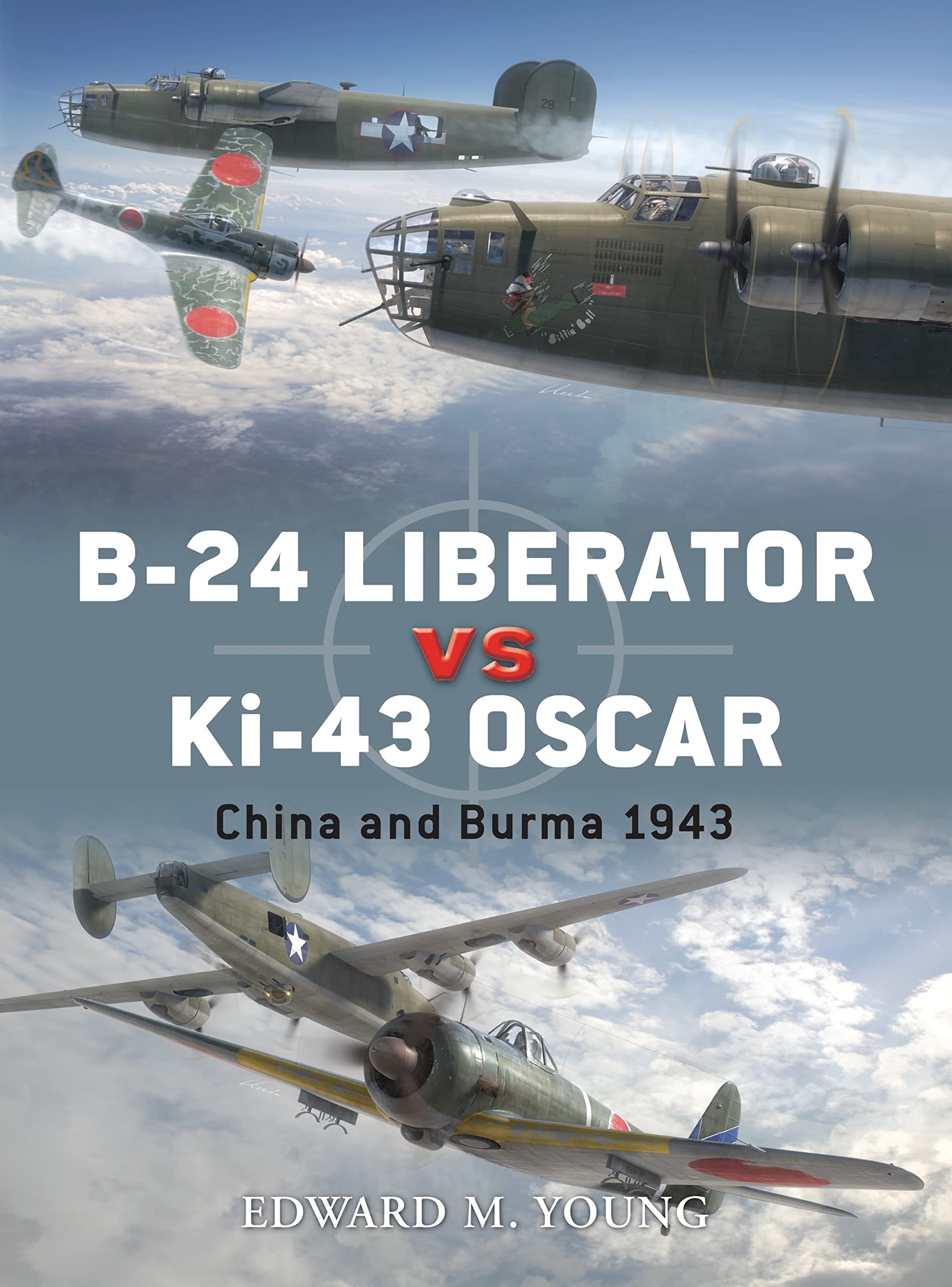
B24 Liberator vs Ki43 Oscar: China and Burma 1943 (Duel, 41),Used
Sold by Ergodebooks, an authorized reseller.
Returns accepted within 30 days | support@ergodebooks.com
Shipping Information
- Free Standard Shipping — United States only
- Processing Time: 3–5 business days
- Estimated Delivery: 6–10 business days after dispatch
- Double-boxed, fully insured & discreetly packaged
- Tracking number sent via email once dispatched
Returns & Refund
Returns accepted within 30 days of delivery.
Damaged or Defective Item
Free return shipping + replacement or full refund
Wrong Item Received
Free return shipping + replacement or full refund
Change of Mind
Return shipping at customer's expense · 25% restocking fee applies
Payment Option

During the late 1930s an armament race developed between bombers and the fighters that were bent on stopping them. The development of multiengined, multigun, allmetal bombers forced a corresponding increase in fighter armament which, in turn, led to further attempts to improve bomber armament to ensure its ability to survive in the face of hostile fighters. The US Army Air Corps (USAAC) requested that powered gun turrets be fitted to its two principal longrange bombers, the B17 Flying Fortress and the B24 Liberator. In reviewing reports of air combat from Spain, China and the early stages of the war in Europe, the USAAC assumed that the greatest danger to the bomber would be attacks from the rear quarter, and thus took steps to ensure that both the B17 and the B24 had tail turrets. A powered turret above and behind the cockpit could deal, it was felt, with attacks from the frontal quarter so that the nose armament for the B17 and the B24 consisted of several handheld 0.50cal machine guns, but not a powered turret. German and Japanese fighter pilots would soon discover and exploit this weakness. The JAAF's response to the increase in bomber armament was to develop a socalled heavy fighter in parallel to the development of the Army's main fighter, the Ki43 Hayabusa (known as the 'Oscar'), which sacrificed armament for superior manoeuvrability. Yet the inability of the Japanese aircraft industry to produce these heavier fighters (the Kawasaki Ki60 and Nakajima Ki44) in sufficient quantities meant that the JAAF had no alternative but to rely on the Ki43 to intercept American heavy bombers. Under the ideal conditions that existed in the Burma and China theatres for much of 1943, the absence of escort fighters allowed the Ki43 pilots to press home their attacks to devastating effect.
⚠️ WARNING (California Proposition 65):
This product may contain chemicals known to the State of California to cause cancer, birth defects, or other reproductive harm.
For more information, please visit www.P65Warnings.ca.gov.