If you have any questions, you are always welcome to contact us. We'll get back to you as soon as possible, withing 24 hours on weekdays.
Customer service
All questions about your order, return and delivery must be sent to our customer service team by e-mail at yourstore@yourdomain.com
Sale & Press
If you are interested in selling our products, need more information about our brand or wish to make a collaboration, please contact us at press@yourdomain.com
Help
If you have any questions, you are always welcome to contact us. We'll get back to you as soon as possible, withing 24 hours on weekdays.
Customer service
All questions about your order, return and delivery must be sent to our customer service team by e-mail at yourstore@yourdomain.com
Sale & Press
If you are interested in selling our products, need more information about our brand or wish to make a collaboration, please contact us at press@yourdomain.com
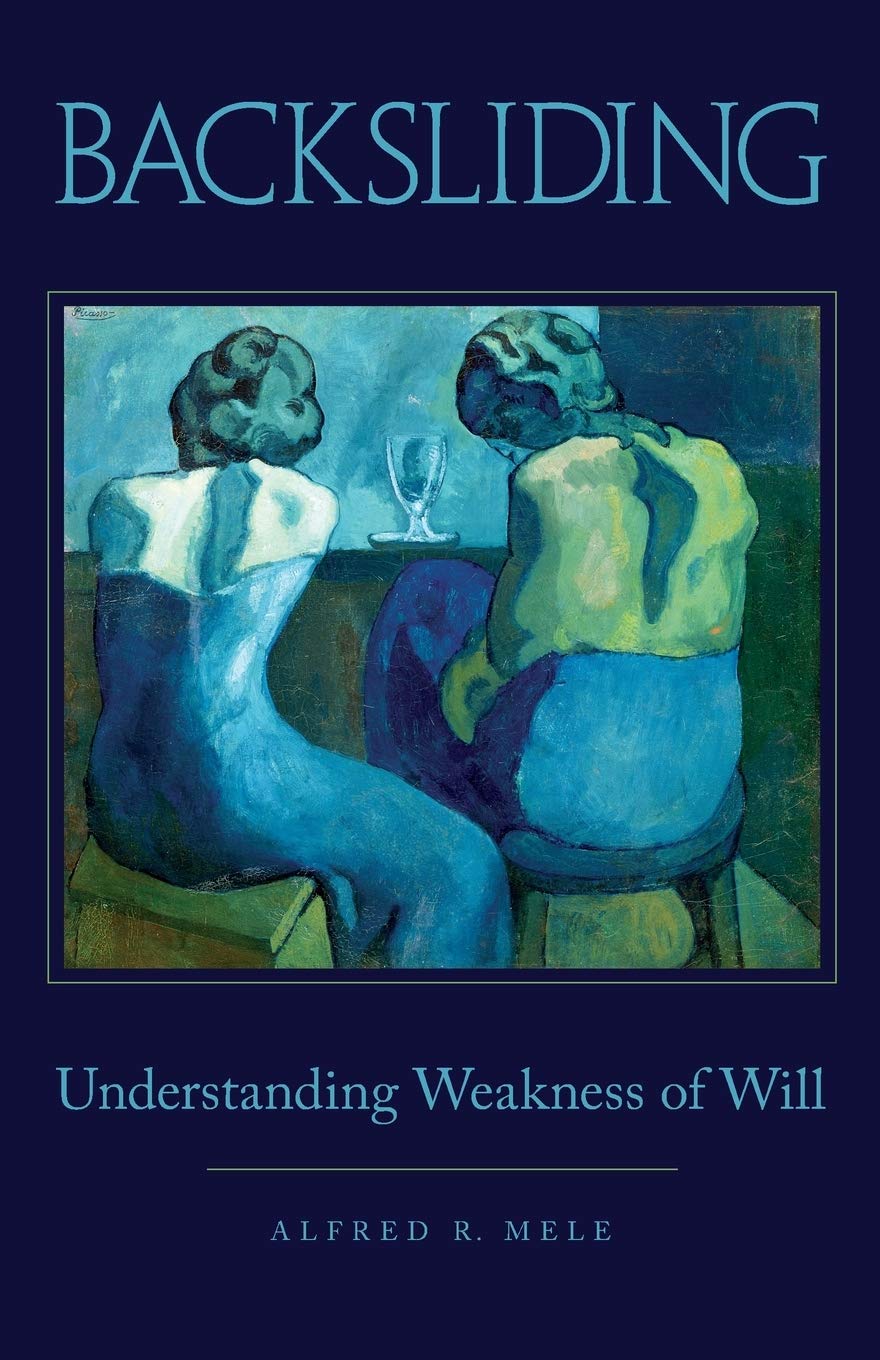
People backslide.They freely do things they believe it would be best on the whole not to do a judgment developed from their own point of view, not just the perspective of their peers or their parents. The aim of this book is to to clarify the nature of backsliding of actions that display some weakness of will using traditional philosophical techniques that date back to Plato and Aristotle (whose work on weakness of will or 'akrasia' he discusses) and some new studies in the emerging field of experimental philosophy. Mele then attacks the thesis that backsliding is an illusion because people never freely act contrarily to what they judge is best. He argues that it is extremely plausible that if people ever act freely, they sometimes backslide. At the book's heart is the development of a theoretical and empirical framework that sheds light both on backsliding and on exercises of selfcontrol that prevent it. Here, Mele draws on work in social and developmental psychology and in psychiatry to motivate a view of human behavior in which both backsliding and overcoming the temptation to backslide are explicable. He argues that backsliding is no illusion and our theories about the springs of action, the power of evaluative judgments, human agency, human rationality, practical reasoning, and motivation should accommodate backsliding.
⚠️ WARNING (California Proposition 65):
This product may contain chemicals known to the State of California to cause cancer,
birth defects, or other reproductive harm.
For MAP (Minimum Advertised Price) violations and Intellectual Property (IP) or Trademark concerns, please contact:
support@ergodebooks.com
⚠️ California Proposition 65 Warning: Some products sold on this website may expose you to chemicals known to the State of California to cause cancer, birth defects, or other reproductive harm. For more information, visit www.P65Warnings.ca.gov.