
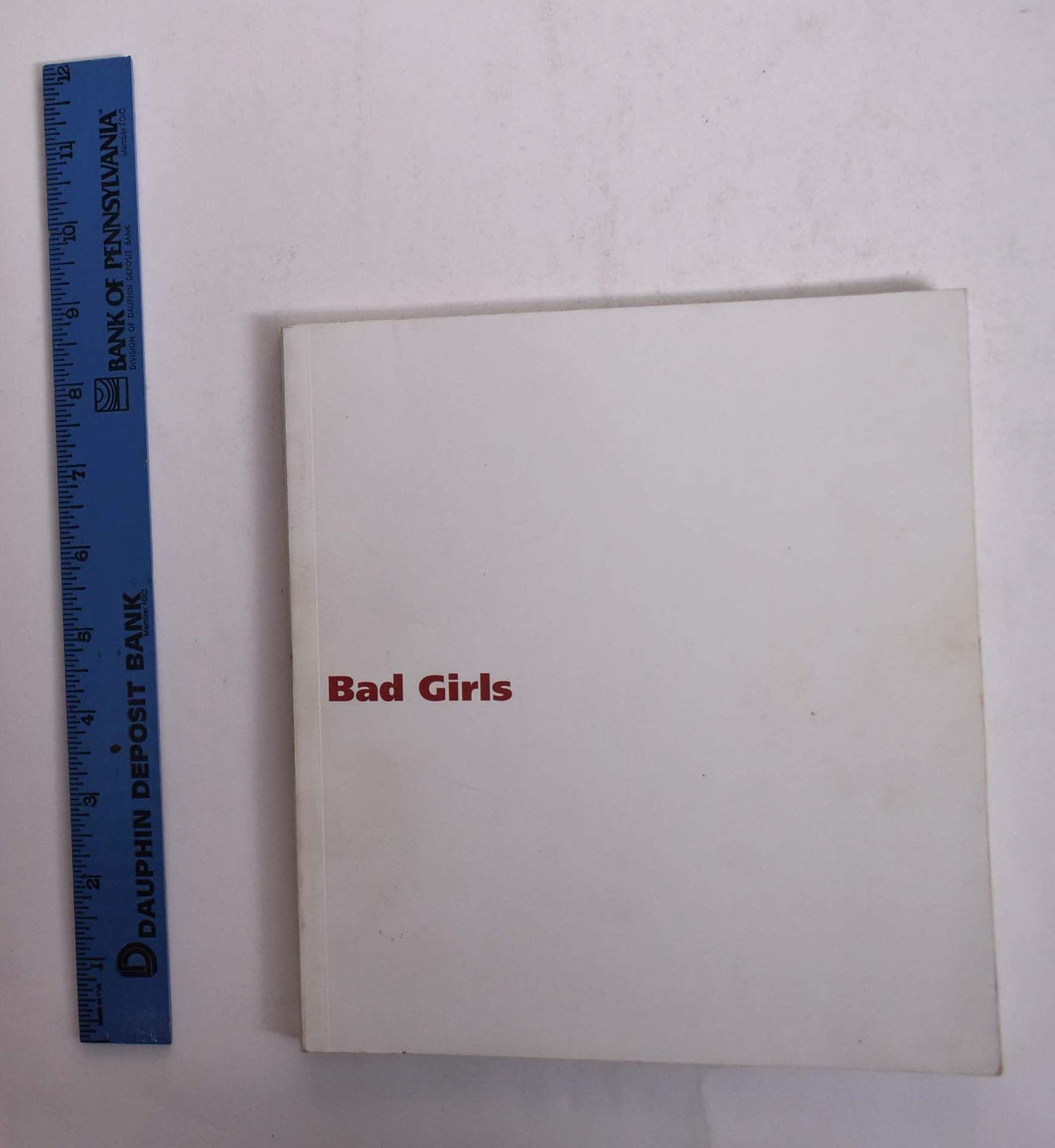
Title
Bad Girls
Sold by Ergodebooks, an authorized reseller.
Returns accepted within 30 days | support@ergodebooks.com
Shipping Information
- Free Standard Shipping — United States only
- Processing Time: 3–5 business days
- Estimated Delivery: 6–10 business days after dispatch
- Double-boxed, fully insured & discreetly packaged
- Tracking number sent via email once dispatched
Returns & Refund
Returns accepted within 30 days of delivery.
Damaged or Defective Item
Free return shipping + replacement or full refund
Wrong Item Received
Free return shipping + replacement or full refund
Change of Mind
Return shipping at customer's expense · 25% restocking fee applies
Payment Option

Examines The Issues And Controversies Raised By The Recent Exhibitions Bad Girls And Bad Girls West In New York And Los Angeles.With Essays By Marcia Tucker, Marcia Tanner, Linda Goode Bryant, And Cheryl Dunye Unconventional And Distinctly Unladylike, Bad Girls Considers Many Issues And Controversies Raised By The Recent Exhibitions Bad Girls And Bad Girls West, Mounted In New York And Los Angeles Respectively. But The Central Issues It Examines Are Humor, Transgression, And The Critical And Constructive Potential Of Laughter In The Work Of A New Generation Of Bad Girls. Humor Is The Connecting Force Between The 45 Artists In Bad Girls, And It Is Clear That They Express Themselves In Ways That Their Mothers Probably Would Not Have Approved Of. But They Don'T Care. Bad Girls Addresses Questions Of Gender, Race, Class, Age, And Sex By Challenging Conventional Ideas About Motherhood, Food, Fashion, Beauty, Work, Marriage, And Psychoanalysis. Using Humor As A Subversive Weapon And Having A Field Day With Cosmetic Aids And Transgressive Bodies, The Artists In Bad Girls Draw From The Issues That Concern Artists Like Barbara Kruger, Jenny Holzer, Hannah Wilke, And Cindy Sherman While Taking These In New Directions. In One Of The Book'S Four Essays, Marcia Tucker, Founder And Director Of The New Museum Of Contemporary Art, Discusses The Relationship Between Work Centering On Gender And Feminist Issues And The Carnivalesque, The Female/Lesbian/Crossdressed Body In Relation To The Grotesque Body, Mass Culture And Popular Culture, And The Evolution Of A Female Comic Sensibility. Marcia Tanner, Independent Curator For Bad Girls West In Los Angeles, Focuses On Foremothers Who Include Yoko Ono, Sherrie Levine, And Louise Bougeoise. Linda Goode Bryant, Freelance Writer And Researcher, Takes On The Etymology Of The World Bad In Black Culture. And Cheryl Dunye, Curator, Lecturer, And Selfdescribed Black Lesbian Bad Girl Filmmaker, Addreses Transgressive Women'S Videos. You'Re Less Apt To Be A Bad Girl If: You'Re Reasonably Sure You Could Survive In The Suburbs Without Taking Prozac. You'Re More Apt To Be A Bad Girl If: Someone Made Your Hair A Primary Color And You Didn'T Sue Sybil Sage/Wall Texts, 1994.
⚠️ WARNING (California Proposition 65):
This product may contain chemicals known to the State of California to cause cancer, birth defects, or other reproductive harm.
For more information, please visit www.P65Warnings.ca.gov.
- Q: What are the dimensions of the book 'Bad Girls'? A: The book 'Bad Girls' measures seven point seventy-six inches in length, eight point five inches in height, and zero point fifty-one inches in width.
- Q: How many pages does 'Bad Girls' have? A: The book contains one hundred forty-four pages, providing a comprehensive exploration of contemporary feminist art and issues.
- Q: What type of binding does 'Bad Girls' have? A: The book is available in a paperback binding, making it lightweight and easy to handle.
- Q: What age group is 'Bad Girls' suitable for? A: The book is suitable for adults and older teens, given its themes of gender, race, and social commentary.
- Q: How can I use 'Bad Girls' for educational purposes? A: You can use 'Bad Girls' as a resource for art history studies, feminist theory discussions, or as a reference for contemporary art exhibitions.
- Q: Is there any specific reading level recommended for 'Bad Girls'? A: The book is recommended for readers with a college-level understanding, particularly those interested in feminist art and cultural critiques.
- Q: How should I care for my copy of 'Bad Girls'? A: To keep your copy in good condition, store it in a cool, dry place and avoid exposure to direct sunlight.
- Q: Can I clean the cover of 'Bad Girls'? A: Yes, you can gently wipe the cover with a soft, dry cloth to remove dust and fingerprints.
- Q: What if my copy of 'Bad Girls' arrives damaged? A: If your copy arrives damaged, you should contact the seller for return instructions or a replacement.
- Q: How is 'Bad Girls' different from other art catalogs? A: Unlike typical art catalogs, 'Bad Girls' focuses specifically on feminist artists and incorporates humor and transgression as central themes.
- Q: Is 'Bad Girls' appropriate for a general audience? A: While it contains valuable insights, 'Bad Girls' addresses complex themes that may not be suitable for younger audiences.
- Q: What themes does 'Bad Girls' explore? A: The book explores themes of gender, race, class, age, and sexuality, challenging conventional norms and societal expectations.
- Q: Who are the authors contributing to 'Bad Girls'? A: Notable contributors include Marcia Tucker, Marcia Tanner, Linda Goode Bryant, and Cheryl Dunye, each offering unique perspectives.
- Q: What types of art does 'Bad Girls' focus on? A: The book highlights contemporary art by female artists, emphasizing subversive humor and critiques of traditional gender roles.
- Q: Can 'Bad Girls' be used for professional development in the arts? A: Yes, 'Bad Girls' serves as a valuable resource for professionals in the arts, providing insights into feminist perspectives and contemporary issues.