If you have any questions, you are always welcome to contact us. We'll get back to you as soon as possible, withing 24 hours on weekdays.
Customer service
All questions about your order, return and delivery must be sent to our customer service team by e-mail at yourstore@yourdomain.com
Sale & Press
If you are interested in selling our products, need more information about our brand or wish to make a collaboration, please contact us at press@yourdomain.com
Help
If you have any questions, you are always welcome to contact us. We'll get back to you as soon as possible, withing 24 hours on weekdays.
Customer service
All questions about your order, return and delivery must be sent to our customer service team by e-mail at yourstore@yourdomain.com
Sale & Press
If you are interested in selling our products, need more information about our brand or wish to make a collaboration, please contact us at press@yourdomain.com
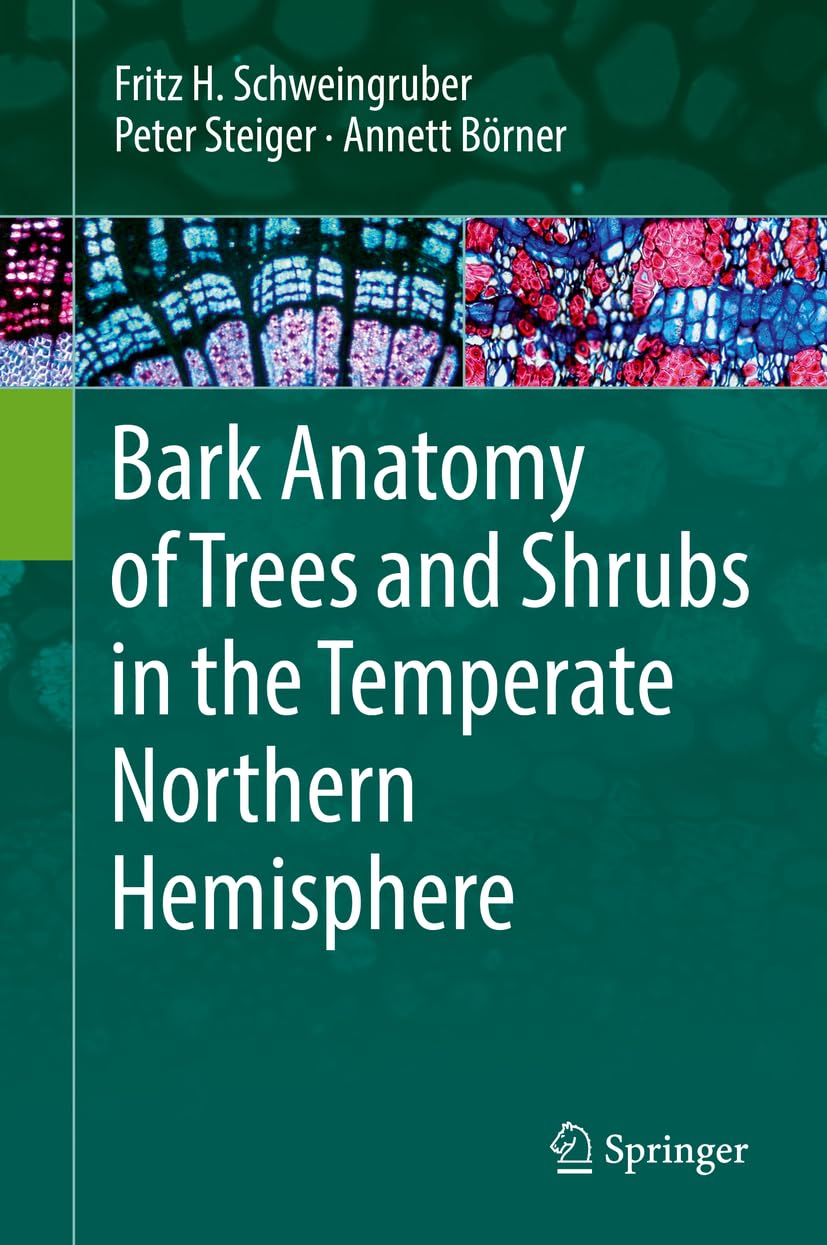
This book presents the microscopic and macroscopic bark structure of more than 180 different tree and shrub species from Europe, Asia and North America. It is the first compendium to demonstrate the anatomical variability in bark since almost 70 years (Holdheide 1951). The introductory chapter explains with highquality microphotographs the anatomical traits most important for identification and ecological interpretation of barks, and the monographic part demonstrates in text and pictures the speciesspecific patterns. The species treatments are grouped by their main biomes. Each species description first characterizes the macroscopic aspects with its main form, features and habitat with text and pictures of the whole plant and the barks in a young and old stage. This is followed by the microscopical description of each species. The microscopic photographs are based on doublestained slides, revealing the quality and distribution of unlignified and lignified tissues in low and high magnification.The book fills a scientific gap: Archeologists and soil scientists want to identify prehistoric and historical remnants. Ecophysiologists are interested in the distribution of conducting and nonconducting tissues in the phloem and xylem along the stem axis and the internal longevity of cells. Ecologists get information about internal defense mechanisms and technologists are enabled to recognize indicators relevant in biophysics and technology.
⚠️ WARNING (California Proposition 65):
This product may contain chemicals known to the State of California to cause cancer,
birth defects, or other reproductive harm.
For MAP (Minimum Advertised Price) violations and Intellectual Property (IP) or Trademark concerns, please contact:
support@ergodebooks.com
⚠️ California Proposition 65 Warning: Some products sold on this website may expose you to chemicals known to the State of California to cause cancer, birth defects, or other reproductive harm. For more information, visit www.P65Warnings.ca.gov.