
Title
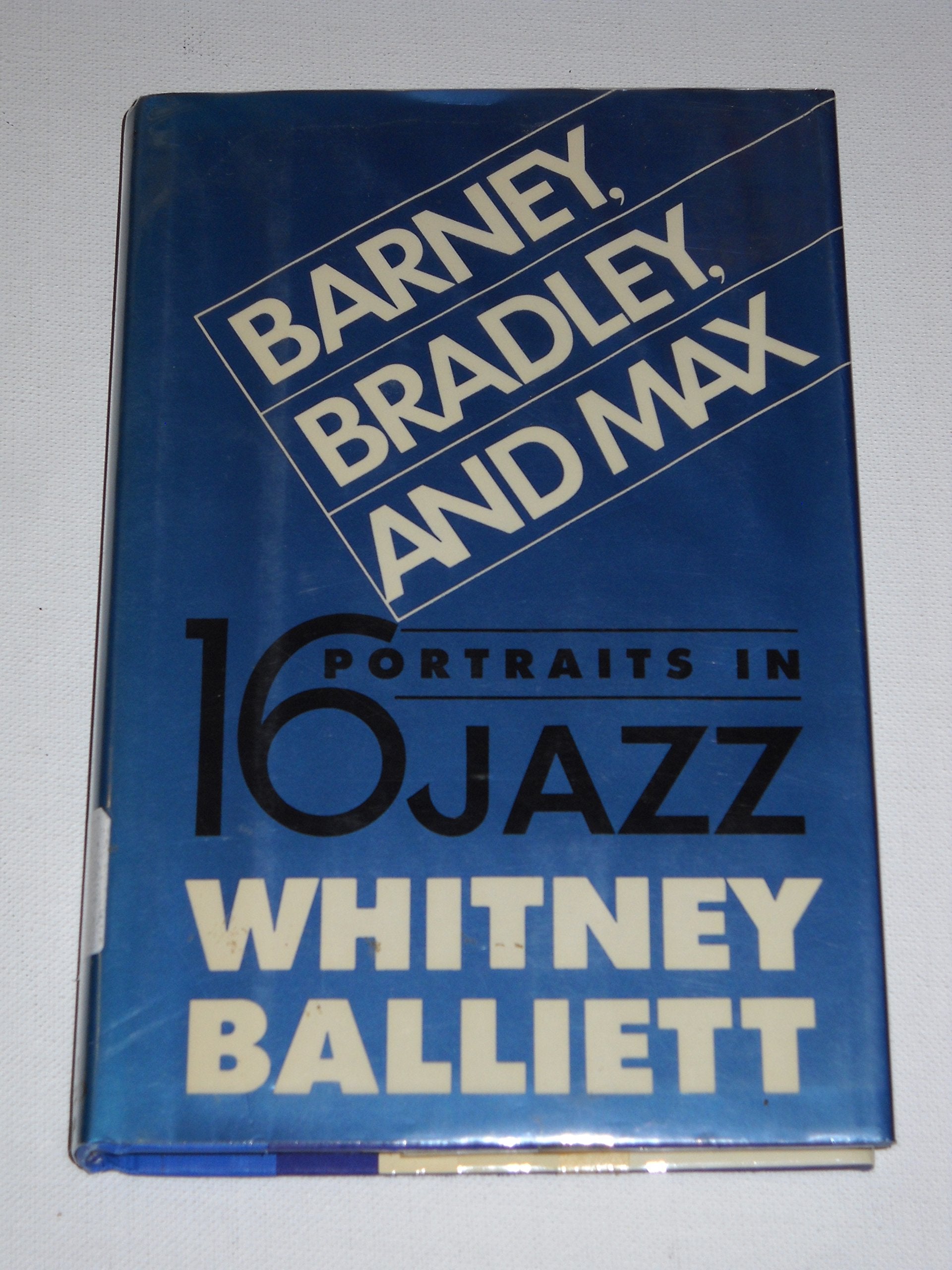
Barney, Bradley, and Max: Sixteen Portraits in Jazz,Used
Sold by Ergodebooks, an authorized reseller.
Returns accepted within 30 days | support@ergodebooks.com
Shipping Information
- Free Standard Shipping — United States only
- Processing Time: 3–5 business days
- Estimated Delivery: 6–10 business days after dispatch
- Double-boxed, fully insured & discreetly packaged
- Tracking number sent via email once dispatched
Returns & Refund
Returns accepted within 30 days of delivery.
Damaged or Defective Item
Free return shipping + replacement or full refund
Wrong Item Received
Free return shipping + replacement or full refund
Change of Mind
Return shipping at customer's expense · 25% restocking fee applies
Payment Option

Whitney Balliett, jazz critic for The New Yorker for more than 30 years, is one of America's foremost jazz writers. "The most literate and knowledgeable living writer on jazz," Alistair Cooke called him, and Robert Dawidoff has written, "few people write as well about anything as Balliett writes about jazz." Two previous collections, American Musicians and American Singers, which gathered, respectively, Balliett's New Yorker profiles of jazz instrumentalists, and his essays about jazz singers, were widely acclaimed.This new book, intended as a supplement to American Musicians, offers sixteen additional profilesseven of which have never appeared in book form before. (The article on clarinettist Buddy De Franco has never been printed anywhere. The eight previously published works have been culled from longoutofprint books.) As Balliett tells us in an introductory note, the book is structured to take us "from the edges of jazz to its heart." Beginning with a profile of the jazz fan Jean Bach, who calls herself "the first jazz groupie," he continues with club owners Max Gordon (The Village Vanguard), Barney Josephson (Cafe Society), and Bradley Cunningham (Bradley's), and finally introduces us to such virtuoso jazz musicians as Benny Goodman and Charlie "Bird" Parker. In between are thoughtful pieces about pianists Claude Thornhill, Mel Powell, and George Shearing; trumpet player Ruby Braff; and more.All the classic Balliett touches are here: his sensitivity to the nuances of both music and personality, his ability to describe the subtleties of tone and rhythm, and, of course, the lyric quality of his own writing. Here is his report of Jimmy Rowles' warmup routine:"In one motion, he sat down, leaned over, poised his fingers a second over the keyboard, and sank into a very slow 'Mood Indigo.' He moved in a gentle, circular fashion, as if he were leafing through a stamp album, and he punctuated his felicitous phrases by pointing his right toe at the ceiling."Balliett fans and jazz aficionados, as well as lovers of good writing will welcome this new collection by the man the late Philip Larkin said "brings jazz journalism to the verge of poetry."
⚠️ WARNING (California Proposition 65):
This product may contain chemicals known to the State of California to cause cancer, birth defects, or other reproductive harm.
For more information, please visit www.P65Warnings.ca.gov.