If you have any questions, you are always welcome to contact us. We'll get back to you as soon as possible, withing 24 hours on weekdays.
Customer service
All questions about your order, return and delivery must be sent to our customer service team by e-mail at yourstore@yourdomain.com
Sale & Press
If you are interested in selling our products, need more information about our brand or wish to make a collaboration, please contact us at press@yourdomain.com
Help
If you have any questions, you are always welcome to contact us. We'll get back to you as soon as possible, withing 24 hours on weekdays.
Customer service
All questions about your order, return and delivery must be sent to our customer service team by e-mail at yourstore@yourdomain.com
Sale & Press
If you are interested in selling our products, need more information about our brand or wish to make a collaboration, please contact us at press@yourdomain.com
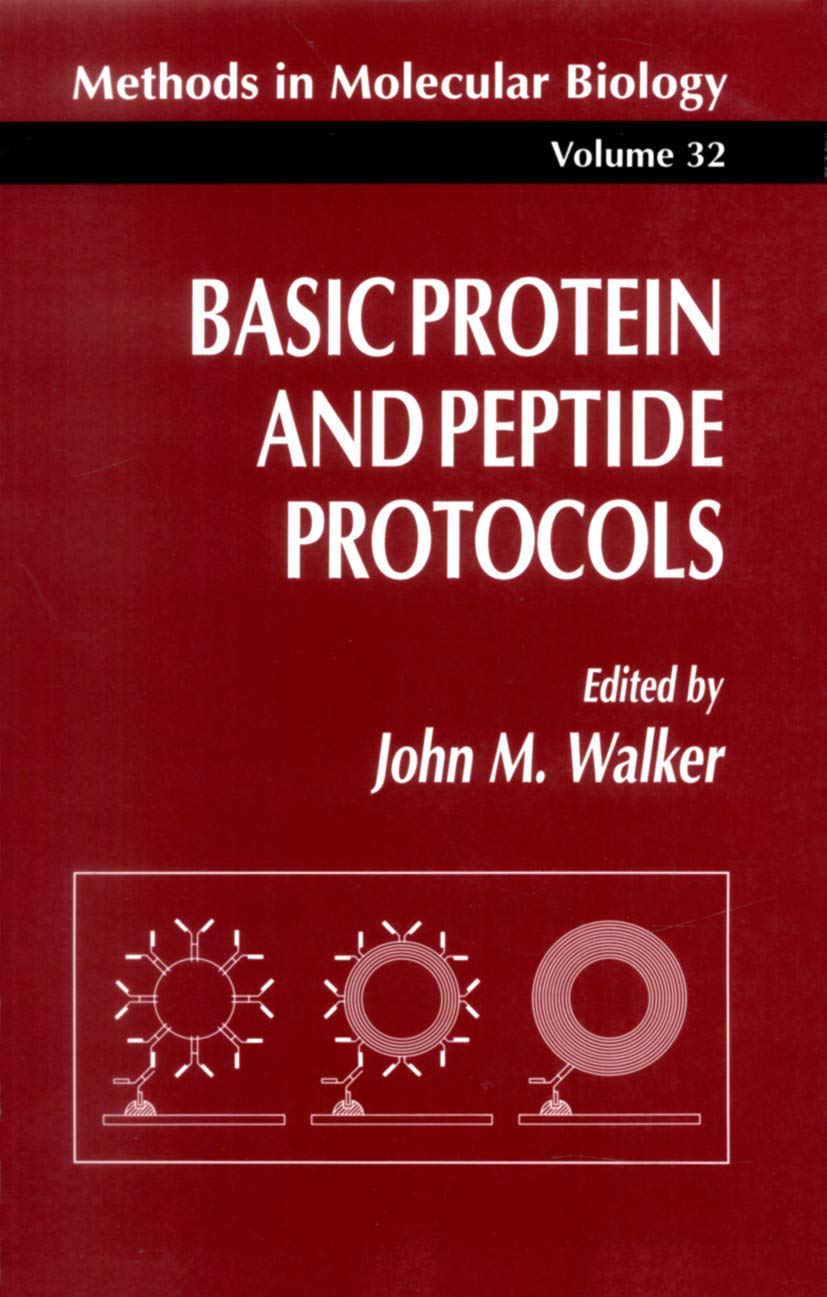
The first volume in this Methods Molecular Biology series, Proteins (1984), concentrated on basic techniques for the analysis and purification of peptides and proteins. As the series developed, more specialized volumes on proteins were introduced, such as those on Immunochemical Protocols (vol. 10), Practical Protein Chro tography (vol. 11), Analysis Glycoprotein Biomedicine (vol. 14), ProteinDNA Interactions (vol. 30), Biomembrane Protocols (vols. 19 and 27), Analyses and Methods (vol. 17), and Optical Spectroscopy, Microscopy, and Macroscopic Techniques (vol. 22). Further specialist volumes on peptides, monoclonal antibodies, immunoassays, ELISA, protein engineering, protein stability, mass spectrometry of proteins, automated sequence analysis, and protein NMR are currently in preparation. Since it is now a decade since the initial volume was published, it seems an especially appropriate moment to extensively reorganize, update, and revise the earlier volume. In an attempt to be more c prehensive in our coverage, this current volume, Basic Protein and Peptide Protocols, is totally committed to basic analytical methods; a planned companion volume will later concentrate on preparative techniques. Those analytical techniques requiring expensive speci ized instrumentation, such as NMR, mass spectrometry, Xray cr tallography, spectroscopy, and automated sequence analysis, are not described here, but in the appropriate specialized volumes listed above.
⚠️ WARNING (California Proposition 65):
This product may contain chemicals known to the State of California to cause cancer,
birth defects, or other reproductive harm.
For MAP (Minimum Advertised Price) violations and Intellectual Property (IP) or Trademark concerns, please contact:
support@ergodebooks.com
⚠️ California Proposition 65 Warning: Some products sold on this website may expose you to chemicals known to the State of California to cause cancer, birth defects, or other reproductive harm. For more information, visit www.P65Warnings.ca.gov.