
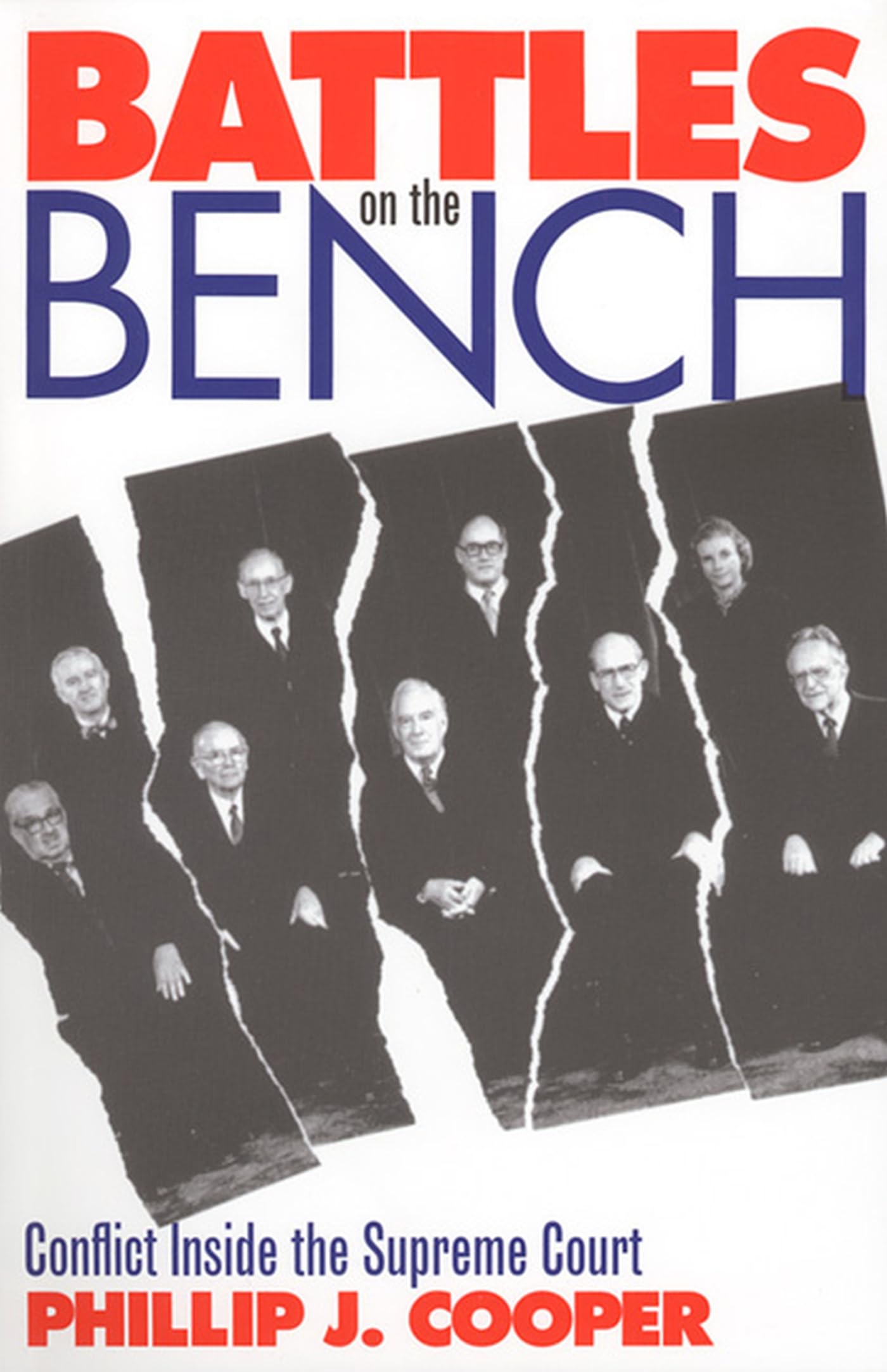
Title
Battles on the Bench: Conflict Inside the Supreme Court,Used
Sold by Ergodebooks, an authorized reseller.
Returns accepted within 30 days | support@ergodebooks.com
Shipping Information
- Free Standard Shipping — United States only
- Processing Time: 3–5 business days
- Estimated Delivery: 6–10 business days after dispatch
- Double-boxed, fully insured & discreetly packaged
- Tracking number sent via email once dispatched
Returns & Refund
Returns accepted within 30 days of delivery.
Damaged or Defective Item
Free return shipping + replacement or full refund
Wrong Item Received
Free return shipping + replacement or full refund
Change of Mind
Return shipping at customer's expense · 25% restocking fee applies
Payment Option

Felix Frankfurter's blustery depiction of debate within the Supreme Court suggests that combat sometimes supersedes collegiality in those hallowed halls. In fact, as Phillip Cooper shows, conflict is an inescapable fact of life in the Marble Temple.Cooper peels back the calm, quiet public image of our judicial royalty to reveal their "family" feuds and squabbles. He shows that, whether motivated by deeply felt principle or by petty and vindictive impulses, these disputes dramatically shape the court's decisionmaking process, the justices' relations with one another, and the public's perception of the court.Filled with wonderful vignettes and telling anecdotes, Battles on the Bench illuminates the court's legendary and littleknown clashes from John Marshall to Ruth Ginsberg and helps us understand why they fight, how they fight, and why their fights matter. In the process, it reveals a long tradition of strategic flattery, cajolery, namecalling, threats, subterfuge, and sermonizingall in an effort to win over or run over fellow justices.Conflict in such highstakes circumstances is hardly unexpected. But some of the court behavior is: Fred Vinson going after Frankfurter with a clenched fist and shouting that "no son of a bitch can ever say that to me!"; Frankfurter's dismissal of Justice Reed's intellect as "largely vegetable"; James McReynolds' undisguised antisemitism toward Louis Brandeis; Antonin Scalia's harsh attacks on Sandra Day O'Connor; and William Rehnquist's sarcastic recital of a nursery rhyme and the "StarSpangled Banner" before his startled brethren.Cooper, however, makes clear that to a surprising degree these justices do find ways to work together. As Earl Warren noted, life on the Court is like a marriageone can't tolerate it if it's one battle after another. Appointed for life and completely independent, these "nine scorpions in a bottle" are nevertheless compelled to furl their stingers from time to timefor no justice can prevail without the support of at least four others. Indeed, one of the toughest questions Cooper tries to answer is why they don't fight more often.A rich treasure trove mined from the vast resources of judicial biography, Cooper's engaging study will be especially appealing to students and general readers with limited knowledge of the court's inner workings.
⚠️ WARNING (California Proposition 65):
This product may contain chemicals known to the State of California to cause cancer, birth defects, or other reproductive harm.
For more information, please visit www.P65Warnings.ca.gov.