If you have any questions, you are always welcome to contact us. We'll get back to you as soon as possible, withing 24 hours on weekdays.
Customer service
All questions about your order, return and delivery must be sent to our customer service team by e-mail at yourstore@yourdomain.com
Sale & Press
If you are interested in selling our products, need more information about our brand or wish to make a collaboration, please contact us at press@yourdomain.com
Help
If you have any questions, you are always welcome to contact us. We'll get back to you as soon as possible, withing 24 hours on weekdays.
Customer service
All questions about your order, return and delivery must be sent to our customer service team by e-mail at yourstore@yourdomain.com
Sale & Press
If you are interested in selling our products, need more information about our brand or wish to make a collaboration, please contact us at press@yourdomain.com
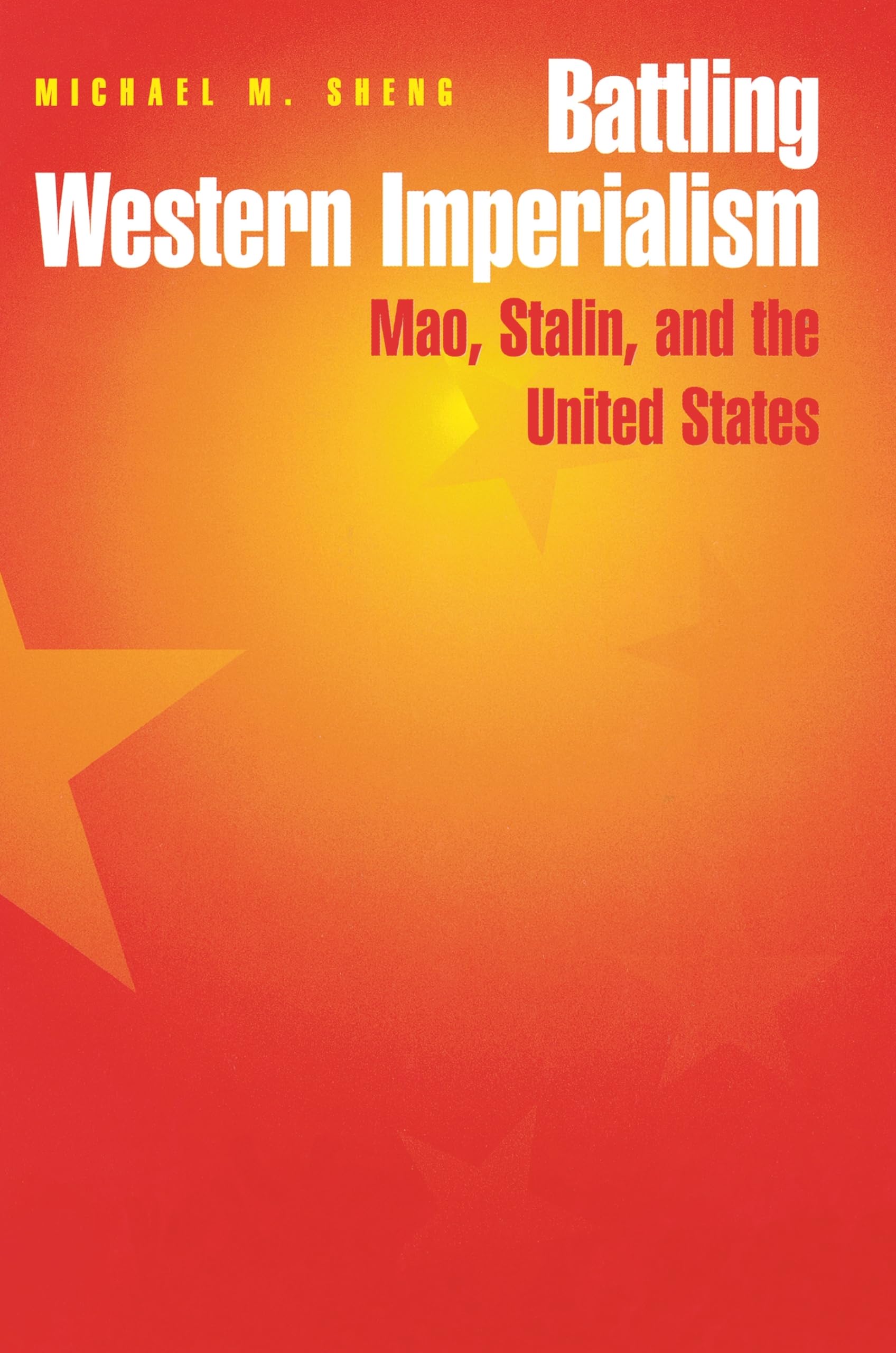
One of the central issues in the study of the Chinese Communist Party and its foreign policy is its relations with Moscow. Was the CCP a Chinese nationalist party antagonistic to an intrusive Soviet Union or was it rather an internationalist party with ideologicalpolitical and strategicmilitary ties to Moscow, faithfully adhering to MarxistLeninist principles as well as to Stalin's policy advice? For the past two decades a number of historians have argued that the CCP was a nationalist movement and that the United States missed its opportunity to establish friendly relations because U.S. leaders were blinded by fears of an international Communist threat. In his provocative book, Michael Sheng strongly challenges this position.On the basis of extensive new information obtained from recently available Chinese sources, Sheng demonstrates that the foreign policy of the CCP under Mao Zedong did, in fact, follow the directions recommended by Joseph Stalin. Sheng reveals that Mao and Stalin were in frequent and direct contact by radio and by correspondence, beginning in 1936, and that Mao consistently acted on Stalin's advice. Battling Western Imperialism analyzes the CCP's relations with both the Soviet Union and the United States and provides conclusive evidence that there was no 'lost opportunity' for the U.S. in China. He shows that the CCP viewed the United States as a hostile capitalist power that opposed its revolutionary aims. The author has drawn on an unprecedented collection of Chineselanguage materials to make a powerful new argument.
⚠️ WARNING (California Proposition 65):
This product may contain chemicals known to the State of California to cause cancer,
birth defects, or other reproductive harm.
For MAP (Minimum Advertised Price) violations and Intellectual Property (IP) or Trademark concerns, please contact:
support@ergodebooks.com
⚠️ California Proposition 65 Warning: Some products sold on this website may expose you to chemicals known to the State of California to cause cancer, birth defects, or other reproductive harm. For more information, visit www.P65Warnings.ca.gov.