If you have any questions, you are always welcome to contact us. We'll get back to you as soon as possible, withing 24 hours on weekdays.
Customer service
All questions about your order, return and delivery must be sent to our customer service team by e-mail at yourstore@yourdomain.com
Sale & Press
If you are interested in selling our products, need more information about our brand or wish to make a collaboration, please contact us at press@yourdomain.com
Help
If you have any questions, you are always welcome to contact us. We'll get back to you as soon as possible, withing 24 hours on weekdays.
Customer service
All questions about your order, return and delivery must be sent to our customer service team by e-mail at yourstore@yourdomain.com
Sale & Press
If you are interested in selling our products, need more information about our brand or wish to make a collaboration, please contact us at press@yourdomain.com
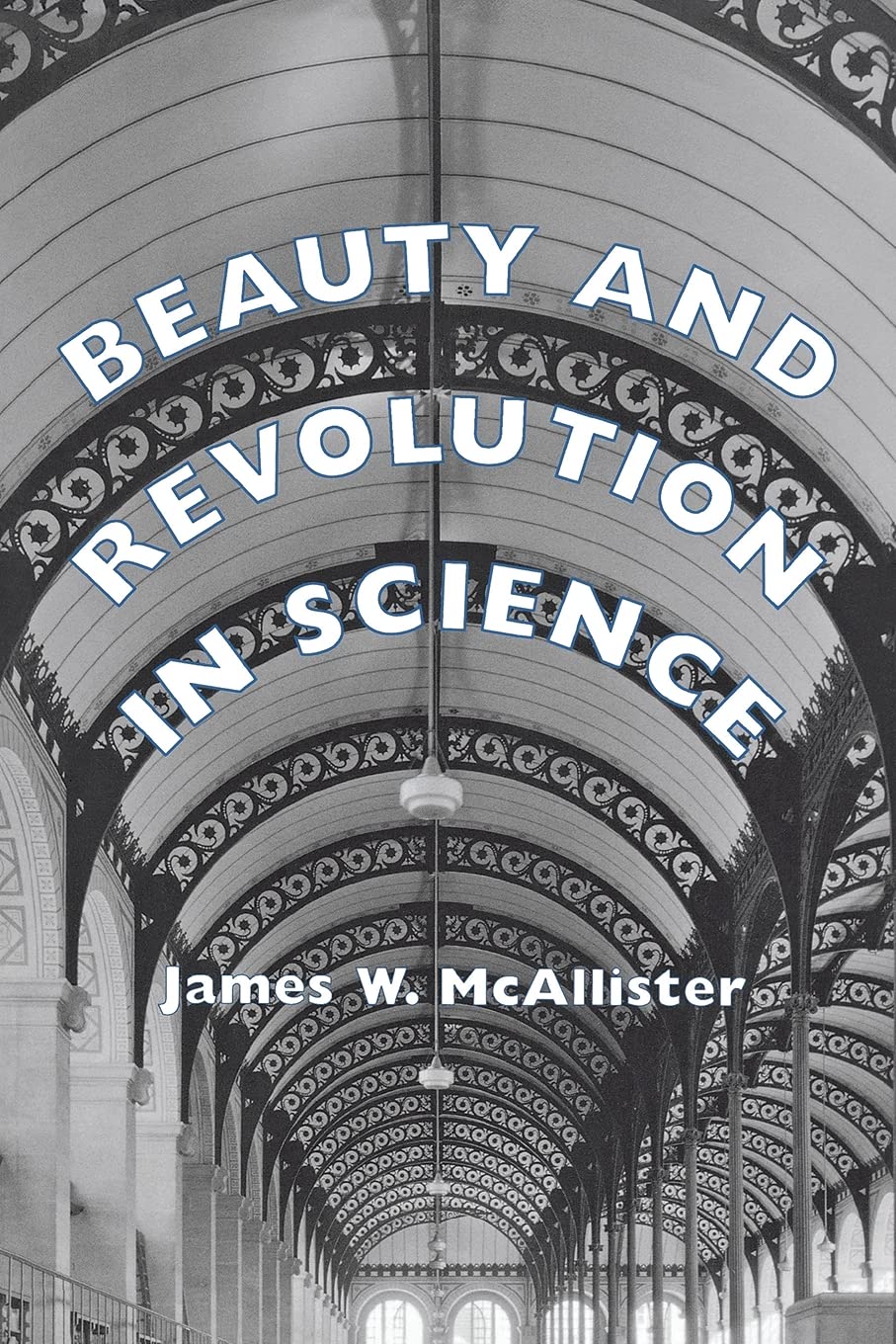
A valuable, important, persuasively argued book. Highly recommended. ChoiceExplaining why he embraced the theory of relativity, the Nobel Prizewinning theoretical physicist P. A. M. Dirac stated, "It is the essential beauty of the theory which I feel is the real reason for believing in it." How reasonable and rational can science be when its practitioners speak of "revolutions" in their thinking and extol certain theories for their "beauty"? James W. McAllister addresses this question with the first systematic study of the aesthetic evaluations that scientists pass on their theories.Using a wealth of other examples, McAllister explains how scientists' aesthetic preferences are influenced by the empirical track record of theories, describes the origin and development of aesthetic styles of theorizing, and reconsiders whether simplicity is an empirical or an aesthetic virtue of theories.McAllister then advances an innovative model of scientific revolutions, in opposition to that of Thomas S. Kuhn. Three detailed studies demonstrate the interconnection of empirical performance, beauty, and revolution. One examines the impact of new construction materials on the history of architecture. Another reexamines the transition from the Ptolemaic system to Kepler's theory in planetary astronomy, and the third documents the rise of relativity and quantum theory in the twentieth century.
⚠️ WARNING (California Proposition 65):
This product may contain chemicals known to the State of California to cause cancer,
birth defects, or other reproductive harm.
For MAP (Minimum Advertised Price) violations and Intellectual Property (IP) or Trademark concerns, please contact:
support@ergodebooks.com
⚠️ California Proposition 65 Warning: Some products sold on this website may expose you to chemicals known to the State of California to cause cancer, birth defects, or other reproductive harm. For more information, visit www.P65Warnings.ca.gov.