
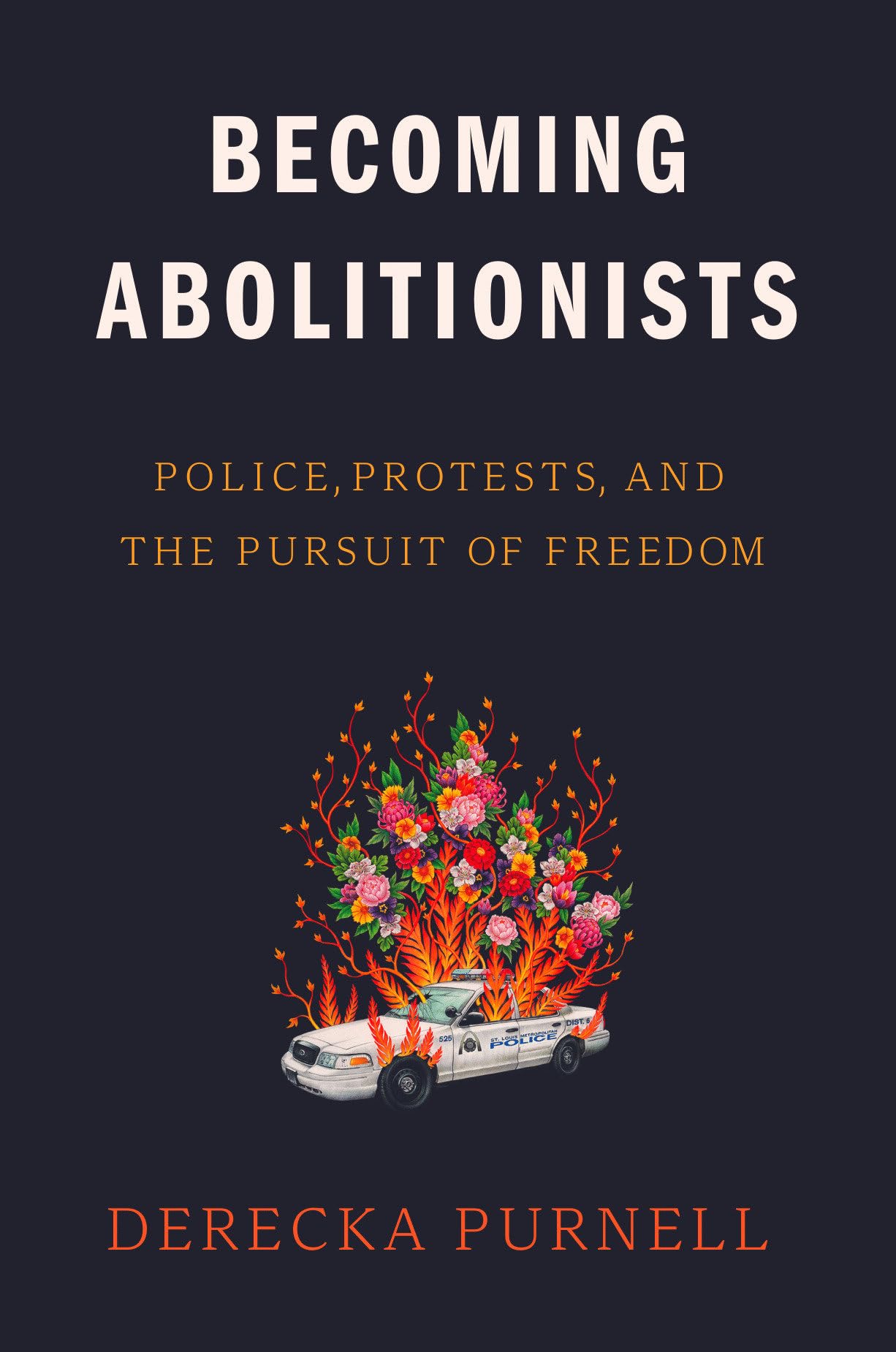
Title

Becoming Abolitionists: Police, Protests, and the Pursuit of Freedom,Used
Sold by Ergodebooks, an authorized reseller.
Returns accepted within 30 days | support@ergodebooks.com
Shipping Information
- Free Standard Shipping — United States only
- Processing Time: 3–5 business days
- Estimated Delivery: 6–10 business days after dispatch
- Double-boxed, fully insured & discreetly packaged
- Tracking number sent via email once dispatched
Returns & Refund
Returns accepted within 30 days of delivery.
Damaged or Defective Item
Free return shipping + replacement or full refund
Wrong Item Received
Free return shipping + replacement or full refund
Change of Mind
Return shipping at customer's expense · 25% restocking fee applies
Payment Option

A NONAME BOOK CLUB PICKNamed a Kirkus Reviews "Best Book of 2021""Becoming Abolitionists is ultimately about the importance of asking questions and our ability to create answers. And in the end, Purnell makes it clear that abolition is a labor of loveone that we can accomplish together if only we decide to."Nia Evans, Boston ReviewFor more than a century, activists in the United States have tried to reform the police. From community policing initiatives to increasing diversity, none of it has stopped the police from killing about three people a day. Millions of people continue to protest police violence because these "solutions" do not match the problem: the police cannot be reformed.In Becoming Abolitionists, Purnell draws from her experiences as a lawyer, writer, and organizer initially skeptical about police abolition. She saw too much sexual violence and buried too many friends to consider getting rid of police in her hometown of St. Louis, let alone the nation. But the police were a placebo. Calling them felt like something, and something feels like everything when the other option seems like nothing.Purnell details how multiracial social movements rooted in rebellion, risktaking, and revolutionary love pushed her and a generation of activists toward abolition. The book travels across geography and time, and offers lessons that activists have learned from Ferguson to South Africa, from Reconstruction to contemporary protests against police shootings.Here, Purnell argues that police can not be reformed and invites readers to envision new systems that work to address the root causes of violence. Becoming Abolitionists shows that abolition is not solely about getting rid of police, but a commitment to create and support different answers to the problem of harm in society, and, most excitingly, an opportunity to reduce and eliminate harm in the first place.
⚠️ WARNING (California Proposition 65):
This product may contain chemicals known to the State of California to cause cancer, birth defects, or other reproductive harm.
For more information, please visit www.P65Warnings.ca.gov.
- Q: How many pages does the book have? A: The book has two hundred eighty-eight pages. It offers a comprehensive look at police abolition and related social movements.
- Q: What is the binding type of this book? A: The book is hardcover. This type of binding provides durability and a more premium feel.
- Q: What are the dimensions of the book? A: The book measures six point three eight inches in length, one point one four inches in width, and nine point three one inches in height.
- Q: Who is the author of 'Becoming Abolitionists'? A: The author is Derecka Purnell. She is a lawyer and organizer with a deep understanding of police abolition.
- Q: What genre does this book belong to? A: This book belongs to the Law Enforcement genre. It discusses systemic issues related to policing and social justice.
- Q: What age group is this book suitable for? A: This book is suitable for adults and older teens. It addresses complex themes around police reform and social activism.
- Q: How can I use the insights from this book? A: You can use the insights to engage in discussions about police reform and social justice. It offers historical context and actionable ideas for activism.
- Q: Is there a specific reading level for this book? A: The reading level is appropriate for adults and educated teenagers. It covers intricate ideas about societal harm and abolition.
- Q: How should I care for this hardcover book? A: To care for the book, keep it in a dry place and avoid exposure to direct sunlight. This will help maintain its condition over time.
- Q: Can I clean the book if it gets dirty? A: Yes, you can clean it gently with a soft, dry cloth. Avoid using water or cleaning solutions that could damage the cover.
- Q: Are there any safety concerns with this book? A: There are no specific safety concerns with this book. It contains discussions on sensitive social issues but is intended for adult readers.
- Q: How does this book compare to other books on police reform? A: This book offers a unique perspective by focusing on abolition rather than reform. It contrasts with many titles that focus solely on reform strategies.
- Q: Is this book a good choice for someone new to the topic? A: Yes, it's a good choice for newcomers. The author provides foundational insights and historical context that are easy to follow.
- Q: What if the book arrives damaged? A: If the book arrives damaged, you should contact the seller for a return or replacement. Most sellers have policies to handle such issues.
- Q: Is there a return policy for this book? A: Yes, most retailers offer a return policy. Check the specific terms of the seller from whom you purchase the book.
- Q: What do I do if I have questions about the book? A: If you have questions, you can refer to the publisher's website or look for author interviews and reviews online for more insights.