
Title
Becoming Asia: Change And Continuity In Asian International Relations Since World War Ii,Used
Sold by Ergodebooks, an authorized reseller.
Returns accepted within 30 days | support@ergodebooks.com
Shipping Information
- Free Standard Shipping — United States only
- Processing Time: 3–5 business days
- Estimated Delivery: 6–10 business days after dispatch
- Double-boxed, fully insured & discreetly packaged
- Tracking number sent via email once dispatched
Returns & Refund
Returns accepted within 30 days of delivery.
Damaged or Defective Item
Free return shipping + replacement or full refund
Wrong Item Received
Free return shipping + replacement or full refund
Change of Mind
Return shipping at customer's expense · 25% restocking fee applies
Payment Option

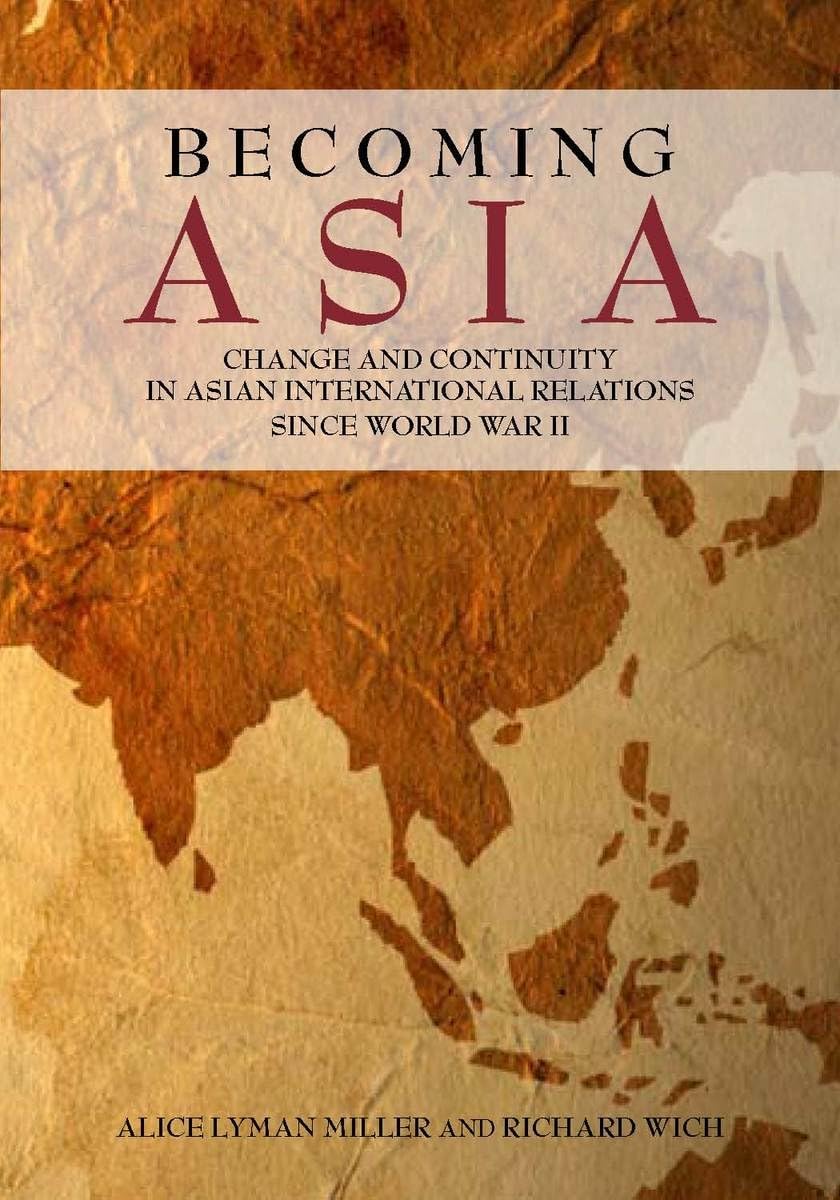
At the conclusion of World War II, Asia was hardly more than a geographic expression. Yet today we recognize Asia as a vibrant and assertive region, fully transformed from the vulnerable nationstates that emerged following the Second World War. The transformation was by no means an inevitable one, but the product of two key themes that have dominated Asia's international relations since 1945: the competition between the United States and the Soviet Union to enlist the region's states as assets in the Cold War, and the struggle of nationalistic Asian leaders to develop the domestic support to maintain power and independence in a dangerous international context.Becoming Asia provides a comprehensive, systemic account of how these themes played out in Asian affairs during the postwar years, covering not only East Asia, but South and Central Asia as well. In addition to exploring the interplay between nationalism and Cold War bipolarity during the first postwar decades, authors Alice Lyman Miller and Richard Wich chart the rise of largely exportled economies that are increasingly making the region the global center of gravity, and document efforts in the ongoing search for regional integration.The book also traces the origins and evolution of deeprooted issues that remain high on the international agenda, such as the Taiwan question, the division of Korea and the threat of nuclear proliferation, the Kashmir issue, and the nuclearized IndianPakistani conflict, and offers an account of the rise of China and its implications for regional and global security and prosperity. Primary documents excerpted throughout the textsuch as leaders' talks and speeches, international agreements, secret policy assessmentsenrich accounts of events, offering readers insight into policymakers' assumptions and perceptions at the time.
⚠️ WARNING (California Proposition 65):
This product may contain chemicals known to the State of California to cause cancer, birth defects, or other reproductive harm.
For more information, please visit www.P65Warnings.ca.gov.
- Q: How many pages does this book have? A: This book has three hundred thirty pages. It's a comprehensive read covering Asian international relations since World War II.
- Q: What is the binding type of 'Becoming Asia'? A: The binding type is paperback. This makes it flexible and easy to handle during reading.
- Q: What are the dimensions of 'Becoming Asia'? A: The dimensions are seven point zero one inches in length, zero point eight three inches in width, and ten inches in height.
- Q: Who are the authors of this book? A: The authors are Alice Lyman Miller and Richard Wich. They provide insights into Asian international relations.
- Q: What is the main theme of 'Becoming Asia'? A: The main theme is the transformation of Asia's international relations since World War II. It explores nationalism and Cold War dynamics.
- Q: Is 'Becoming Asia' suitable for casual readers? A: Yes, it's suitable for casual readers interested in history and international relations. The writing is accessible while still informative.
- Q: How does this book address the Taiwan question? A: The book traces the origins and evolution of the Taiwan question. It discusses its significance in the context of regional stability.
- Q: Can students use this book for research? A: Yes, students can use it for research. It includes primary documents and a comprehensive analysis of Asian affairs.
- Q: Is there a specific audience for this book? A: The book targets students, historians, and anyone interested in Asian studies. It's rich in detail and context.
- Q: What should I do to keep this book in good condition? A: Keep it in a dry, cool place away from direct sunlight. Avoid bending the spine to maintain its shape.
- Q: Are there any specific storage recommendations for this book? A: Yes, store it upright on a shelf or in a bookcase. Avoid stacking heavy items on top of it.
- Q: Is this book safe for all ages? A: Yes, the content is suitable for a general audience. However, it's best for older teens and adults due to complex themes.
- Q: What if the book arrives damaged? A: If the book arrives damaged, contact the seller for a replacement or refund. Keep the original packaging for returns.
- Q: Does this book cover the Indian-Pakistani conflict? A: Yes, it documents the nuclearized Indian-Pakistani conflict and discusses its implications for regional security.
- Q: How can I find more information about the authors? A: You can find more information about Alice Lyman Miller and Richard Wich online or in academic publications related to Asian studies.
- Q: What are the key issues discussed in this book? A: Key issues include the division of Korea, nuclear proliferation, and the rise of China in regional affairs.