
Title
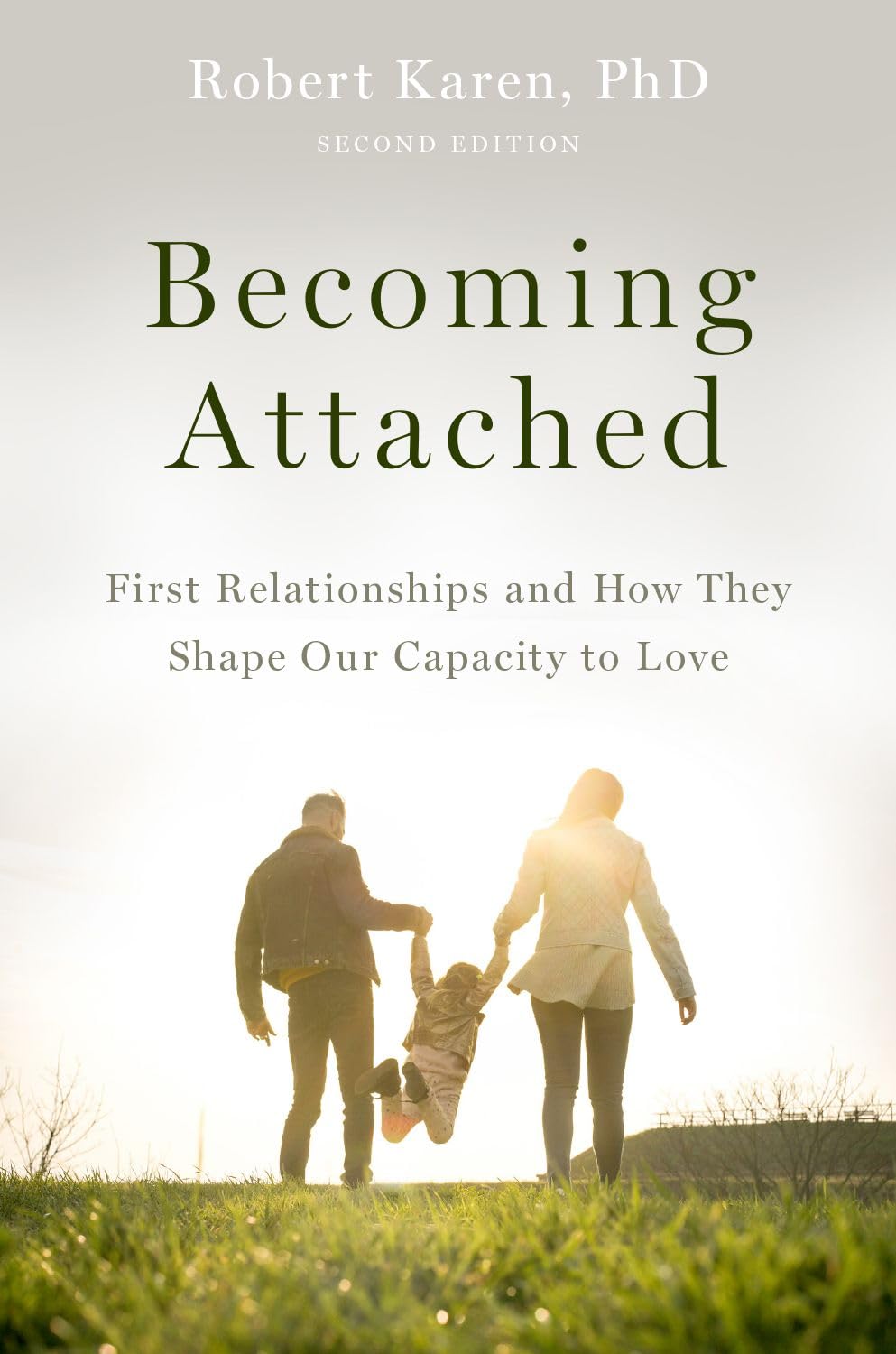
Becoming Attached: First Relationships And How They Shape Our Capacity To Love
Sold by Ergodebooks, an authorized reseller.
Returns accepted within 30 days | support@ergodebooks.com
Shipping Information
- Free Standard Shipping — United States only
- Processing Time: 3–5 business days
- Estimated Delivery: 6–10 business days after dispatch
- Double-boxed, fully insured & discreetly packaged
- Tracking number sent via email once dispatched
Returns & Refund
Returns accepted within 30 days of delivery.
Damaged or Defective Item
Free return shipping + replacement or full refund
Wrong Item Received
Free return shipping + replacement or full refund
Change of Mind
Return shipping at customer's expense · 25% restocking fee applies
Payment Option

The Classic Text On The History Of Attachment Theory And Its Impact On The Field Of Child Development, Now In A Fully Expanded And Updated Edition.A Century Ago, Leading Childcare Experts Were Miles Apart In Their Recommendations To Parents. Behaviorists Warned Against Spoiling Children With Too Much Affection (Never Hug And Kiss Them, Never Let Them Sit In Your Lap) Whereas Geneticists Argued That Affection Matters Little Because Our Genes Alone Determine Who We Are. Into This Fray In The Late 1930S Stepped John Bowlby, The British Psychoanalyst Whose Work With Psychologist Mary Ainsworth Would Overturn The World Of Child Development And Shape Its Trajectory For The Next 70 Years.Becoming Attached Tells The Story Of One Of The Great Undertakings Of Modern Psychology: The Hundredyear Quest To Understand What Children Need And What Constitutes Good Parenting. In This Expanded And Fully Updated New Edition, Psychotherapist And Journalist Robert Karen Chronicles The Origin Of A Groundbreaking Idea Attachment Theory And Its Resounding Impact On The Fields Of Developmental Psychology, Psychiatry, And Psychoanalysis. Karen Charts The Historic Course Of Attachment Theory As It Gained Notoriety And Supportand Not A Little Controversy. Do Securely Attached Children Fare Better As Adults Than Insecurely Attached Ones? What Do Children Truly Need To Thrive? Can Babies Handle Prolonged Separations? Presenting The Origin Story Of An Important Idea In Child Development, This New Edition Also Reveals How Attachment Research Has Exploded Worldwide In The Past Several Years As Evidence For The Benefits Of Secure Attachment Continue To Grow. Karen Explores The Cuttingedge Science Examining The Relationship Between Infants And Their Caregivers Such As The Hidden World Of Synchronized Play, Fmri Studies That Reveal Neural Patterns Of Parental And Receptive Love, And The Link Between Attachment And Genetics, Wherein Early Experience Changes The Expression Of Genes. Karen Also Tells A Dramatic Story Of Scientists At Work And At War, What Happens When A Theory Such As Attachment Becomes Complicated By Political And Economic Pressures, And How Its Entanglement With Gender Roles And Equity In The Workforce Continue To Overshadow Research To This Day. Karen Shares Anecdotes Drawn From His Own Practice To Illuminate The Challenges Many Adults Face In Overcoming Insecurities That May Originate In Infancy And Childhood, And How Resulting Harmful Relationship Patterns May Be Quashed.Cementing Its Place As A Classic Text Of Child Development And Its Rich History, Becoming Attached Has Much To Say About Both Child And Adult Life, As Readers Will Find It Impossible To Read Without Reflecting On Their Own Lives As Children, Parents, And Intimate Partners In Love Or Marriage.
⚠️ WARNING (California Proposition 65):
This product may contain chemicals known to the State of California to cause cancer, birth defects, or other reproductive harm.
For more information, please visit www.P65Warnings.ca.gov.
- Q: How many pages does the book 'Becoming Attached' have? A: This book has eight hundred twenty-four pages. It's a comprehensive exploration of attachment theory in child psychology.
- Q: What is the binding type of 'Becoming Attached'? A: The book is available in paperback binding. This makes it more flexible and easier to handle than hardcover editions.
- Q: What are the dimensions of 'Becoming Attached'? A: The book measures six and a half inches in length, two and six-tenths inches in width, and nine and three-tenths inches in height. These dimensions make it convenient for reading.
- Q: Who is the author of 'Becoming Attached'? A: The author is Robert Karen. He is known for his work in child psychology and attachment theory.
- Q: What is the main theme of 'Becoming Attached'? A: The main theme revolves around the impact of early relationships on emotional development and adult relationships. It delves into the significance of secure attachment.
- Q: Is 'Becoming Attached' suitable for parents? A: Yes, it is suitable for parents and caregivers. The insights provided can help improve understanding of child-rearing and emotional support.
- Q: What age group is 'Becoming Attached' appropriate for? A: The book is appropriate for adults and professionals in psychology. It can be beneficial for anyone interested in child development.
- Q: Can I benefit from reading 'Becoming Attached' as a teacher? A: Yes, teachers can benefit from this book. It provides valuable insights into child behavior and emotional needs, aiding in better classroom management.
- Q: Are there any personal anecdotes in 'Becoming Attached'? A: Yes, the author shares personal anecdotes throughout the book. These stories help illustrate key concepts in attachment theory.
- Q: How should I care for my copy of 'Becoming Attached'? A: To care for your copy, store it in a cool, dry place away from direct sunlight. This will help preserve its condition.
- Q: What should I do if my copy of 'Becoming Attached' arrives damaged? A: If your copy arrives damaged, you should contact the retailer for a return or exchange. Most retailers have policies in place for such issues.
- Q: Is there a warranty for 'Becoming Attached'? A: No, books typically do not come with a warranty. However, check with the retailer for their return policy.
- Q: How do I keep 'Becoming Attached' in good condition? A: Keep it on a shelf upright, and avoid placing heavy items on top. This prevents damage to the spine and pages.
- Q: Is 'Becoming Attached' a good gift for new parents? A: Yes, it makes an excellent gift for new parents. It offers insights into attachment that can enhance their parenting approach.
- Q: Is 'Becoming Attached' a research-based book? A: Yes, the book is research-based. It draws on decades of studies in attachment theory and child psychology.