
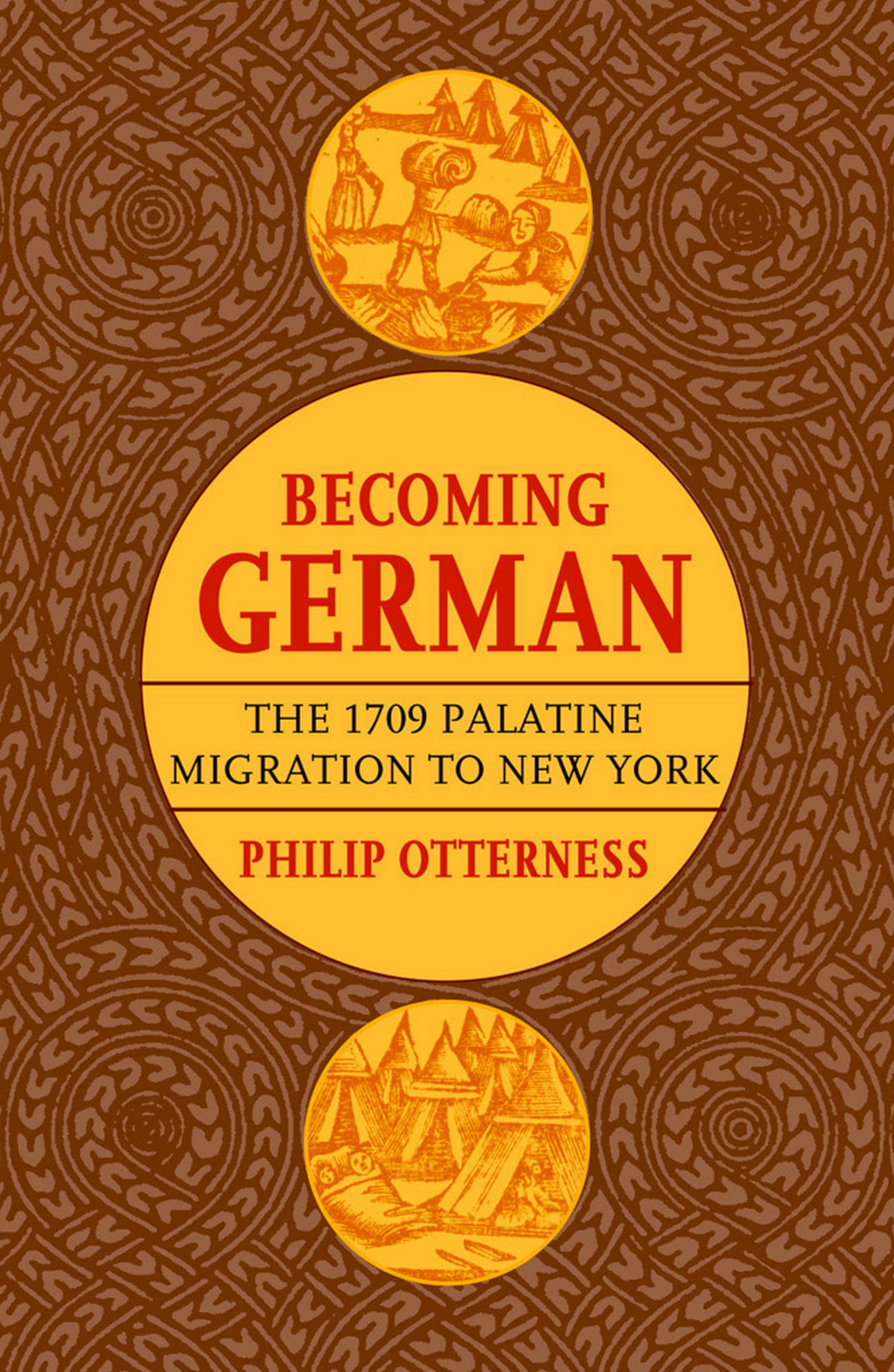
Title
Becoming German: The 1709 Palatine Migration to New York,Used
Sold by Ergodebooks, an authorized reseller.
Returns accepted within 30 days | support@ergodebooks.com
Shipping Information
- Free Standard Shipping — United States only
- Processing Time: 3–5 business days
- Estimated Delivery: 6–10 business days after dispatch
- Double-boxed, fully insured & discreetly packaged
- Tracking number sent via email once dispatched
Returns & Refund
Returns accepted within 30 days of delivery.
Damaged or Defective Item
Free return shipping + replacement or full refund
Wrong Item Received
Free return shipping + replacement or full refund
Change of Mind
Return shipping at customer's expense · 25% restocking fee applies
Payment Option

Becoming German nicely details the complex development of ethnic identity in eighteenthcentury British America. With engaging prose and a straightforward style, Otterness demonstrates how people from a variety of religious, political, and cultural backgrounds reshaped the definition others imposed on them and forged a commonly held and unique identity.... Becoming German significantly broadens our understanding of early American identity formation and adds welcome nuance and complexity to our image of cultural encounters in British America.' Rosalind J. Beiler Journal of American Ethnic HistoryBecoming German tells the intriguing story of the largest and earliest mass movement of Germanspeaking immigrants to America. The socalled Palatine migration of 1709 began in the western part of the Holy Roman Empire, where perhaps as many as thirty thousand people left their homes, lured by rumors that Britain's Queen Anne would give them free passage overseas and land in America. They journeyed down the Rhine and eventually made their way to London, where they settled in refugee camps. The rumors of free passage and land proved false, but, in an attempt to clear the camps, the British government finally agreed to send about three thousand of the immigrants to New York in exchange for several years of labor. After their arrival, the Palatines refused to work as indentured servants and eventually settled in autonomous German communities near the Iroquois of central New York.Becoming German tracks the Palatines' travels from Germany to London to New York City and into the frontier areas of New York. Philip Otterness demonstrates that the Palatines cannot be viewed as a cohesive 'German' group until after their arrival in America; indeed, they came from dozens of distinct principalities in the Holy Roman Empire. It was only in refusing to assimilate to British colonial cultureinstead maintaining separate Germanspeaking communities and mixing on friendly terms with Native American neighborsthat the Palatines became German in America.
⚠️ WARNING (California Proposition 65):
This product may contain chemicals known to the State of California to cause cancer, birth defects, or other reproductive harm.
For more information, please visit www.P65Warnings.ca.gov.