
Title
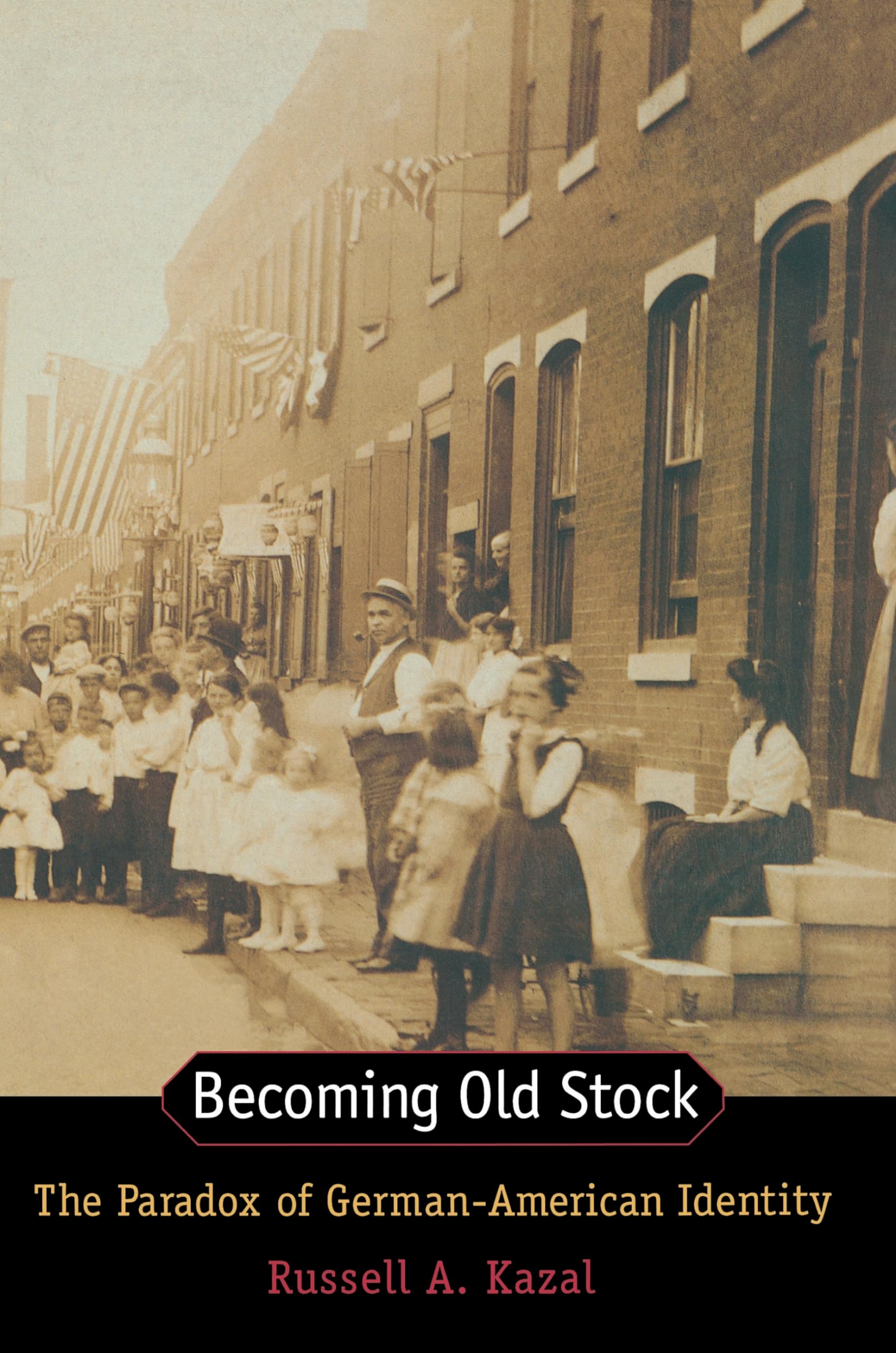
Becoming Old Stock: The Paradox of GermanAmerican Identity,Used
Sold by Ergodebooks, an authorized reseller.
Returns accepted within 30 days | support@ergodebooks.com
Shipping Information
- Free Standard Shipping — United States only
- Processing Time: 3–5 business days
- Estimated Delivery: 6–10 business days after dispatch
- Double-boxed, fully insured & discreetly packaged
- Tracking number sent via email once dispatched
Returns & Refund
Returns accepted within 30 days of delivery.
Damaged or Defective Item
Free return shipping + replacement or full refund
Wrong Item Received
Free return shipping + replacement or full refund
Change of Mind
Return shipping at customer's expense · 25% restocking fee applies
Payment Option

More Americans trace their ancestry to Germany than to any other country. Arguably, German Americans form America's largest ethnic group. Yet they have a remarkably low profile today, reflecting a dramatic, twentiethcentury retreat from GermanAmerican identity. In this age of multiculturalism, why have German Americans gone into ethnic eclipseand where have they ended up? Becoming Old Stock represents the first indepth exploration of that question. The book describes how German Philadelphians reinvented themselves in the early twentieth century, especially after World War I brought a nationwide antiGerman backlash.Using quantitative methods, oral history, and a cultural analysis of written sources, the book explores how, by the 1920s, many middleclass and Lutheran residents had redefined themselves in 'oldstock' termsas 'American' in opposition to southeastern European 'new immigrants.' It also examines workingclass and Catholic Germans, who came to share a common identity with other European immigrants, but not with newly arrived black Southerners.Becoming Old Stock sheds light on the way German Americans used race, American nationalism, and mass culture to fashion new identities in place of ethnic ones. It is also an important contribution to the growing literature on racial identity among European Americans. In tracing the fate of one of America's largest ethnic groups, Becoming Old Stock challenges historians to rethink the phenomenon of ethnic assimilation and to explore its complex relationship to American pluralism.
⚠️ WARNING (California Proposition 65):
This product may contain chemicals known to the State of California to cause cancer, birth defects, or other reproductive harm.
For more information, please visit www.P65Warnings.ca.gov.