
Title
Bees: (CW 351),Used
Sold by Ergodebooks, an authorized reseller.
Returns accepted within 30 days | support@ergodebooks.com
Shipping Information
- Free Standard Shipping — United States only
- Processing Time: 3–5 business days
- Estimated Delivery: 6–10 business days after dispatch
- Double-boxed, fully insured & discreetly packaged
- Tracking number sent via email once dispatched
Returns & Refund
Returns accepted within 30 days of delivery.
Damaged or Defective Item
Free return shipping + replacement or full refund
Wrong Item Received
Free return shipping + replacement or full refund
Change of Mind
Return shipping at customer's expense · 25% restocking fee applies
Payment Option

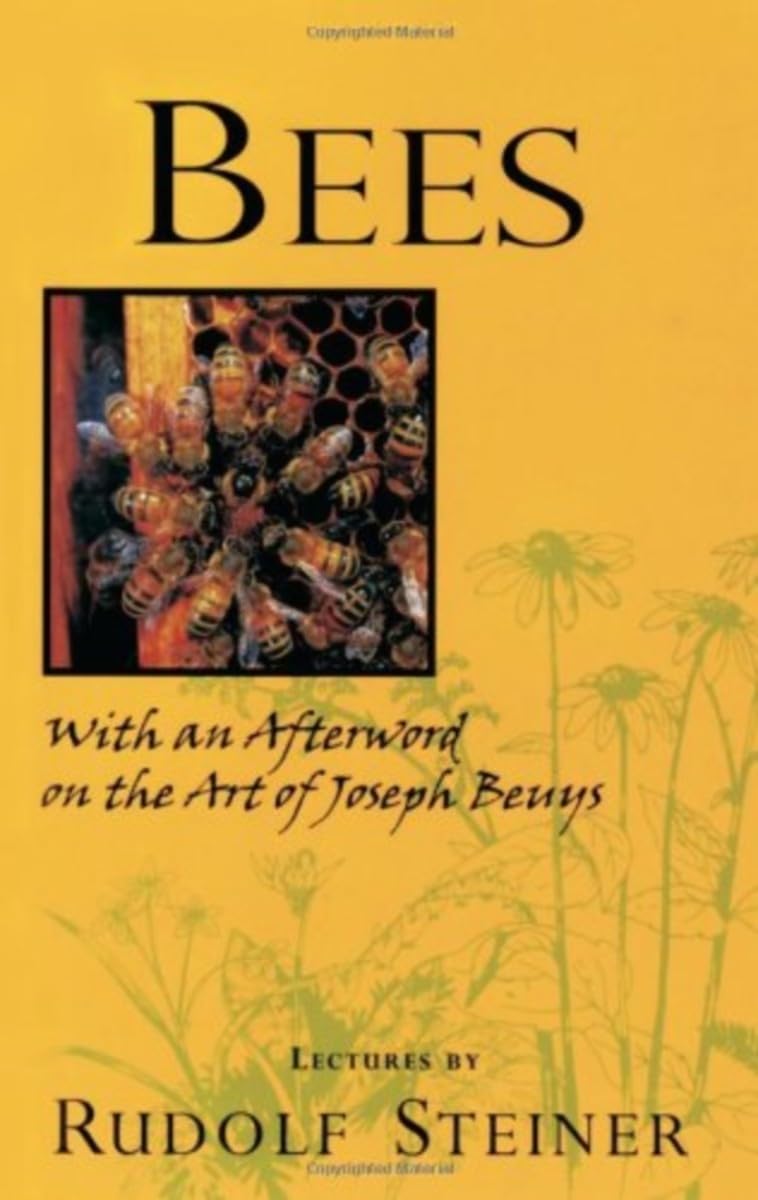
8 Lectures in Dornach, Nov 26, to Dec 22, 1923 (CW 351);1 lecture in Dornach, February 3, 1923 (CW 348)In 1923 Rudolf Steiner predicted the dire state of today's honeybee. He stated that, within fifty to eighty years, we would see the consequences of mechanizing the forces that had previously operated organically in the beehive. Such practices include breeding queen bees artificially.The fact that over sixty percent of the American honeybee population has died during the past ten years, and that this trend is continuing around the world, should make us aware of the importance of the issues discussed in these lectures. Steiner began this series of lectures on bees in response to a question from an audience of workers at the Goetheanum.From physical depictions of the daily activities of bees to the most elevated esoteric insights, these lectures describe the unconscious wisdom of the beehive and its connection to our experience of health, culture, and the cosmos.Bees is essential reading for anyone interested in understanding the true nature of the honeybee, as well as those who wish to heal the contemporary crisis of the beehive. Bees includes an essay by David Adams, "From Queen Bee to Social Sculpture: The Artistic Alchemy of Joseph Beuys."The art and social philosophy of Joseph Beuys (19211986) is among the most influential of the twentieth century. He was strongly influenced by Rudolf Steiner's lectures on bees. The elemental imagery and its relationship to human society played an important role in Beuys's sculptures, drawings, installations, and performance art. Adams' essay on Beuys adds a whole new dimension to these lectures, generally considered to be directed more specifically to biodynamic methods and beekeeping.This volume consists of the 8 final lectures (of 15) from Mensch und Welt. Das Wirken des Geistes in der Natur. ber das Wesen der Bienen (GA 351), plus one lecture of Feb. 3, 1923, from ber Gesundheit und Krankheit. Grundlagen einer geisteswissenschaftlichen Sinneslehre (GA 348).
⚠️ WARNING (California Proposition 65):
This product may contain chemicals known to the State of California to cause cancer, birth defects, or other reproductive harm.
For more information, please visit www.P65Warnings.ca.gov.
- Q: What is the main focus of the book 'Bees: (CW 351)'? A: The book primarily focuses on Rudolf Steiner's lectures about the honeybee, discussing its importance in relation to health, culture, and the cosmos. It addresses the contemporary crisis of the honeybee population and the implications of mechanized beekeeping practices.
- Q: Who is the author of 'Bees: (CW 351)'? A: The author is Rudolf Steiner, a prominent philosopher and social reformer known for his work in anthroposophy and biodynamic agriculture.
- Q: How many lectures are included in this book? A: The book includes eight lectures from the series given in Dornach from November 26 to December 22, 1923, along with one additional lecture from February 3, 1923.
- Q: What is the significance of the additional essay by David Adams? A: David Adams' essay, 'From Queen Bee to Social Sculpture: The Artistic Alchemy of Joseph Beuys,' explores the influence of Steiner's lectures on the art and social philosophy of Joseph Beuys, adding depth to the understanding of the themes discussed in the book.
- Q: Is this book suitable for someone new to the topic of beekeeping? A: Yes, 'Bees: (CW 351)' is suitable for readers new to beekeeping as it provides a foundational understanding of the honeybee's nature and the issues surrounding contemporary beekeeping practices.
- Q: What type of binding does this book have? A: The book is published in a paperback binding, making it lightweight and easy to handle.
- Q: What is the publication date of 'Bees: (CW 351)'? A: The book was published on June 1, 1998.
- Q: How many pages are in 'Bees: (CW 351)'? A: The book contains a total of 240 pages.
- Q: What edition of the book is available? A: The available edition is a revised edition.
- Q: Can 'Bees: (CW 351)' be used as a resource for biodynamic farming? A: Yes, the lectures discussed in 'Bees: (CW 351)' are relevant to biodynamic farming practices, particularly in understanding the relationship between bees and ecological health.