
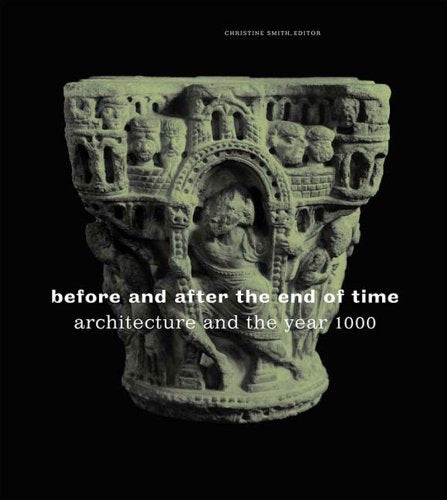
Title
Before And After The End Of Time: Architecture And The Year 1000,New
Sold by Ergodebooks, an authorized reseller.
Returns accepted within 30 days | support@ergodebooks.com
Shipping Information
- Free Standard Shipping — United States only
- Processing Time: 3–5 business days
- Estimated Delivery: 6–10 business days after dispatch
- Double-boxed, fully insured & discreetly packaged
- Tracking number sent via email once dispatched
Returns & Refund
Returns accepted within 30 days of delivery.
Damaged or Defective Item
Free return shipping + replacement or full refund
Wrong Item Received
Free return shipping + replacement or full refund
Change of Mind
Return shipping at customer's expense · 25% restocking fee applies
Payment Option

The end of the worldand of timewas expected by many to occur in the year 1000. This was based on references in the Bible, which also described in considerable architectural detail the Heavenly City of Jerusalem that was to come. The essays in this book look at the contrast between the heavenly architecture of prophecy and the Romanesque architecture that did appear. At the turn of the first millennium, spiritual and historical notions of time were held simultaneously. The powerful imagery of an ideal, translucent kingdom of heaven permeated the European imagination at the same time that the massive style of Romanesque architecture began to flourish. The essay 'The Human Architect...' serves as an excellent introduction to Romanesque architecture with its revival of cutstone masonry and the technological revolution it began. It delineates its links to classical antiquity and points out its innovations. Other essays focus on references to God as the divine architect, on the precious stones of which the Heavenly City is built, architectural photography, and the influences of both Romanesque architecture and the imagery of the ideal city on architects and scholars. They bring to life some of the most powerful and enduring ideas in western European cultural tradition. This book is illustrated throughout in color and black and white. Numerous photographs, drawings, and plans illustrate the exteriors, interiors, and sculptural details of Romanesque architecture. A series of lithographs from Odilon Redon's Apocalypse series evoke the Medieval imagination. 30 color illustrations, 51 blackandwhite illustrations.
⚠️ WARNING (California Proposition 65):
This product may contain chemicals known to the State of California to cause cancer, birth defects, or other reproductive harm.
For more information, please visit www.P65Warnings.ca.gov.
- Q: What are the dimensions of the book? A: The book measures eight point five inches in length, nine point six one inches in height, and zero point four inches in width.
- Q: How many pages does this book have? A: This book contains one hundred twenty-eight pages, providing a comprehensive exploration of its subject.
- Q: What type of binding does this book have? A: The book features a paperback binding, making it lightweight and easy to handle.
- Q: What is the main theme of this book? A: The book explores the architectural contrast between heavenly prophecies and Romanesque architecture as it appeared around the year one thousand.
- Q: Who is the author of this book? A: The book is authored by Christine Smith, who delves into historical and architectural insights.
- Q: Is this book suitable for academic purposes? A: Yes, this book is suitable for academic purposes, particularly in studies related to history and architecture.
- Q: How can I use this book for research? A: You can use this book to gain insights into the architectural styles of the Romanesque period and their cultural significance.
- Q: Is this book appropriate for beginner readers? A: Yes, the essays are written in an accessible style, making it suitable for beginner readers interested in architecture and history.
- Q: Can I use this book for a project on medieval architecture? A: Yes, this book is an excellent resource for projects focused on medieval architecture and its historical context.
- Q: What should I do to preserve the book's condition? A: To preserve the book's condition, store it in a cool, dry place and avoid exposure to direct sunlight.
- Q: How should I clean the book if it gets dirty? A: You can gently wipe the cover with a soft, dry cloth to remove dust or smudges without damaging the material.
- Q: Does this book have any illustrations? A: Yes, the book includes thirty color illustrations and fifty-one black-and-white illustrations to enhance the text.
- Q: Is there a warranty for this book? A: Books typically do not come with warranties, but check with the retailer for return policies.
- Q: What if the book arrives damaged? A: If the book arrives damaged, contact the seller immediately to discuss a return or replacement.
- Q: Can this book be used for a course on art history? A: Yes, this book can be effectively used in a course on art history, especially concerning architectural developments.
- Q: Is there a specific audience for this book? A: The book appeals to students, scholars, and enthusiasts of history and architecture, making it versatile for various readers.