If you have any questions, you are always welcome to contact us. We'll get back to you as soon as possible, withing 24 hours on weekdays.
Customer service
All questions about your order, return and delivery must be sent to our customer service team by e-mail at yourstore@yourdomain.com
Sale & Press
If you are interested in selling our products, need more information about our brand or wish to make a collaboration, please contact us at press@yourdomain.com
Help
If you have any questions, you are always welcome to contact us. We'll get back to you as soon as possible, withing 24 hours on weekdays.
Customer service
All questions about your order, return and delivery must be sent to our customer service team by e-mail at yourstore@yourdomain.com
Sale & Press
If you are interested in selling our products, need more information about our brand or wish to make a collaboration, please contact us at press@yourdomain.com
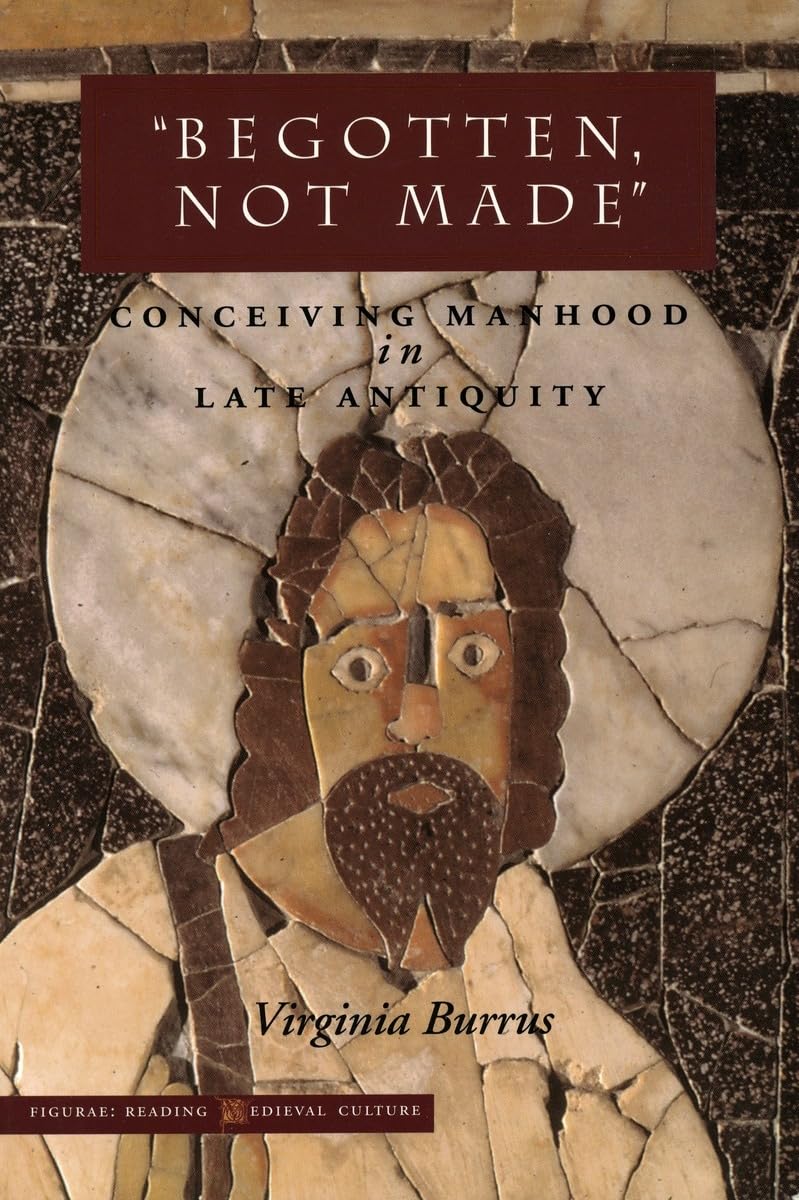
This book interprets fourthcentury theological discourse as an incident in the history of masculine gender, arguing that Nicene trinitarian doctrine is a crucial site not only for theological innovation but also for reimagining and reproducing manhood in the late Roman period. When the Trinity became for the first time the sine qua non of doctrinal orthodoxy, masculinity was conceived anew, in terms that heightened the claims of patriarchal authority while cutting manhood loose from its traditional fleshly and familial moorings.In exploring the significance of this late antique movement for the subsequent history of ideals of manhood in the West, this study directly engages, combines, and thereby disrupts the divergent disciplinary perspectives of historical theology, late Roman cultural history, and French feminist theory. The author brings contemporary theorist Luce Irigaray into dialogue with the Patristic corpus to coax out a fresh interpretation of ancient texts and themes.The book centers on performative readings of major works by three prominent fourthcentury FathersAthanasius of Alexandria, Gregory of Nyssa, and Ambrose of Milan. Each of these ascetic bishops played a crucial role in defending Nicene trinitarian doctrine as the touchstone of orthodox belief; each also modeled a distinctive style of fourthcentury masculine selffashioning. The concluding chapter considers the sum of these three figures from an explicitly feminist theological and theoretical perspective.
⚠️ WARNING (California Proposition 65):
This product may contain chemicals known to the State of California to cause cancer,
birth defects, or other reproductive harm.
For MAP (Minimum Advertised Price) violations and Intellectual Property (IP) or Trademark concerns, please contact:
support@ergodebooks.com
⚠️ California Proposition 65 Warning: Some products sold on this website may expose you to chemicals known to the State of California to cause cancer, birth defects, or other reproductive harm. For more information, visit www.P65Warnings.ca.gov.