
Title
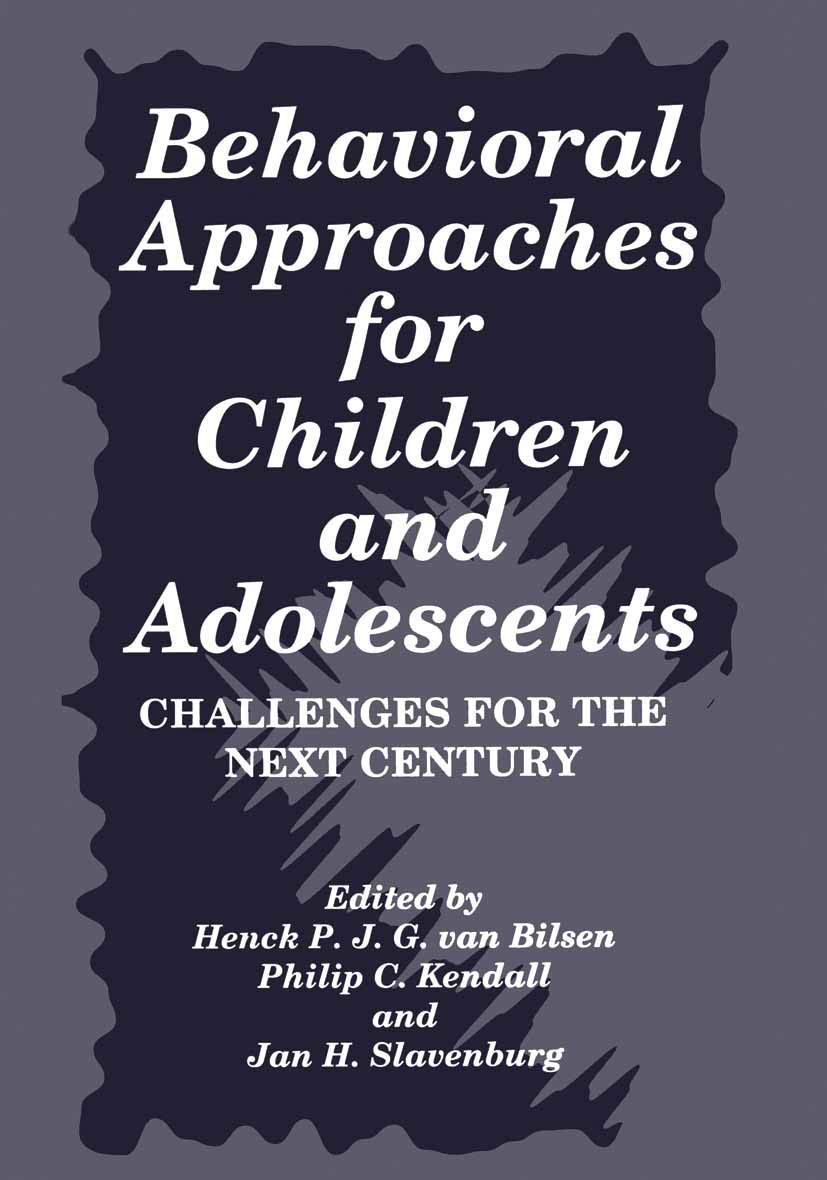
Behavioral Approaches for Children and Adolescents: Challenges for the Next Century (Language of Science),New
Sold by Ergodebooks, an authorized reseller.
Returns accepted within 30 days | support@ergodebooks.com
Shipping Information
- Free Standard Shipping — United States only
- Processing Time: 3–5 business days
- Estimated Delivery: 6–10 business days after dispatch
- Double-boxed, fully insured & discreetly packaged
- Tracking number sent via email once dispatched
Returns & Refund
Returns accepted within 30 days of delivery.
Damaged or Defective Item
Free return shipping + replacement or full refund
Wrong Item Received
Free return shipping + replacement or full refund
Change of Mind
Return shipping at customer's expense · 25% restocking fee applies
Payment Option

Challenges for the next decade as the subtitle ofa book is a statement ofambition. In the present time we have to be ambitious as scientists, clinicians, and teachers. Without ambition we would not be able to confront the problems of young people in an effective way. In this decade, we can see an abundance of problems of young people: football hooliganism, school drop out, vandalism, delinquency, lack ofsocial skills, aggression, and depression. The problem seems to grow. Governments, parents, and concerned citizens call for action now. Unfortunately, the action that is taken is often impulsive and not based on scientifically proven methods: longerjail sentences for young first offenders, putting young offenders in military lookalike training camps, etc. For some reason, the usage of effective interventions is limited. In this, book the reader will find an extensive overview of what we know to be effective as a 'cure' or prevention for the abovementioned problems. The first four chapters will give the reader a clear insight ofwhat the 'state ofthe art' is today. erview of cognitive behavioural therapies with children and ado An integrative ov lescents isgiven by Kendall, PanichelliMindel, and Gerow.Russo and Navalta providesome new dimensions ofbehavior analysis and therapy. What behavioral approaches can offer to education is described by Slavenburg and van Bilsen in two chapters. In Part II authors from Australia, the United States, and the Netherlands describe programs for specific clinical populations: attention deficit disorder, antisocial youth, learning problems, social skills problems, depression, and aggression.
⚠️ WARNING (California Proposition 65):
This product may contain chemicals known to the State of California to cause cancer, birth defects, or other reproductive harm.
For more information, please visit www.P65Warnings.ca.gov.