
Title
Behavioral Public Finance,Used
Sold by Ergodebooks, an authorized reseller.
Returns accepted within 30 days | support@ergodebooks.com
Shipping Information
- Free Standard Shipping — United States only
- Processing Time: 3–5 business days
- Estimated Delivery: 6–10 business days after dispatch
- Double-boxed, fully insured & discreetly packaged
- Tracking number sent via email once dispatched
Returns & Refund
Returns accepted within 30 days of delivery.
Damaged or Defective Item
Free return shipping + replacement or full refund
Wrong Item Received
Free return shipping + replacement or full refund
Change of Mind
Return shipping at customer's expense · 25% restocking fee applies
Payment Option

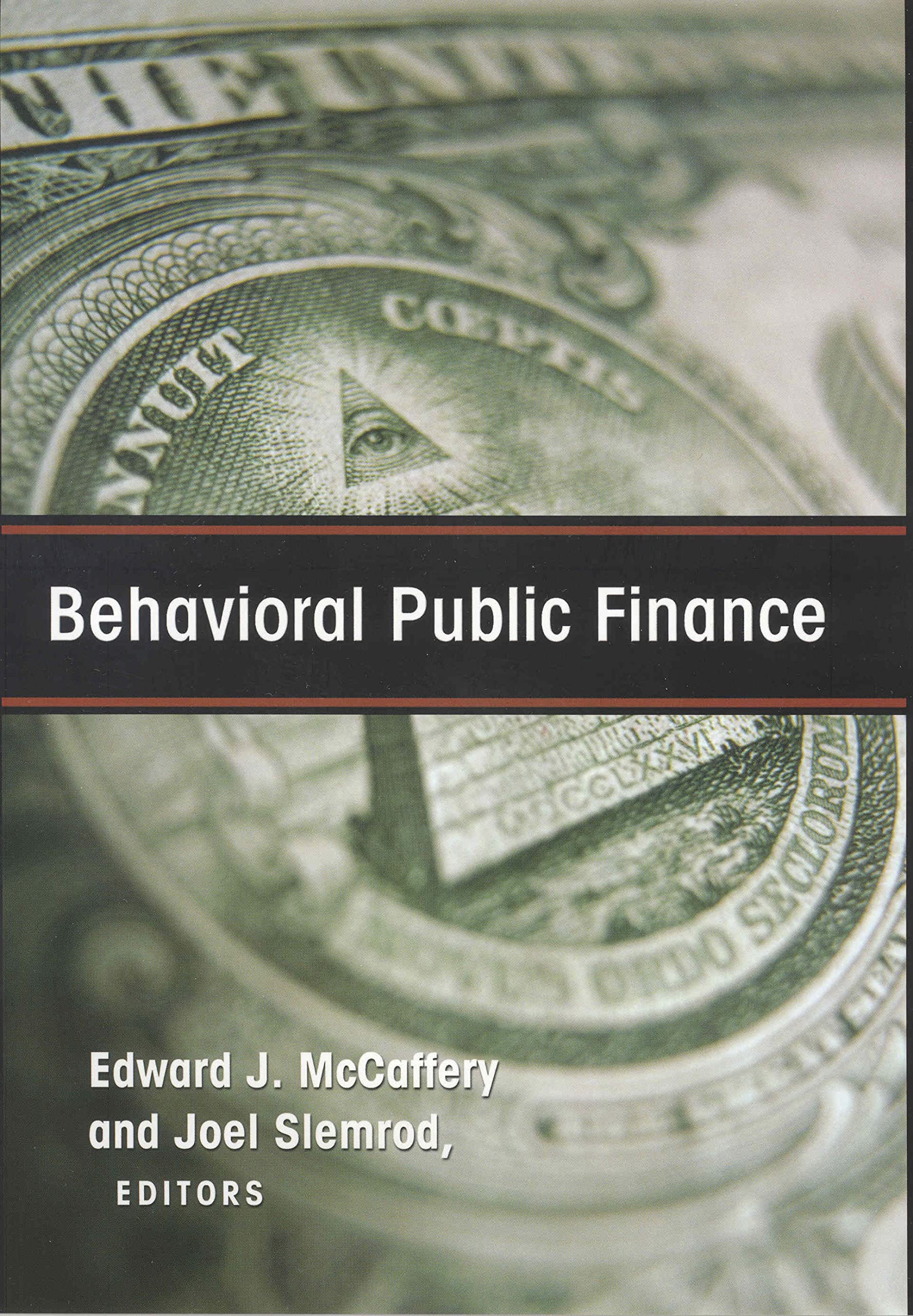
Behavioral economics questions the basic underpinnings of economic theory, showing that people often do not act consistently in their own selfinterest when making economic decisions. While these findings have important theoretical implications, they also provide a new lens for examining public policies, such as taxation, public spending, and the provision of adequate pensions. How can people be encouraged to save adequately for retirement when evidence shows that they tend to spend their money as soon as they can? Would closer monitoring of income tax returns lead to more honest taxpayers or a more distrustful, uncooperative citizenry? Behavioral Public Finance, edited by Edward McCaffery and Joel Slemrod, applies the principles of behavioral economics to government's role in constructing economic and social policies of these kinds and suggests that programs crafted with rational participants in mind may require redesign. Behavioral Public Finance looks at several facets of economic life and asks how behavioral research can increase public welfare. Deborah A. Small, George Loewenstein, and Jeff Strnad note that public support for a tax often depends not only on who bears its burdens, but also on how the tax is framed. For example, people tend to prefer corporate taxes over sales taxes, even though the cost of both is eventually extracted from the consumer. James J. Choi, David Laibson, Brigitte C. Madrian, and Andrew Metrick assess the impact of several different features of 401(k) plans on employee savings behavior. They find that when employees are automatically enrolled in a retirement savings plan, they overwhelmingly accept the status quo and continue participating, while employees without automatic enrollment typically take over a year to join the saving plan. Behavioral Public Finance also looks at taxpayer compliance. While the classic economic model suggests that the low rate of IRS audits means far fewer people should voluntarily pay their taxes than actually do, John Cullis, Philip Jones, and Alan Lewis present new research showing that many people do not underreport their incomes even when the probability of getting caught is a mere one percent. Human beings are not always rational, utilitymaximizing economic agents. Behavioral economics has shown how human behavior departs from the assumptions made by generations of economists. Now, Behavioral Public Finance brings the insights of behavioral economics to analysis of policies that affect us all.
⚠️ WARNING (California Proposition 65):
This product may contain chemicals known to the State of California to cause cancer, birth defects, or other reproductive harm.
For more information, please visit www.P65Warnings.ca.gov.