
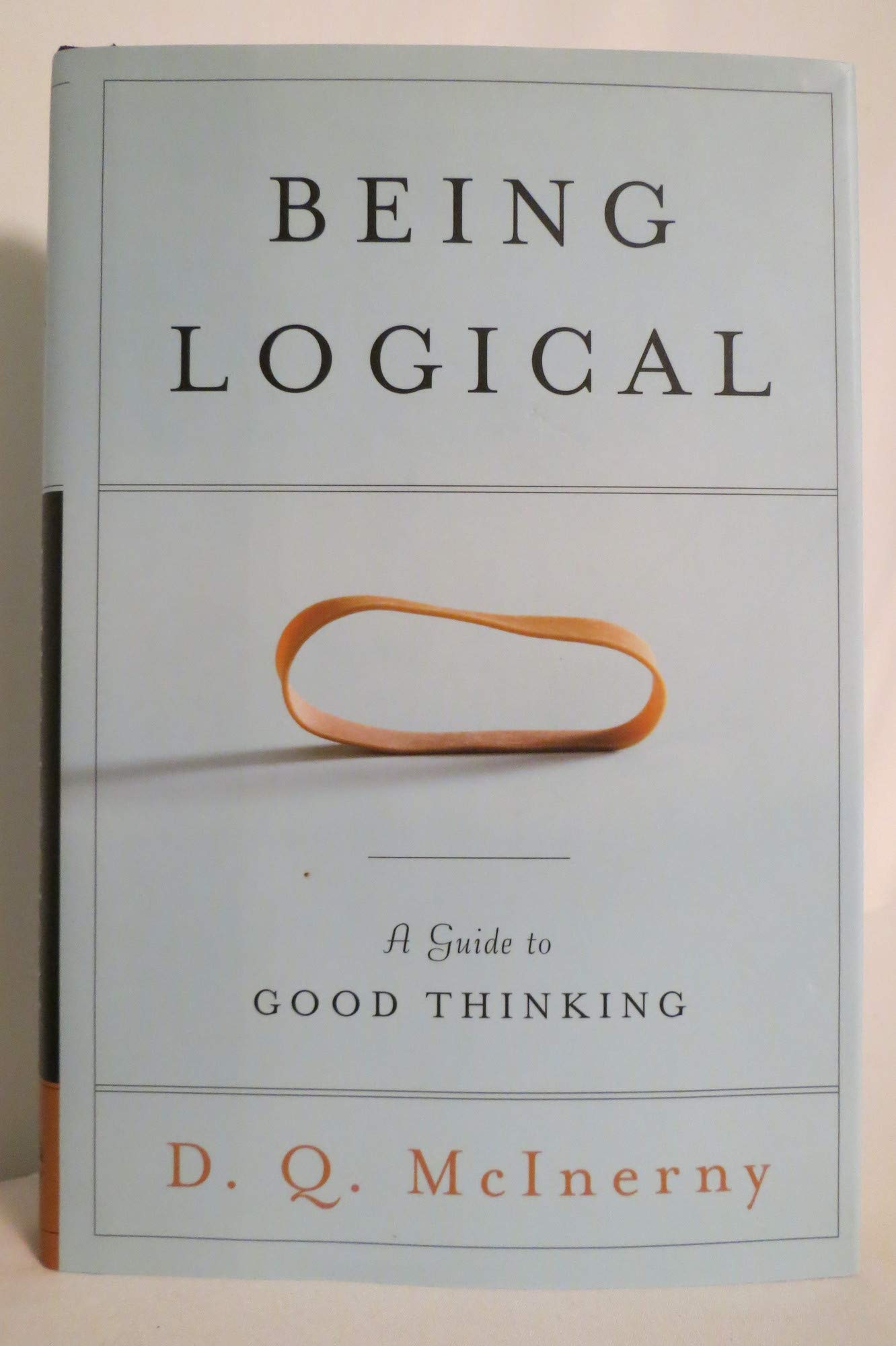
Title
Being Logical: A Guide to Good Thinking,New
Processing time: 1-3 days
US Orders Ships in: 3-5 days
International Orders Ships in: 8-12 days
Return Policy: 15-days return on defective items
Payment Option

Whether regarded as a science, an art, or a skilland it can properly be regarded as all threelogic is the basis of our ability to think, analyze, argue, and communicate. Indeed, logic goes to the very core of what we mean by human intelligence. In this concise, crisply readable book, distinguished professor D. Q. McInerny offers an indispensable guide to using logic to advantage in everyday life. Written explicitly for the layperson, McInernys Being Logical promises to take its place beside Strunk and Whites The Elements of Style as a classic of lucid, invaluable advice.As McInerny notes, logic is a deep, wide, and wonderfully varied field, with a bearing on every aspect of our intellectual life. A mastery of logic begins with an understanding of right reasoningand encompasses a grasp of the close kinship between logical thought and logical expression, a knowledge of the basic terms of argument, and a familiarity with the pitfalls of illogical thinking. Accordingly, McInerny structures his book in a series of brief, penetrating chapters that build on one another to form a unified and coherent introduction to clear and effective reasoning.At the heart of the book is a brilliant consideration of argumenthow an argument is founded and elaborated, how it differs from other forms of intellectual discourse, and how it critically embodies the elements of logic. McInerny teases out the subtleties and complexities of premises and conclusions, differentiates statements of fact from statements of value, and discusses the principles and uses of every major type of argument, from the syllogistic to the conditional. In addition, he provides an incisive look at illogical thinking and explains how to recognize and avoid the most common errors of logic.Elegant, pithy, and precise, Being Logical breaks logic down to its essentials through clear analysis, accessible examples, and focused insights. Whether you are a student or a teacher, a professional sharpening your career skills or an amateur devoted to the fine points of thought and expression, you are sure to find this brief guide to effecting reasoning both fascinating and illuminating.
⚠️ WARNING (California Proposition 65):
This product may contain chemicals known to the State of California to cause cancer, birth defects, or other reproductive harm.
For more information, please visit www.P65Warnings.ca.gov.
- Q: How many pages are in 'Being Logical'? A: There are one hundred sixty pages in 'Being Logical: A Guide to Good Thinking'. This concise book offers insights into the principles of logic.
- Q: What is the binding type of this book? A: The binding type is hardcover. This durable format is ideal for frequent use and enhances the book’s longevity.
- Q: Who is the author of 'Being Logical'? A: The author is D.Q. McInerny. He is a distinguished professor known for his expertise in logic and reasoning.
- Q: What age group is 'Being Logical' suitable for? A: This book is suitable for adults and older teens. Its clear explanations make it accessible for anyone interested in improving their reasoning skills.
- Q: How can I apply the principles from 'Being Logical'? A: You can apply the principles by practicing logical reasoning in daily decision-making. The book provides examples and exercises to enhance your thinking.
- Q: Is this book helpful for students? A: Yes, this book is very helpful for students. It offers foundational skills in logic that can improve academic performance across various subjects.
- Q: How should I care for my hardcover copy of 'Being Logical'? A: To care for your hardcover copy, keep it in a dry place and avoid exposing it to direct sunlight. This will help maintain its condition.
- Q: Can I use this book for teaching purposes? A: Yes, it is suitable for teaching. The clear structure and concise chapters make it a valuable resource for educators.
- Q: What if the book arrives damaged? A: If the book arrives damaged, you should contact the seller for a return or exchange. Most sellers have policies in place for damaged items.
- Q: Are there any common mistakes in logic that this book addresses? A: Yes, the book discusses common pitfalls of illogical thinking. It teaches you how to recognize and avoid these errors in reasoning.
- Q: How does 'Being Logical' compare to other logic books? A: 'Being Logical' is concise and accessible compared to more academic texts. It focuses on practical applications of logic in everyday life.
- Q: Is there a focus on any specific type of argument in the book? A: Yes, the book covers various types of arguments, including syllogistic and conditional arguments. It provides detailed explanations of their structures.
- Q: Will this book benefit someone in a professional setting? A: Absolutely, this book benefits professionals by enhancing critical thinking and reasoning skills essential for effective communication.
- Q: What themes are explored in 'Being Logical'? A: The book explores themes of clear reasoning, the structure of arguments, and the importance of logical thought in communication.
- Q: Can I recommend this book to others? A: Yes, you can confidently recommend this book to others interested in improving their logical reasoning skills. It has received positive reviews for its clarity.
- Q: Is there a glossary of terms in 'Being Logical'? A: No, there is no specific glossary, but the book defines key terms throughout the chapters to aid understanding.