
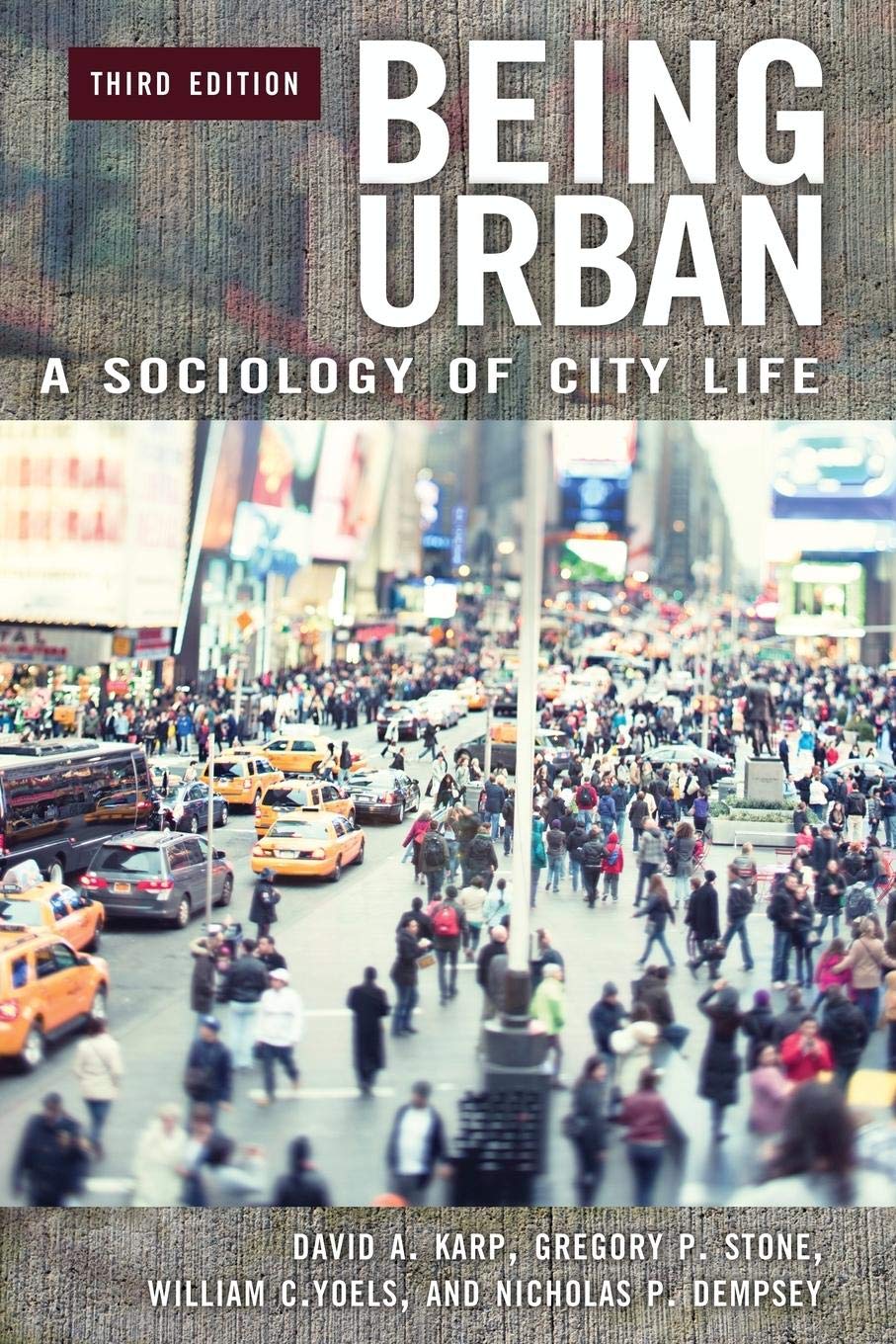
Title
Being Urban: A Sociology of City Life,Used
Sold by Ergodebooks, an authorized reseller.
Returns accepted within 30 days | support@ergodebooks.com
Shipping Information
- Free Standard Shipping — United States only
- Processing Time: 3–5 business days
- Estimated Delivery: 6–10 business days after dispatch
- Double-boxed, fully insured & discreetly packaged
- Tracking number sent via email once dispatched
Returns & Refund
Returns accepted within 30 days of delivery.
Damaged or Defective Item
Free return shipping + replacement or full refund
Wrong Item Received
Free return shipping + replacement or full refund
Change of Mind
Return shipping at customer's expense · 25% restocking fee applies
Payment Option

This third edition of a classic urban sociology text examines critical but oftenneglected aspects of urban life from a socialpsychological theoretical perspective.Symbolic interaction is among the most central theoretical paradigms in sociology and the theory that most thoroughly attends to how individuals give meaning to their worldin this case, how city dwellers interpret and respond to their daily experiences as urbanites. This thoroughly updated edition of Being Urban: A Sociology of City Life remains true to this particular theoretical angle of visionthe symbolic interactionist approachfocusing on specific topics that are relatively neglected in other urban sociology texts, and that lend themselves to the kind of socialpsychological analyses that define the distinctive conceptual core of the authors' efforts.After the first two chapters supply readers with theoretical foundations of urban sociology, the next four chapters describe the various ways that individuals experience and make sense of key aspects of urban life. The final sectionalso composed of four chaptersaddresses strategically chosen urban institutions and related processes of social change. Specific subject areas covered include sports, everyday public life, tolerance for diversity, women in cities, urban politics, and the arts. Readers will learn about how order is maintained in public urban places, understand why cities naturally breed a tolerance for diversity that may not be so easily achieved in less urban settings, and appreciate the delicate political and economic tensions between cities and their surrounding suburbs.
⚠️ WARNING (California Proposition 65):
This product may contain chemicals known to the State of California to cause cancer, birth defects, or other reproductive harm.
For more information, please visit www.P65Warnings.ca.gov.
- Q: What is the page count of 'Being Urban: A Sociology of City Life'? A: This book has three hundred sixty pages. It provides comprehensive insights into urban sociology from a social-psychological perspective.
- Q: What is the binding type of this book? A: The binding type is paperback. This makes it lightweight and easy to carry, suitable for reading on the go.
- Q: What are the dimensions of 'Being Urban'? A: The book measures six point fourteen inches in length, zero point seventy-five inches in width, and nine point twenty-one inches in height. These dimensions make it portable and easy to store.
- Q: Who is the author of 'Being Urban: A Sociology of City Life'? A: The author is David A. Karp. He brings a sociological perspective to urban life, focusing on how individuals interpret their experiences.
- Q: What is the target audience for this book? A: The target audience includes students and professionals in sociology and urban studies. It’s suitable for anyone interested in understanding city life from a social-psychological standpoint.
- Q: Is 'Being Urban' suitable for beginners in sociology? A: Yes, it is suitable for beginners. The first two chapters provide foundational theoretical concepts that help readers understand urban sociology.
- Q: How can I apply the concepts from this book? A: You can apply the concepts by analyzing urban experiences through a social-psychological lens. This book offers insights into various urban topics like public life and social change.
- Q: Does this book cover modern urban issues? A: Yes, it addresses contemporary urban issues such as diversity, urban politics, and social change. It provides a relevant context for understanding current urban dynamics.
- Q: What themes are explored in 'Being Urban'? A: Key themes include tolerance for diversity, urban politics, and the role of arts in cities. These themes help illustrate the complexities of urban life.
- Q: How do I keep the book in good condition? A: To keep it in good condition, store it in a dry place away from direct sunlight. Avoid bending the cover or pages to maintain its integrity.
- Q: What if the book arrives damaged? A: If the book arrives damaged, contact the seller for a replacement or refund. Most sellers have policies in place to address such issues.
- Q: Is there a warranty for this book? A: No, books typically do not come with warranties. However, you should check the seller's return policy for any concerns.
- Q: Can I find this book in libraries? A: Yes, 'Being Urban' is often available in academic libraries. You can also check local public libraries for its availability.
- Q: What makes 'Being Urban' unique compared to other sociology books? A: It uniquely focuses on symbolic interactionism in urban contexts, exploring often-neglected aspects of city life that other texts overlook.
- Q: Are there any illustrations in this book? A: No, 'Being Urban' primarily contains text without illustrations. It focuses on theoretical discussions and analyses rather than visual representations.
- Q: What are the key topics discussed in the book? A: Key topics include sports, public life, urban politics, and the arts. These areas provide a broader understanding of urban sociology.