
Title
Believe Not Every Spirit: Possession, Mysticism, & Discernment in Early Modern Catholicism,Used
Sold by Ergodebooks, an authorized reseller.
Returns accepted within 30 days | support@ergodebooks.com
Shipping Information
- Free Standard Shipping — United States only
- Processing Time: 3–5 business days
- Estimated Delivery: 6–10 business days after dispatch
- Double-boxed, fully insured & discreetly packaged
- Tracking number sent via email once dispatched
Returns & Refund
Returns accepted within 30 days of delivery.
Damaged or Defective Item
Free return shipping + replacement or full refund
Wrong Item Received
Free return shipping + replacement or full refund
Change of Mind
Return shipping at customer's expense · 25% restocking fee applies
Payment Option

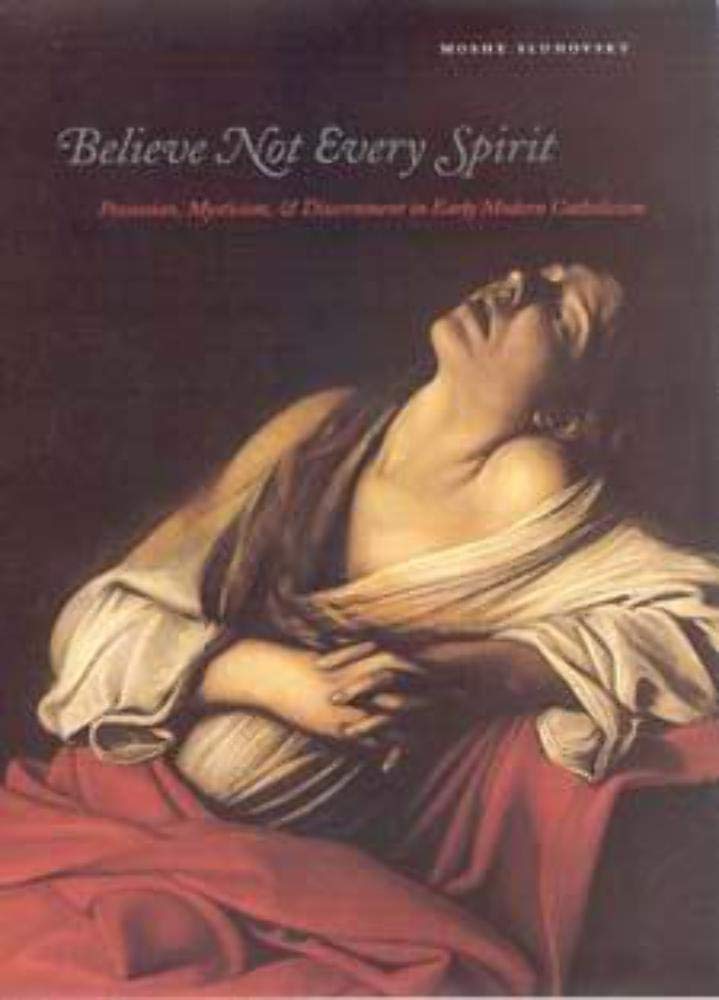
From 1400 through 1700, the number of reports of demonic possessions among European women was extraordinarily high. During the same period, a new type of mysticismpopular with womenemerged that greatly affected the risk of possession and, as a result, the practice of exorcism. Many feared that in moments of rapture, women, who had surrendered their souls to divine love, were not experiencing the work of angels, but rather the ravages of demons in disguise. So how then, asks Moshe Sluhovsky, were practitioners of exorcism to distinguish demonic from divine possessions?Drawing on unexplored accounts of mystical schools and spiritual techniques, testimonies of the possessed, and exorcism manuals, Believe Not Every Spirit examines how early modern Europeans dealt with this dilemma. The personal experiences of practitioners, Sluhovsky shows, trumped theological knowledge. Worried that this could lead to a rejection of Catholic rituals, the church reshaped the meaning and practices of exorcism, transforming this healing rite into a means of spiritual interrogation. In its efforts to distinguish between good and evil, the church developed important new explanatory frameworks for the relations between body and soul, interiority and exteriority, and the natural and supernatural.
⚠️ WARNING (California Proposition 65):
This product may contain chemicals known to the State of California to cause cancer, birth defects, or other reproductive harm.
For more information, please visit www.P65Warnings.ca.gov.
- Q: What is the main topic of 'Believe Not Every Spirit'? A: 'Believe Not Every Spirit' explores the phenomena of demonic possession and mysticism in early modern Catholicism, focusing on the period between 1400 and 1700.
- Q: Who is the author of this book? A: The book is authored by Moshe Sluhovsky, who delves into historical accounts and practices surrounding possession and exorcism.
- Q: What historical context does the book cover? A: The book covers the historical context of Europe from 1400 to 1700, highlighting the high number of reported demonic possessions among women during this time.
- Q: How does the book address the distinction between divine and demonic possession? A: The author examines the challenges faced by practitioners of exorcism in differentiating between divine and demonic influences, drawing on historical accounts and exorcism manuals.
- Q: What themes are explored in the book? A: Themes include the relationship between body and soul, the practices of exorcism, and the evolving understanding of mysticism and possession in early modern Catholicism.
- Q: Is 'Believe Not Every Spirit' suitable for academic research? A: Yes, the book is well-researched and provides valuable insights for academic research on historical religious practices and mystical experiences.
- Q: What type of binding does this book have? A: 'Believe Not Every Spirit' is available in hardcover binding, ensuring durability and a quality reading experience.
- Q: How many pages does the book have? A: The book contains 384 pages, providing a comprehensive exploration of its subject matter.
- Q: When was 'Believe Not Every Spirit' published? A: The book was published on May 1, 2007.
- Q: What audience would benefit from reading this book? A: The book is beneficial for historians, theologians, and anyone interested in the intersection of religion, mysticism, and cultural history in early modern Europe.