If you have any questions, you are always welcome to contact us. We'll get back to you as soon as possible, withing 24 hours on weekdays.
Customer service
All questions about your order, return and delivery must be sent to our customer service team by e-mail at yourstore@yourdomain.com
Sale & Press
If you are interested in selling our products, need more information about our brand or wish to make a collaboration, please contact us at press@yourdomain.com
Help
If you have any questions, you are always welcome to contact us. We'll get back to you as soon as possible, withing 24 hours on weekdays.
Customer service
All questions about your order, return and delivery must be sent to our customer service team by e-mail at yourstore@yourdomain.com
Sale & Press
If you are interested in selling our products, need more information about our brand or wish to make a collaboration, please contact us at press@yourdomain.com
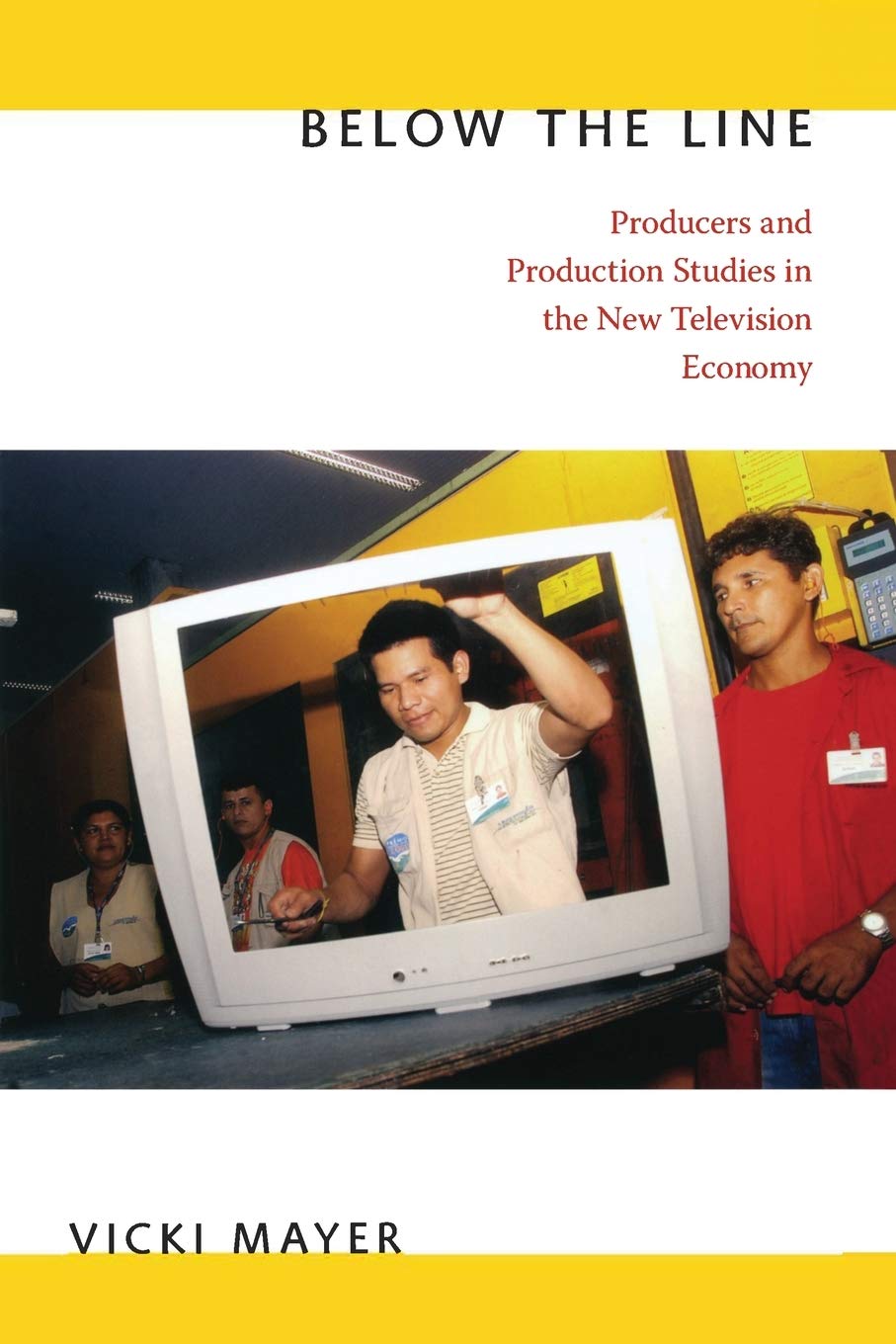
Below the Line illuminates the hidden labor of people who not only produce things that the television industry needs, such as a bit of content or a policy sound bite, but also produce themselves in the service of capital expansion. Vicki Mayer considers the work of television set assemblers, softcore cameramen, realityprogram casters, and publicaccess and cable commissioners in relation to the globalized economy of the television industry. She shows that these workers are increasingly engaged in professional and creative work, unsettling the industrys mythological account of itself as a business driven by auteurs, manned by an executive class, and created by the talented few. As Mayer demonstrates, the new television economy casts a wide net to exploit those excluded from these hierarchies. Meanwhile, television set assemblers in Brazil devise creative solutions to the problems of material production. Softcore videographers, who sell televised content, develop their own modes of professionalism. Everyday people become casters, who commodify suitable participants for reality programs, or volunteers, who administer local cable television policies. These sponsors and regulators boost media industries profits when they commodify and discipline their colleagues, their neighbors, and themselves. Mayer proposes that studies of production acknowledge the changing dynamics of labor to include production workers who identify themselves and their labor with the industry, even as their work remains undervalued or invisible.
⚠️ WARNING (California Proposition 65):
This product may contain chemicals known to the State of California to cause cancer,
birth defects, or other reproductive harm.
For MAP (Minimum Advertised Price) violations and Intellectual Property (IP) or Trademark concerns, please contact:
support@ergodebooks.com
⚠️ California Proposition 65 Warning: Some products sold on this website may expose you to chemicals known to the State of California to cause cancer, birth defects, or other reproductive harm. For more information, visit www.P65Warnings.ca.gov.