
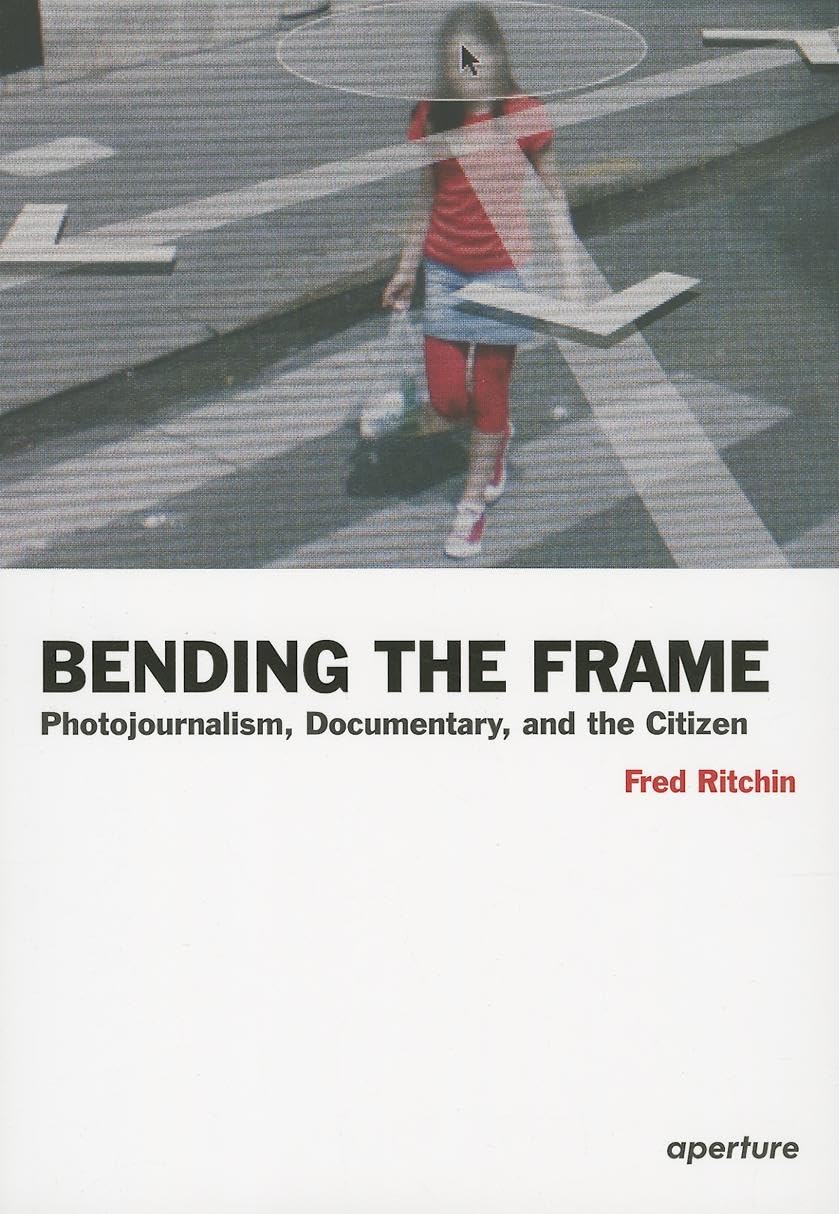
Title
Bending the Frame: Photojournalism, Documentary, and the Citizen,Used
Sold by Ergodebooks, an authorized reseller.
Returns accepted within 30 days | support@ergodebooks.com
Shipping Information
- Free Standard Shipping — United States only
- Processing Time: 3–5 business days
- Estimated Delivery: 6–10 business days after dispatch
- Double-boxed, fully insured & discreetly packaged
- Tracking number sent via email once dispatched
Returns & Refund
Returns accepted within 30 days of delivery.
Damaged or Defective Item
Free return shipping + replacement or full refund
Wrong Item Received
Free return shipping + replacement or full refund
Change of Mind
Return shipping at customer's expense · 25% restocking fee applies
Payment Option

In 'Bending the Frame,' Fred RitchinProfessor of Photography & Imaging at New York University's Tisch School of the Arts, and author of 'After Photography'examines the complex relations between social justice and photojournalism in today's oversaturated political and media climates. Is visual journalism even effective at all, given the ease with which so many of us can simply record events? And how can the impact of iconic images from the Civil Rights Movement or the Vietnam War be compared to, say, the consequences of leaked images from Abu Ghraib? Do changes in strategy imply changes in accountability and responsibility for visual journalism as a whole? Ritchin intends his discussionwhich ranges across new media but also includes uses of video as well as a wide range of books and exhibitionsto provide critical tools with which to approach the various efforts of today's visual (and 'citizen') journalists and documentary photographers. He also examines the historical uses of photography and related media to inspire social change, the better to pose the critical question that lies at the heart of his book: How can images promote new thinking and make a difference in the world?
⚠️ WARNING (California Proposition 65):
This product may contain chemicals known to the State of California to cause cancer, birth defects, or other reproductive harm.
For more information, please visit www.P65Warnings.ca.gov.
- Q: How many pages does the book have? A: This book contains one hundred seventy-six pages. It provides a comprehensive exploration of contemporary photojournalism and visual storytelling.
- Q: What is the binding type of this book? A: The binding type is paperback. This makes it lightweight and easy to carry around.
- Q: What are the dimensions of the book? A: The dimensions are six point zero six inches in length, zero point five two inches in width, and eight point four three inches in height. These dimensions make it a convenient size for reading.
- Q: Who is the author of this book? A: The author is Fred Ritchin. He is known for his influential works on photography and visual media.
- Q: What is the main theme of the book? A: The main theme explores the future of photography and the role of image makers in society. It encourages readers to think critically about visual storytelling.
- Q: Is this book suitable for beginners in photography? A: Yes, this book is suitable for beginners. It provides a thoughtful introduction to contemporary issues in photography and visual media.
- Q: Can I use this book for academic purposes? A: Yes, this book can be used for academic purposes. It offers insights and critical questions relevant to the study of photojournalism and media.
- Q: Is there a specific age group this book is aimed at? A: This book is aimed at adults and young adults. It discusses complex themes that may not be suitable for younger readers.
- Q: How should I care for this book? A: To care for this book, store it in a dry place away from direct sunlight. Avoid bending the pages to maintain its condition.
- Q: Is this book safe for all readers? A: Yes, this book is safe for all readers. It does not contain explicit content but discusses serious themes related to photography.
- Q: What should I do if the book arrives damaged? A: If the book arrives damaged, contact customer support for assistance. They can help with returns or exchanges.
- Q: Can I return the book if I don't like it? A: Yes, you can return the book if you are not satisfied. Ensure it is in its original condition to qualify for a refund.
- Q: How is this book different from other photography books? A: This book is unique because it addresses the societal implications of photography. It goes beyond techniques and focuses on the narrative role of images.
- Q: Are there any illustrations in the book? A: Yes, the book includes forty color illustrations. These visuals enhance the understanding of the discussed concepts.
- Q: What genre does this book belong to? A: This book belongs to the genre of Criticism and Essays. It critically examines photojournalism and visual culture.
- Q: Is this book part of a series? A: Yes, this book is part of the 'Aperture Ideas' series. It includes writings from various artists and thinkers on photography.