
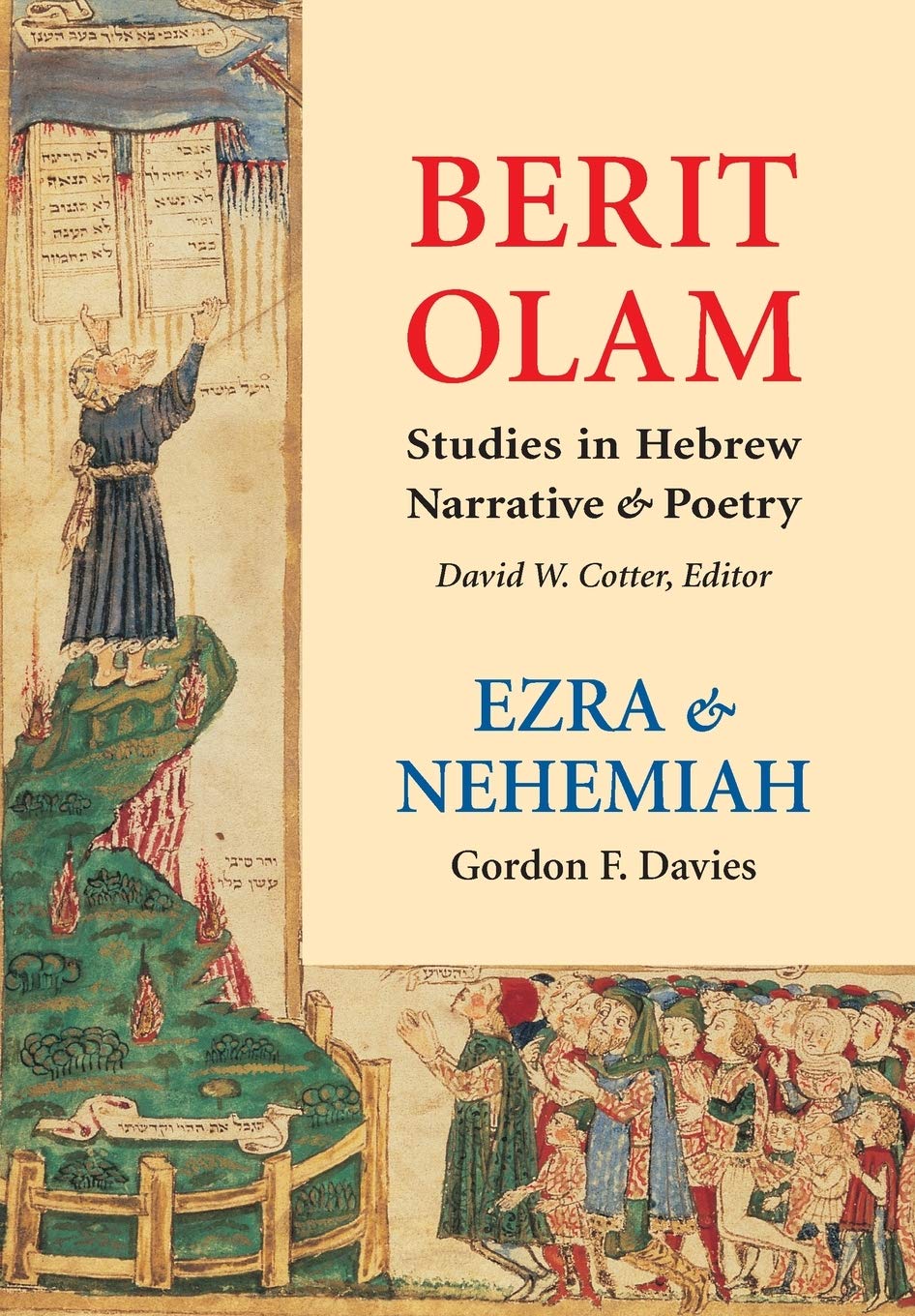
Title
Berit Olam: Ezra And Nehemiah,Used
Sold by Ergodebooks, an authorized reseller.
Returns accepted within 30 days | support@ergodebooks.com
Shipping Information
- Free Standard Shipping — United States only
- Processing Time: 3–5 business days
- Estimated Delivery: 6–10 business days after dispatch
- Double-boxed, fully insured & discreetly packaged
- Tracking number sent via email once dispatched
Returns & Refund
Returns accepted within 30 days of delivery.
Damaged or Defective Item
Free return shipping + replacement or full refund
Wrong Item Received
Free return shipping + replacement or full refund
Change of Mind
Return shipping at customer's expense · 25% restocking fee applies
Payment Option

EzraNehemiah has been neglected in biblical studies, but it is important as one of the few windows into the Persian period of Israel's history, the setting for so much of the final shape of the Hebrew Bible. To know this period is to know what influenced these redactors. In Ezra and Nehemiah Gordon Davies provides that knowledge using rhetorical criticism, a methodology that reveals the full range and progress of the book's ideas without hiding its rough seams and untidy edges.The purpose of rhetorical criticism is to explain not the source but the power of the text as a unitary message. This approach does not look at plot development, characterization, or other elements whose roughness makes EzraNehemiah frustrating to read. Instead, it examines the three parts of the relationship the strategies, the situations, and the effects between the speaker and the audience. Rhetorical criticism's scrutiny of the audience in context favors the search for the ideas and structures that are indigenous to the culture of the text.Rhetorical criticism is interested in figures of speech as means of persuasion. Therefore, to apply it to EzraNehemiah, Davies concentrates on the public discourse the orations, letters, and prayers throughout its text. In each chapter he follows a procedure that: (1) where it is unclear, identifies the rhetorical unit in which the discourse is set; (2) identifies the audiences of the discourse and the rhetorical situation; (3) studies the arrangement of the material; (4) studies the effect on the various audiences; (5) reviews the passage as a whole and judges its success. In the conclusion, Davies explains that EzraNehemiah makes theological sense on its own terms, by forming a single work in which a range of ideas is argued.Biblical scholars as well as those interested in literary criticism, communication studies, rhetorical studies, ecclesiology, and homiletics will find Ezra and Nehemiah enlightening.Chapters are Ezra 1:16,' 'Ezra 4:124,' 'Ezra 5:16: 15,' 'Ezra 7,' 'Ezra 910,' 'Nehemiah 1 2,' 'Nehemiah 37,' and 'Nehemiah 810.'Gordon F. Davies is associate professor of Old Testament and dean of students at St. Augustine's Seminary of Toronto. '
⚠️ WARNING (California Proposition 65):
This product may contain chemicals known to the State of California to cause cancer, birth defects, or other reproductive harm.
For more information, please visit www.P65Warnings.ca.gov.