If you have any questions, you are always welcome to contact us. We'll get back to you as soon as possible, withing 24 hours on weekdays.
Customer service
All questions about your order, return and delivery must be sent to our customer service team by e-mail at yourstore@yourdomain.com
Sale & Press
If you are interested in selling our products, need more information about our brand or wish to make a collaboration, please contact us at press@yourdomain.com
Help
If you have any questions, you are always welcome to contact us. We'll get back to you as soon as possible, withing 24 hours on weekdays.
Customer service
All questions about your order, return and delivery must be sent to our customer service team by e-mail at yourstore@yourdomain.com
Sale & Press
If you are interested in selling our products, need more information about our brand or wish to make a collaboration, please contact us at press@yourdomain.com
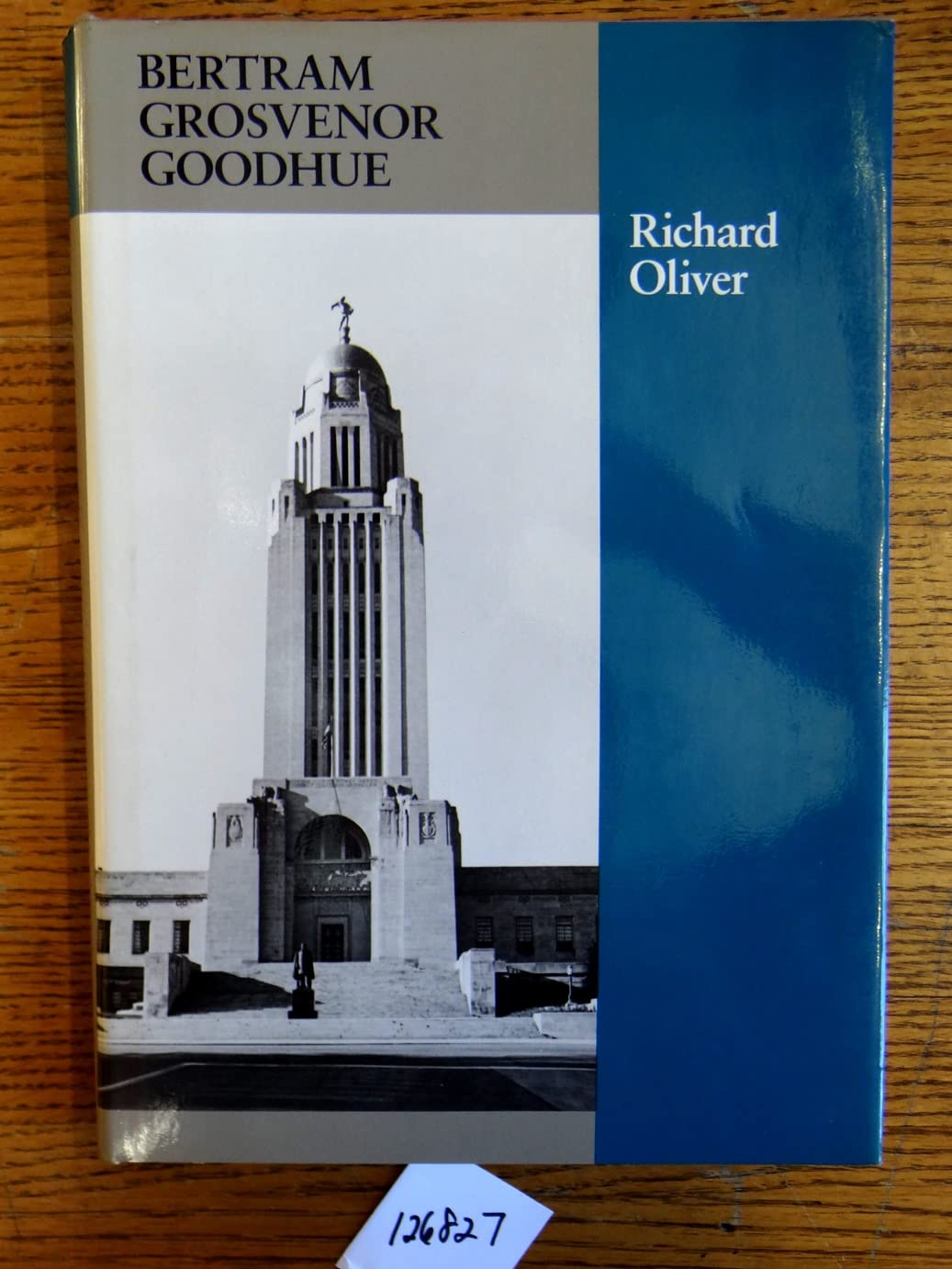
Bertram Goodhue was the undisputed eclectic synthesist of his generation in America. His wide repertory included elements from Gothic, Spanish, and Classical styles to create such landmark buildings as St. Thomas's church in New York, the National Academy of Science in Washington, and the Nebraska State Capitol which HenryRussell Hitchcock called 'the most innovative state capitol built in the twentieth century.' Goodhue's Church of St. Bartholomew in New York and his Central Library in Los Angeles are currently the focus of heated preservation debates. This book goes beyond the stock characterizations of Goodhue as a derivative architect or protomodernist. It shows Goodhue as a talented exemplar of the free eclectism of the late nineteenth century, an innovator who freshly interpreted traditional forms. The author discusses Goodhue's early career during which he displayed a remarkable skill in draftsmanship and decorative design, as well as his later search for new directions after the impact of Scott's Liverpool Cathedral stimulated him to reevaluate the function of tradition in contemporary practice. The author is a registered architect who practices out of his own firm, Richard Oliver Architects, in New York. He has taught at Columbia University, was Curator of Architecture and Design at the CooperHewitt Museum for several years, and is the author of two previous books, Architectural Drawing and America's Grand Resort Hotels. This is included in the Architectural History Foundation's American Monograph Series.
⚠️ WARNING (California Proposition 65):
This product may contain chemicals known to the State of California to cause cancer,
birth defects, or other reproductive harm.
For MAP (Minimum Advertised Price) violations and Intellectual Property (IP) or Trademark concerns, please contact:
support@ergodebooks.com
⚠️ California Proposition 65 Warning: Some products sold on this website may expose you to chemicals known to the State of California to cause cancer, birth defects, or other reproductive harm. For more information, visit www.P65Warnings.ca.gov.