
Title
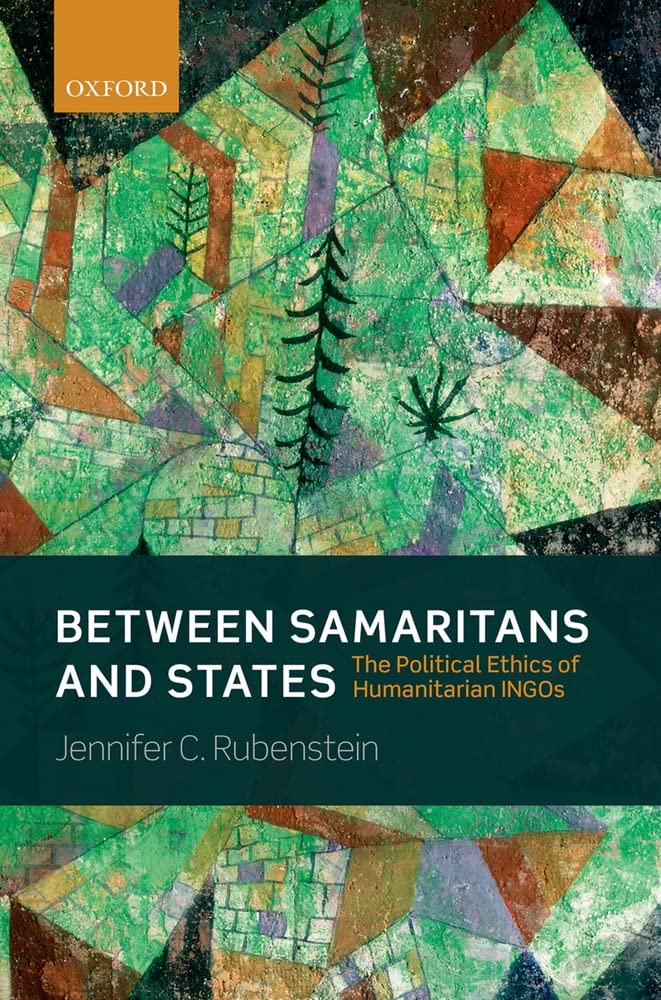
Between Samaritans and States: The Political Ethics of Humanitarian INGOs,Used
Sold by Ergodebooks, an authorized reseller.
Returns accepted within 30 days | support@ergodebooks.com
Shipping Information
- Free Standard Shipping — United States only
- Processing Time: 3–5 business days
- Estimated Delivery: 6–10 business days after dispatch
- Double-boxed, fully insured & discreetly packaged
- Tracking number sent via email once dispatched
Returns & Refund
Returns accepted within 30 days of delivery.
Damaged or Defective Item
Free return shipping + replacement or full refund
Wrong Item Received
Free return shipping + replacement or full refund
Change of Mind
Return shipping at customer's expense · 25% restocking fee applies
Payment Option

This book provides the first booklength, Englishlanguage account of the political ethics of largescale, Westernbased humanitarian INGOs, such as Oxfam, CARE, and Doctors Without Borders. These INGOs are often either celebrated as 'dogooding machines' or maligned as incompetents 'on the road to hell'. In contrast, this book suggests the picture is more complicated.Drawing on political theory, philosophy, and ethics, along with original fieldwork, this book shows that while humanitarian INGOs are often perceived as nongovernmental and apolitical, they are in fact sometimes somewhat governmental, highly political, and often 'secondbest' actors. As a result, they face four central ethical predicaments: the problem of spattered hands, the quandary of the secondbest, the costeffectiveness conundrum, and the moral motivation tradeoff.This book considers what it would look like for INGOs to navigate these predicaments in ways that are as consistent as possible with democratic, egalitarian, humanitarian and justicebased norms. It argues that humanitarian INGOs must regularly make deep moral compromises. In choosing which compromises to make, they should focus primarily on their overall consequences, as opposed to their intentions or the intrinsic value of their activities. But they should interpret consequences expansively, and not limit themselves to those that are amenable to precise costbenefit analysis. The book concludes by explaining the implications of its 'map' of humanitarian INGO political ethics for individual donors to INGOs, and for how we all should conceive of INGOs' role in addressing pressing global problems.
⚠️ WARNING (California Proposition 65):
This product may contain chemicals known to the State of California to cause cancer, birth defects, or other reproductive harm.
For more information, please visit www.P65Warnings.ca.gov.