If you have any questions, you are always welcome to contact us. We'll get back to you as soon as possible, withing 24 hours on weekdays.
Customer service
All questions about your order, return and delivery must be sent to our customer service team by e-mail at yourstore@yourdomain.com
Sale & Press
If you are interested in selling our products, need more information about our brand or wish to make a collaboration, please contact us at press@yourdomain.com
Help
If you have any questions, you are always welcome to contact us. We'll get back to you as soon as possible, withing 24 hours on weekdays.
Customer service
All questions about your order, return and delivery must be sent to our customer service team by e-mail at yourstore@yourdomain.com
Sale & Press
If you are interested in selling our products, need more information about our brand or wish to make a collaboration, please contact us at press@yourdomain.com
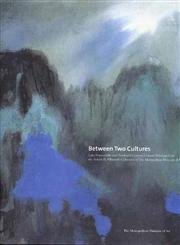
During a crucial period from the 1860s to about 1980, Chinese painting was transformed into a modern expression of its classical heritage. This book draws on a selection of modern Chinese paintings from the Robert H. Ellsworth Collection at The Metropolitan Museum of Art in order to explore this period, discussing issues of modernity and creativity in latenineteenth and earlytwentiethcentury Chinese painting.Wen C. Fong deals with both traditionalist and modernizing Chinese masters from the comparative perspective of East and West, traditional and modern. He begins by examining the last traditional 'revival,' the epigraphic school of painting, and the rise of a populist art in the cosmopolitan city of Shanghai. Next he focuses on painters who absorbed the lessons of Western realism, in particular one artist who followed the Ecole des Beaux Arts and one who adapted the model of the Japanese Nihonga painters, and on three great traditionalist masters, two of whom were professional populist painters. Finally he explores Chinese painting from about 1950 to 1980 by the second generation of artists and teachers in the national academies who, having been trained by traditionalist and Westernstyle teachers, developed their own schools of influence in their search for a new synthesis of Chinese and Western methods.
⚠️ WARNING (California Proposition 65):
This product may contain chemicals known to the State of California to cause cancer,
birth defects, or other reproductive harm.
For MAP (Minimum Advertised Price) violations and Intellectual Property (IP) or Trademark concerns, please contact:
support@ergodebooks.com
⚠️ California Proposition 65 Warning: Some products sold on this website may expose you to chemicals known to the State of California to cause cancer, birth defects, or other reproductive harm. For more information, visit www.P65Warnings.ca.gov.