If you have any questions, you are always welcome to contact us. We'll get back to you as soon as possible, withing 24 hours on weekdays.
Customer service
All questions about your order, return and delivery must be sent to our customer service team by e-mail at yourstore@yourdomain.com
Sale & Press
If you are interested in selling our products, need more information about our brand or wish to make a collaboration, please contact us at press@yourdomain.com
Help
If you have any questions, you are always welcome to contact us. We'll get back to you as soon as possible, withing 24 hours on weekdays.
Customer service
All questions about your order, return and delivery must be sent to our customer service team by e-mail at yourstore@yourdomain.com
Sale & Press
If you are interested in selling our products, need more information about our brand or wish to make a collaboration, please contact us at press@yourdomain.com
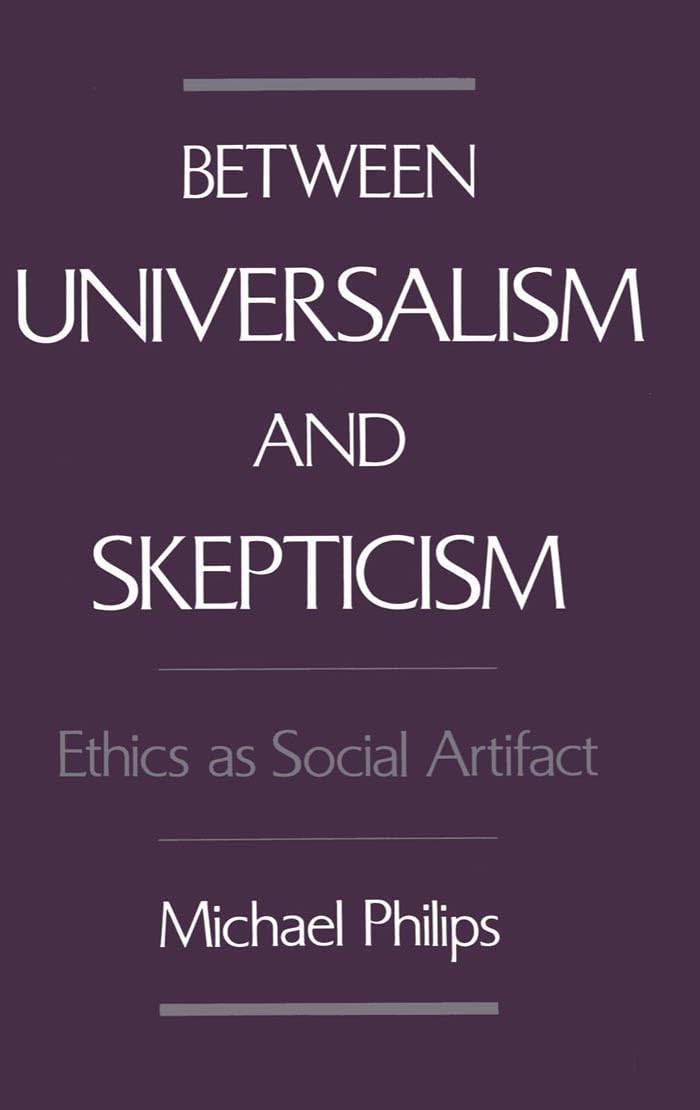
Philips defends a middle ground between the view that there is a set of standards binding on rational beings as such (universalism) and the view that differences in morals reduce ultimately to matters of taste (skepticism). He begins with a sustained critique of universalist moral theories and some familiar approaches to concrete moral questions that presuppose them (most appeals to intuitions, respect for person's moralities, and versions of contractarianism and wide reflective equilibrium). He goes on to criticize major recent attempts to develop nonuniversalist alternatives to skepticism, arguing that they rely on excessively abstract and philosophically indefensible preference satisfaction theories of the good. According to Philips's positive alternative, moral standards are justified to the extent that they support reasonably valued ways of life. He devotes considerable attention to clarifying this idea and draws conclusions from it about the role and limits of reason in ethics. Philips's theory provides us with a theoretical basis for dealing with actual moral controversies and for approaching questions of applied and professional ethics in a systematic way.
⚠️ WARNING (California Proposition 65):
This product may contain chemicals known to the State of California to cause cancer,
birth defects, or other reproductive harm.
For MAP (Minimum Advertised Price) violations and Intellectual Property (IP) or Trademark concerns, please contact:
support@ergodebooks.com
⚠️ California Proposition 65 Warning: Some products sold on this website may expose you to chemicals known to the State of California to cause cancer, birth defects, or other reproductive harm. For more information, visit www.P65Warnings.ca.gov.