
Title
Beyond Aviation Human Factors,Used
Sold by Ergodebooks, an authorized reseller.
Returns accepted within 30 days | support@ergodebooks.com
Shipping Information
- Free Standard Shipping — United States only
- Processing Time: 3–5 business days
- Estimated Delivery: 6–10 business days after dispatch
- Double-boxed, fully insured & discreetly packaged
- Tracking number sent via email once dispatched
Returns & Refund
Returns accepted within 30 days of delivery.
Damaged or Defective Item
Free return shipping + replacement or full refund
Wrong Item Received
Free return shipping + replacement or full refund
Change of Mind
Return shipping at customer's expense · 25% restocking fee applies
Payment Option

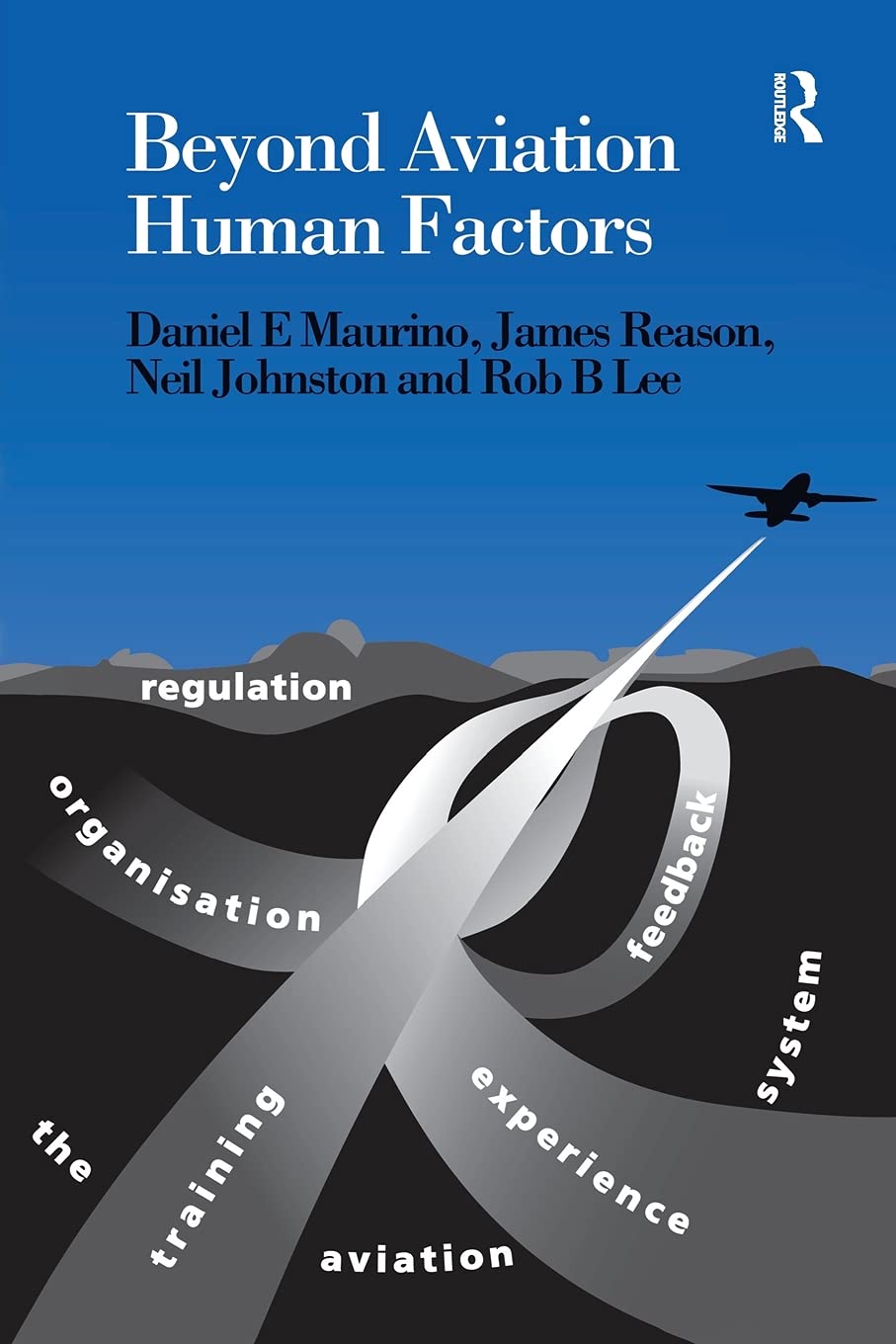
The authors believe that a systematic organizational approach to aviation safety must replace the piecemeal approaches largely favoured in the past, but this change needs to be preceded by information to explain why a new approach is necessary. Accident records show a flattening of the safety curve since the early Seventies: instead of new kinds of accident, similar safety deficiencies have become recurrent features in accident reports. This suggests the need to review traditional accident prevention strategies, focused almost exclusively on the action or inactions of frontline operational personnel. The organizational model proposed by the authors is one alternative means to pursue safety and prevention strategies in contemporary aviation; it is also applicable to other production systems. The model argues for a broadened approach, which considers the influence of all organizations (the blunt end) involved in aviation operations, in addition to individual human performance (the sharp end). If the concepts of systems safety and organizational accidents are to be advanced, aviation management at all levels must be aware of them. This book is intended to provide a bridge from the academic knowledge gained from research, to the needs of practitioners in aviation. It comprises six chapters: the fundamentals, background and justification for an organizational accident causation model to the flight deck, maintenance and air traffic control environments. The last chapter suggest different ways to apply the model as a prevention tool which furthermore enhances organizational effectiveness. The value of the organizational framework pioneered by Professor Reason in analyzing safety in hightechnology production systems is felt by his coauthors to have an enduring role to play, both now and in coming decades. Applied now in this book, it has been adopted by ICAO, IFATCA, IMO, the US National Transportation Safety Board, the Transportation Safety B
⚠️ WARNING (California Proposition 65):
This product may contain chemicals known to the State of California to cause cancer, birth defects, or other reproductive harm.
For more information, please visit www.P65Warnings.ca.gov.