
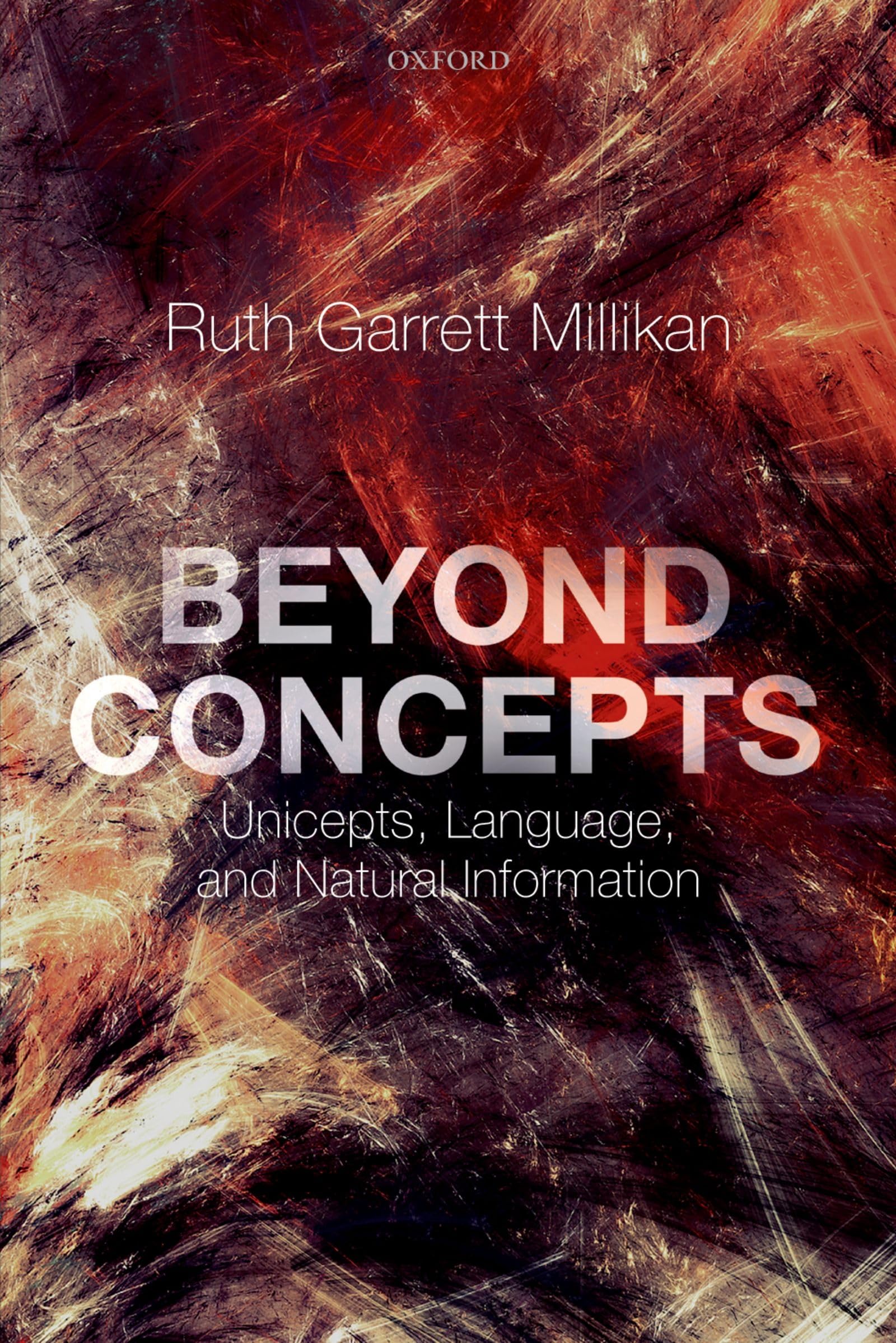
Title
Beyond Concepts: Unicepts, Language, and Natural Information,Used
Sold by Ergodebooks, an authorized reseller.
Returns accepted within 30 days | support@ergodebooks.com
Shipping Information
- Free Standard Shipping — United States only
- Processing Time: 3–5 business days
- Estimated Delivery: 6–10 business days after dispatch
- Double-boxed, fully insured & discreetly packaged
- Tracking number sent via email once dispatched
Returns & Refund
Returns accepted within 30 days of delivery.
Damaged or Defective Item
Free return shipping + replacement or full refund
Wrong Item Received
Free return shipping + replacement or full refund
Change of Mind
Return shipping at customer's expense · 25% restocking fee applies
Payment Option

Ruth Garrett Millikan presents a highly original account of cognition of how we get to grips with the world in thought. The question at the heart of her book is Kant's 'How is knowledge possible?', but answered from a contemporary naturalist standpoint. The starting assumption is that we are evolved creatures that use cognition as a guide in dealing with the natural world, and that the natural world is roughly as natural science has tried to describe it. Very unlike Kant, then, we must begin with ontology, with a rough understanding of what the world is like prior to cognition, only later developing theories about the nature of cognition within that world and how it manages to reflect the rest of nature. And in trying to get from ontology to cognition we must traverse another nonKantian domain: questions about the transmission of information both through natural signs and through purposeful signs including, especially, language.Millikan makes a number of innovations. Central to the book is her introduction of the ideas of unitrackers and unicepts, whose job is to recognize the same again as manifested through the jargon of experience. She offers a direct reference theory for common nouns and other extensional terms; a naturalist sketch of conceptual development; a theory of natural information and of language function that shows how properly functioning language carries natural information; a novel description of the semantics/pragmatics distinction; a discussion of perception as translation from natural informational signs; new descriptions of indexicals, demonstratives and intensional contexts; and a new analysis of the reference of incomplete descriptions.
⚠️ WARNING (California Proposition 65):
This product may contain chemicals known to the State of California to cause cancer, birth defects, or other reproductive harm.
For more information, please visit www.P65Warnings.ca.gov.