
Title
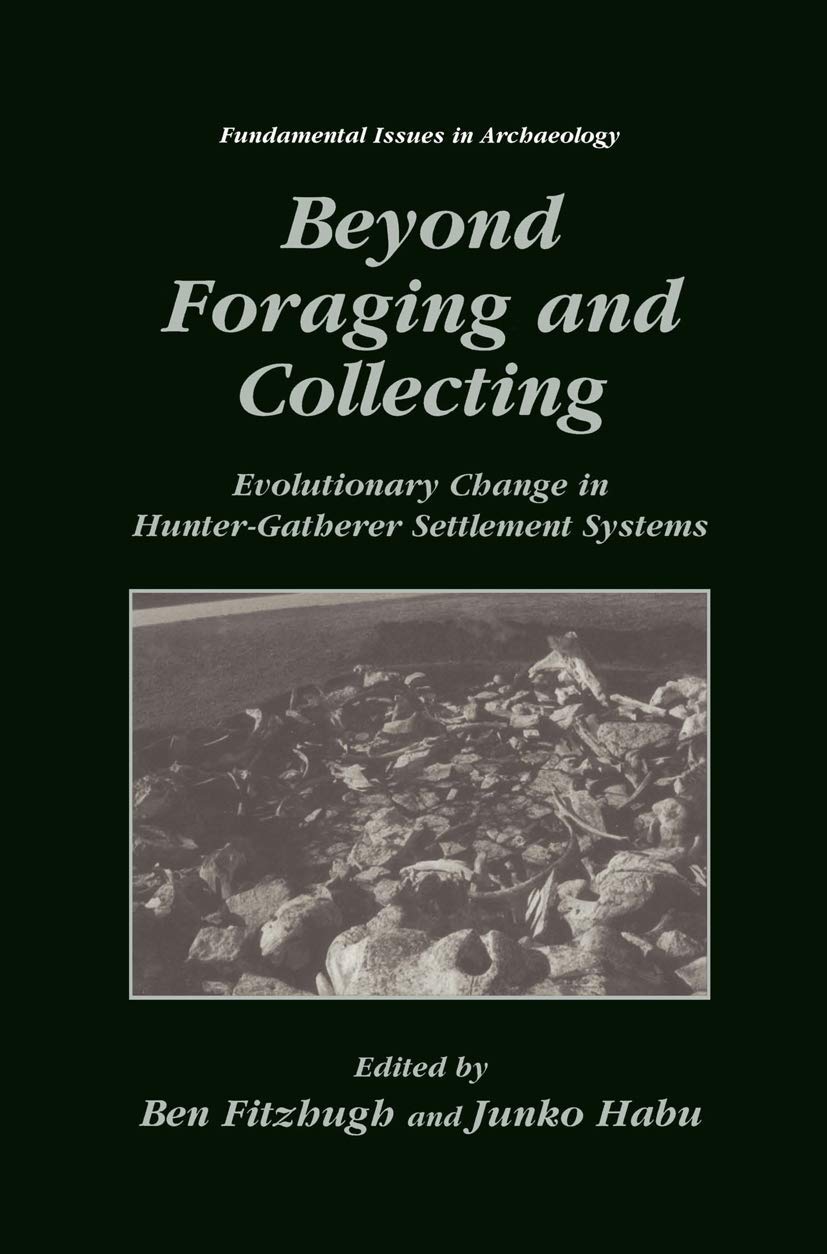
Beyond Foraging And Collecting: Evolutionary Change In Huntergatherer Settlement Systems (Fundamental Issues In Archaeology)
Sold by Ergodebooks, an authorized reseller.
Returns accepted within 30 days | support@ergodebooks.com
Shipping Information
- Free Standard Shipping — United States only
- Processing Time: 3–5 business days
- Estimated Delivery: 6–10 business days after dispatch
- Double-boxed, fully insured & discreetly packaged
- Tracking number sent via email once dispatched
Returns & Refund
Returns accepted within 30 days of delivery.
Damaged or Defective Item
Free return shipping + replacement or full refund
Wrong Item Received
Free return shipping + replacement or full refund
Change of Mind
Return shipping at customer's expense · 25% restocking fee applies
Payment Option

LEWIS R. BINFORD AND AMBER L. JOHNSON The organizers of this volume have brought together authors who have worked on local sequences, much as traditional archaeologists tended to do, however, with the modern goal of addressing evolutionary change in huntergatherer systems over long time spans. Given this ambitious goal they wisely chose to ask the authors to build their treatments around a focal question, the utility of the foragereollector continuum (Binford 1980) for research on archaeological sequences. Needless to say, Binford was flat tered by their choice and understandably read the papers with a great deal of interest. When he was asked to write the foreword to this provoca tive book he expected to learn new things and in this he has not been disappointed. The common organizing questions addressed among the contributors to this volume are simply, how useful is the foragereollector continuum for explanatory research on sequences, and what else might we need to know to explain evolutionary change in huntergatherer adaptations? Most sequences document systems change, in some sense. Though we don't necessarily know how much synchronous systemic variability there might have been relative to the documented sequence, most authors have tried to address the problem of within systems variability. In this sense, most are operating with sophistication not seen among traditional culture historians. The primary problem for archaeologists of the generation prior to Binford was how to date archaeological materials.
⚠️ WARNING (California Proposition 65):
This product may contain chemicals known to the State of California to cause cancer, birth defects, or other reproductive harm.
For more information, please visit www.P65Warnings.ca.gov.