
Title
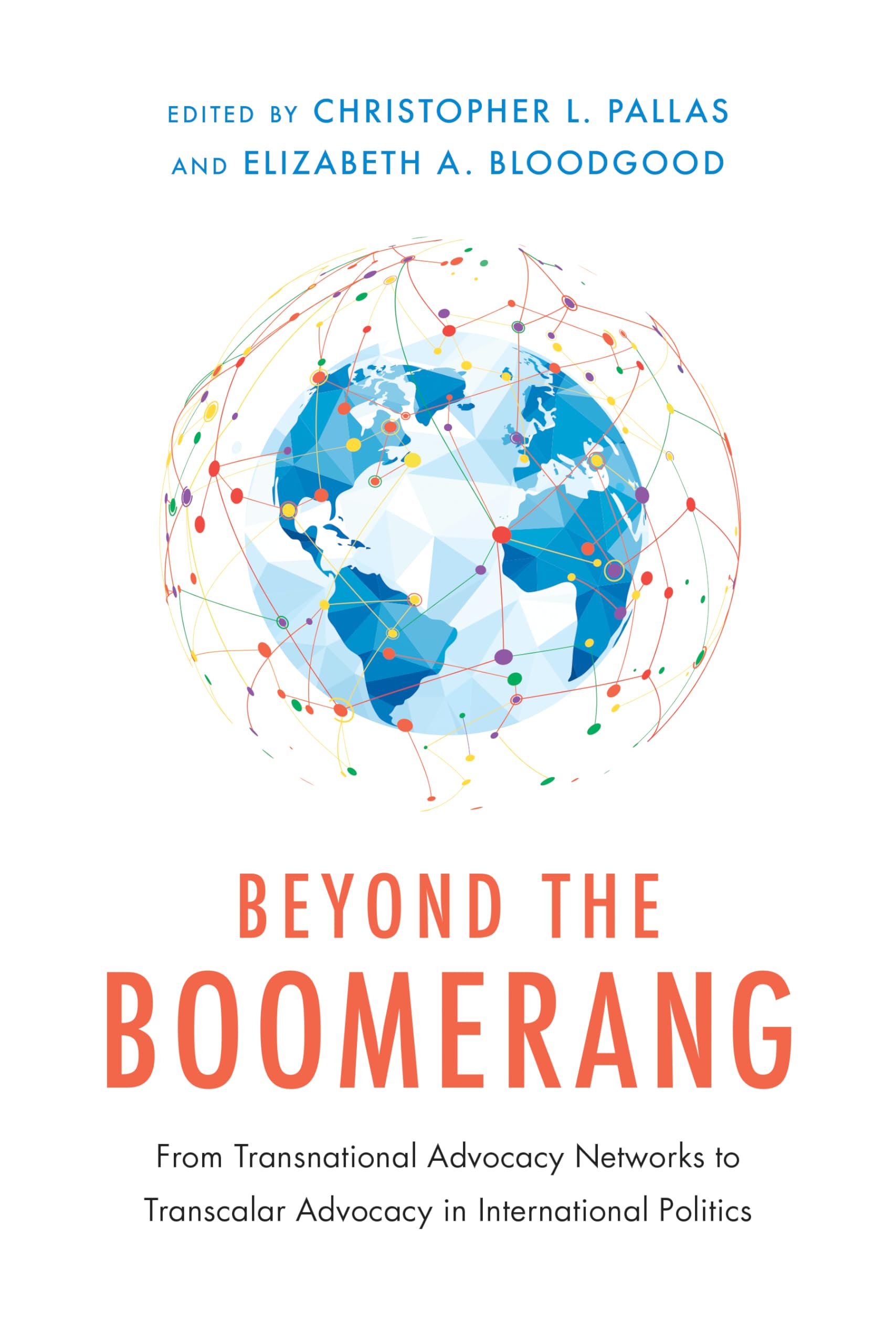
Beyond The Boomerang: From Transnational Advocacy Networks To Transcalar Advocacy In International Politics (Ngographies: Ethnog,Used
Sold by Ergodebooks, an authorized reseller.
Returns accepted within 30 days | support@ergodebooks.com
Shipping Information
- Free Standard Shipping — United States only
- Processing Time: 3–5 business days
- Estimated Delivery: 6–10 business days after dispatch
- Double-boxed, fully insured & discreetly packaged
- Tracking number sent via email once dispatched
Returns & Refund
Returns accepted within 30 days of delivery.
Damaged or Defective Item
Free return shipping + replacement or full refund
Wrong Item Received
Free return shipping + replacement or full refund
Change of Mind
Return shipping at customer's expense · 25% restocking fee applies
Payment Option

Essays that generate a new, empirically grounded theory of transnational advocacyMargaret E. Keck and Kathryn Sikkink introduced the boomerang theory in their 1998 book, Activists beyond Borders: Advocacy Networks in International Politics. It remains one of the first broadly applicable theories for why groups of NGOs and interested individuals form transnational advocacy networks. Since its publication, however, the empirical conditions that prompted their theory have changed. The types of actors involved in transnational advocacy have diversified. Northern NGOs have lost power and influence and have been restricted in their access to southern states. Southern NGOs have developed the capacity to undertake advocacy on their own and often built closer relationships with their own governments. The architecture of global governance has likewise changed, providing new avenues of access and influence for southern voices.In Beyond the Boomerang: From Transnational Advocacy Networks to Transcalar Advocacy in International Politics, editors Christopher L. Pallas and Elizabeth A. Bloodgood offer cuttingedge scholarship that synthesizes a new theoretical framework to develop a coherent, integrated picture of the current dynamics in global advocacy. This new theory of transcalar advocacy focuses on advocacy activities and policy impacts that transcend different levels or scales of political action. In transcalar advocacy, all NGOsnorthern and southernare treated as strategic actors, choosing the targets, scales of advocacy, and partnerships that best suit their capacities and goals. The case studies in the volume develop the empirical grounding of this theory using data from Latin America, Africa, Europe, and Asia, with several chapters featuring crossnational comparison. The chapters highlight the wide variety of actors involved in advocacy work, including NGOs, social movements, international institutions, governments, and businesses. Contributors use both qualitative and quantitative methodologies and bring to bear insights from political science, international relations, and sociology. The case studies also include diverse issue areas, from womens rights to environmental protection, sustainable agriculture, health policy, and democracy promotion.
⚠️ WARNING (California Proposition 65):
This product may contain chemicals known to the State of California to cause cancer, birth defects, or other reproductive harm.
For more information, please visit www.P65Warnings.ca.gov.