
Title
Beyond The Textbook: Teaching History Using Documents And Primary Sources,New
Sold by Ergodebooks, an authorized reseller.
Returns accepted within 30 days | support@ergodebooks.com
Shipping Information
- Free Standard Shipping — United States only
- Processing Time: 3–5 business days
- Estimated Delivery: 6–10 business days after dispatch
- Double-boxed, fully insured & discreetly packaged
- Tracking number sent via email once dispatched
Returns & Refund
Returns accepted within 30 days of delivery.
Damaged or Defective Item
Free return shipping + replacement or full refund
Wrong Item Received
Free return shipping + replacement or full refund
Change of Mind
Return shipping at customer's expense · 25% restocking fee applies
Payment Option

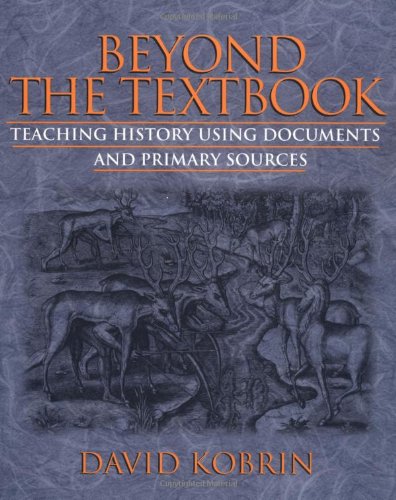
Beyond The Textbook Is A Chronicle Of What Happened When Several 'Interesting Ideas' About Teaching And Learning History Were Put To The Test In Providence, Rhode Island, Public Schools. Here, Diverse Mainstream Students Used Documents And Primary Sources To Actually Construct History, Acting As Historians And Drawing Their Own Conclusions About The Past.Instead Of Offering A Single Model For Teachers To Copy, Beyond The Textbook Presents Nuanced Illustrations Of What 'Student Historian Theory' Looks Like In Action. Included Are Accounts Of Actual Classroom Lessons; Discussion Topics; Sample Handouts And Primary Sources; And Excerpts From Students' Writings. There Are Also Frank Recollections Of The Brainstorming, Collaborative Teaching, Curriculum Development, And Evaluation That Kobrin And His Colleagues Didas Well As Feedback From Their Students.Though Kobrin'S Case Studies Reflect The Experiences Of History And Social Studies Classes In Grades Seven Through Twelve, The Issues Raised Will Resonate With All Educators: How Much Do Textbooks Dictate The Curriculum? What Is Needed To Involve Students In Their School Work? How Are Higherlevel Thinking Skills Mastered? How Do Professional Teachers Continue To Develop Their Skills? Beyond The Textbook Does Not Offer Facile, Open Andshut Answers. Rather, It Opens Various Windows Revealing The Possibilities.
⚠️ WARNING (California Proposition 65):
This product may contain chemicals known to the State of California to cause cancer, birth defects, or other reproductive harm.
For more information, please visit www.P65Warnings.ca.gov.
- Q: How many pages does the book have? A: The book has ninety-eight pages. This length allows for a concise exploration of teaching history using documents and primary sources.
- Q: What is the binding type of this book? A: This book is paperback. The paperback binding makes it lightweight and easy to handle for students and teachers alike.
- Q: What are the dimensions of the book? A: The book measures seven point four inches in length, zero point twenty-eight inches in width, and nine point twenty-one inches in height. These dimensions make it portable and easy to fit in backpacks.
- Q: Who is the author of this book? A: The author of the book is David Kobrin. He shares insights from his experiences teaching history in public schools.
- Q: What is the main topic of the book? A: The main topic is teaching history using documents and primary sources. It emphasizes engaging students as active historians rather than passive learners.
- Q: Is this book suitable for middle school students? A: Yes, the book is suitable for middle school students. It addresses history education practices relevant for grades seven through twelve.
- Q: How can I use this book in my classroom? A: You can use this book as a guide to incorporate primary sources into your history lessons. It includes practical examples, lesson plans, and discussion topics.
- Q: Does this book provide teaching strategies? A: Yes, the book provides various teaching strategies. It includes accounts from actual classroom lessons and collaborative teaching experiences.
- Q: Can this book help improve critical thinking skills? A: Yes, the book aims to enhance critical thinking skills. It encourages students to draw their own conclusions and engage deeply with historical texts.
- Q: What kind of feedback is included in the book? A: The book includes feedback from students. This feedback reflects on their experiences and the impact of using primary sources in learning history.
- Q: Is the content of the book relevant for all educators? A: Yes, the content is relevant for all educators. It raises important questions about curriculum and student engagement applicable across various subjects.
- Q: Does the book provide examples of student work? A: Yes, the book includes excerpts from students' writings. These examples illustrate the outcomes of using primary sources in history lessons.
- Q: Are there any collaborative teaching experiences mentioned? A: Yes, the book discusses collaborative teaching experiences. It highlights the brainstorming and curriculum development efforts of the author and his colleagues.
- Q: What is the focus of the case studies in the book? A: The case studies focus on history and social studies classes. They provide insights into innovative teaching practices in real classroom settings.
- Q: Is the book primarily theoretical or practical? A: The book is practical. It offers nuanced illustrations of teaching practices alongside theoretical discussions about history education.