
Title
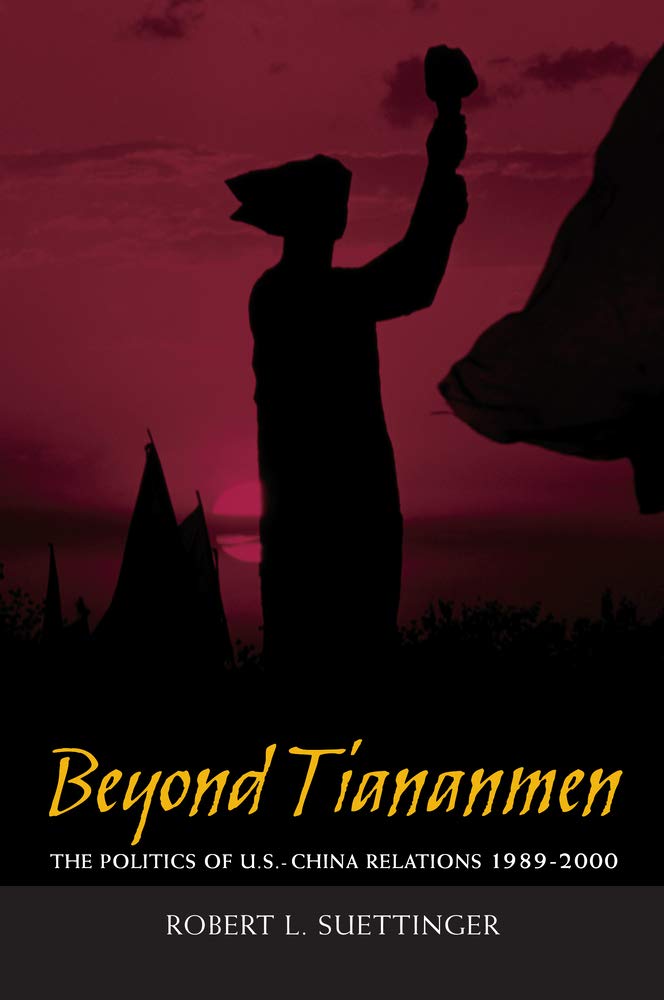
Beyond Tiananmen: The Politics Of U.S.China Relations 19892000,Used
Sold by Ergodebooks, an authorized reseller.
Returns accepted within 30 days | support@ergodebooks.com
Shipping Information
- Free Standard Shipping — United States only
- Processing Time: 3–5 business days
- Estimated Delivery: 6–10 business days after dispatch
- Double-boxed, fully insured & discreetly packaged
- Tracking number sent via email once dispatched
Returns & Refund
Returns accepted within 30 days of delivery.
Damaged or Defective Item
Free return shipping + replacement or full refund
Wrong Item Received
Free return shipping + replacement or full refund
Change of Mind
Return shipping at customer's expense · 25% restocking fee applies
Payment Option

It has been thirteen years since soldiers of the Chinese People's Liberation Army (PLA) raced into the center of Beijing, ordered to recover ''at any cost'' the city's most important landmark, Tiananmen Square, from student demonstrators. The U.S. and other Western countries recoiled in disgust after the horrific incident, and the relationship between the U.S. and China went from amity and strategic cooperation to hostility, distrust, and misunderstanding. Time has healed many of the wounds from those terrible days of June 1989, and bilateral strains have been eased in light of the countries' joint opposition to international terrorism. Yet China and U.S. remain locked in opposition, as strategic thinkers and military planners on both sides plot future conflict scenarios with the other side as principal enemy. Polls indicate that most Americans consider China an ''unfriendly'' country, and antiAmerican sentiment is growing in China. According to Robert Suettinger, the calamity in Tiananmen Square marked a critical turning point in U.S.China affairs. In Beyond Tiananmen, Suettinger traces the turbulent bilateral relationship since that time, with a particular focus on the internal political factors that shaped it. Through a series of candid anecdotes and observations, Suettinger sheds light on the complex and confused decisionmaking process that affected relations between the U.S. and China between 1989 and the end of the Clinton presidency in 2000. By illuminating the way domestic political ideas, beliefs, and prejudices affect foreign policymaking, Suettinger reveals policy decisions as outcomes of complex processes, rather than the results of grand strategic trends. He also refutes the view that strategic confrontation between the superpowers is inevitable. Suettinger sees considerable opportunity for cooperation and improvement in what is likely to be the single most important bilateral relationship of the twentyfirst century. He cautions, however'
⚠️ WARNING (California Proposition 65):
This product may contain chemicals known to the State of California to cause cancer, birth defects, or other reproductive harm.
For more information, please visit www.P65Warnings.ca.gov.