
Title
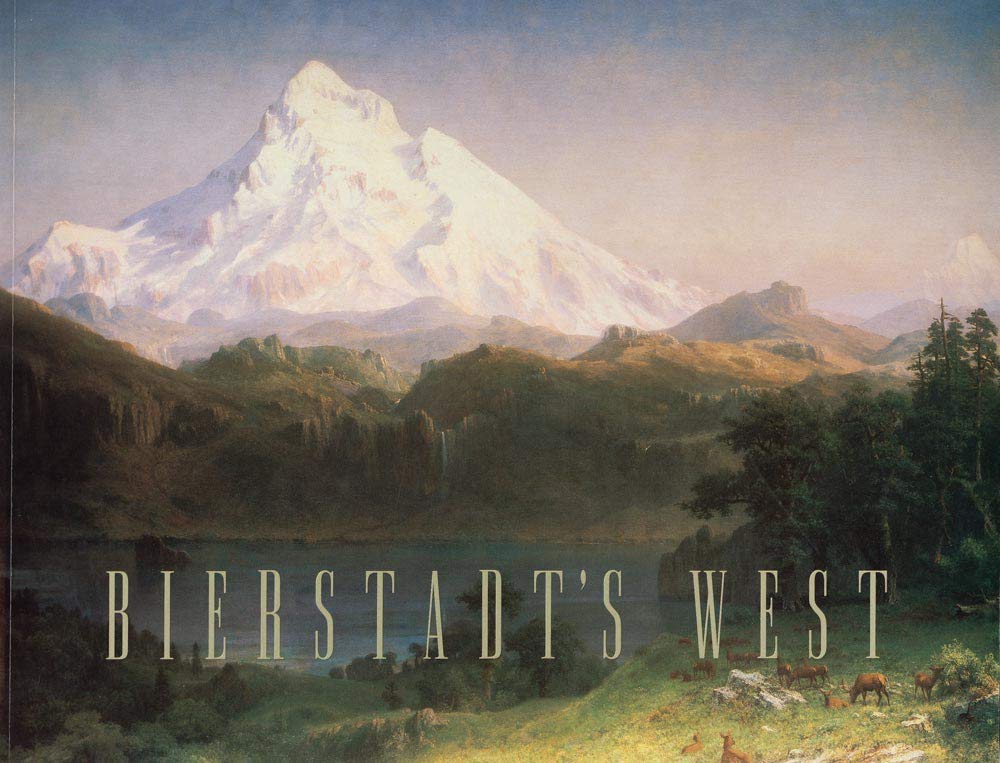
Bierstadt's West,Used
Sold by Ergodebooks, an authorized reseller.
Returns accepted within 30 days | support@ergodebooks.com
Shipping Information
- Free Standard Shipping — United States only
- Processing Time: 3–5 business days
- Estimated Delivery: 6–10 business days after dispatch
- Double-boxed, fully insured & discreetly packaged
- Tracking number sent via email once dispatched
Returns & Refund
Returns accepted within 30 days of delivery.
Damaged or Defective Item
Free return shipping + replacement or full refund
Wrong Item Received
Free return shipping + replacement or full refund
Change of Mind
Return shipping at customer's expense · 25% restocking fee applies
Payment Option

Albert Bierstadt (18301902) took his first trip West early in 1859 with Frederic Lander. He was chosen to be a civilian artist on a government expedition which set out to improve the wagon roads of the South Pass from Fort Kearny to the eastern border of California. By the middle of the year, Bierstadt was following the same steps taken by Alfred Jacob Miller twentytwo years earlier, on the Oregon Trail. Along the way he met and sketched thousands of discouraged gold seekers and immigrants. In late summer he returned east and began turning his sketches into huge canvases. Included among some of these earlier scenes were Chimney Rock, Fort Laramie and Laramie Park.Bierstadt's second trip, this time to the far West, took place in 1863. He traveled with his friend Fitz Ludlow. They spent several weeks in Yosemite Valley beyond the Sierra Nevada, eventually traveling up into Oregon. By 1864, scarcely five years after painting his first Rocky Mountain picture, Bierstadt was the most highly acclaimed American painter, rivaling even Frederick Church.As an artist, Bierstadt was concerned more with communicating his image of the West to the American public than with following changing styles in the art world. For him, the immensity of the Rocky Mountains could find appropriate expression only on large canvases. Despite their size, and the immensity of terrain represented, he also managed to include a lavish amount of detail, particularly in his foregrounds. As a consequence, he was often criticized in later years for overstatement, for combining several paintings into one canvas, sometimes from different perspectives. When he did not lose sight of the whole in his efforts to combine large vistas and accurate amounts of detail, the impact of his work could be universalizing.
⚠️ WARNING (California Proposition 65):
This product may contain chemicals known to the State of California to cause cancer, birth defects, or other reproductive harm.
For more information, please visit www.P65Warnings.ca.gov.